Who Protects the People When Those Entrusted With Justice Become Part of the Problem?
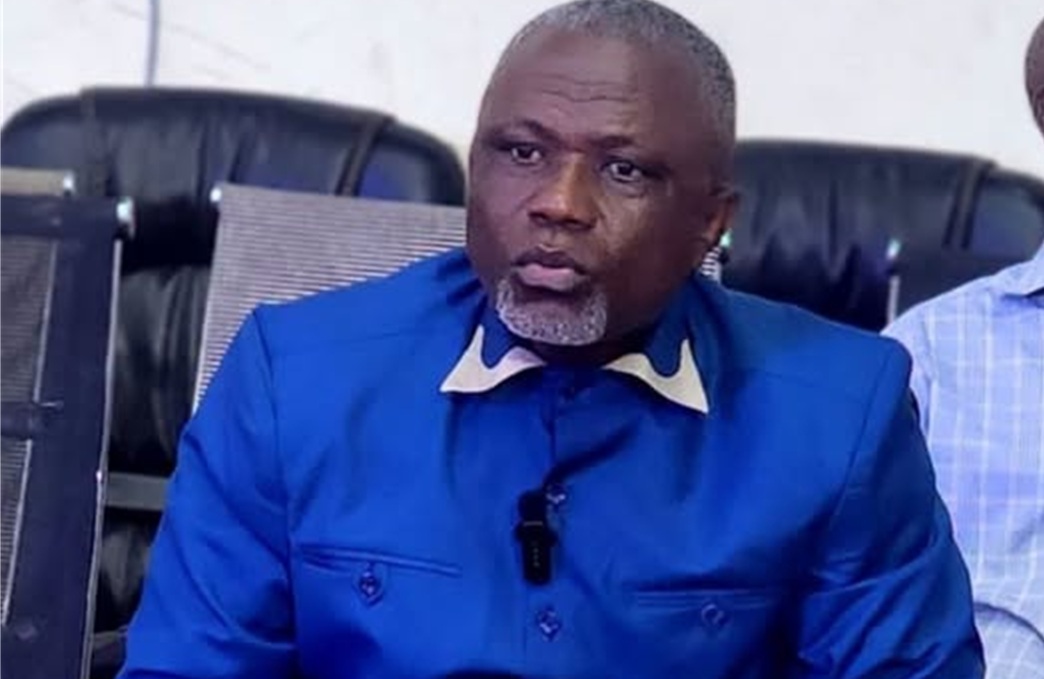
MONROVIA, LIBERIA — When Liberia’s Chief Justice, Yamie Quiqui Gbeisay Sr., declared that “a corrupt jury is worse than no jury at all,” he reignited debate about the integrity of the country’s justice system and the future of jury trials.
While concerns about jury tampering and corruption deserve serious attention, the proposal to abolish the jury system raises a fundamental question: If corruption among jurors is a reason to eliminate jury trials, what should Liberia do when judges or justices face credible allegations of corruption, misconduct or partiality?
Should the judiciary itself be abolished?
The question lies at the heart of a broader debate about accountability, constitutional rights and the institutional safeguards necessary to ensure that justice is administered fairly.
Nobody should defend jury tampering, bribery, intimidation or any attempt to manipulate a verdict. Jurors who accept bribes to acquit guilty defendants or convict innocent people undermine public confidence in the justice system and betray the responsibilities entrusted to them.
However, accountability must apply equally to everyone involved in administering justice.
If jurors can be corrupted, judicial officers must not be exempt from scrutiny. If jury verdicts can be manipulated, the independence and impartiality of judges must also remain subjects of legitimate public concern.
The central issue, therefore, is not whether corruption exists within the jury system. It is whether abolishing an entire institution is the appropriate response to misconduct by some of its members.
The problem is corruption. The solution must prioritize accountability and institutional reform rather than the automatic removal of constitutional safeguards.
WHO PROTECTS THE JURY?
Chief Justice Gbeisay’s proposal raises an important question: Who is responsible for protecting the integrity of Liberia’s jury system?
Jurors do not operate independently of the courts. They participate in proceedings governed by judicial officers and established legal procedures, with prosecutors and defense lawyers presenting evidence and arguments before them.
Consequently, efforts to address jury corruption must examine the entire process, including juror selection, protection against outside influence, the investigation of alleged bribery and the prosecution of those responsible for interfering with trials.
If jurors are being bribed, who is offering the money? If they are being threatened, who is issuing those threats? If verdicts are being manipulated, who is organizing or financing the interference?
These questions deserve answers.
An investigation into jury tampering should not stop with a juror who allegedly accepted a bribe. It should also examine those who offered the money, facilitated the arrangement or attempted to influence the outcome of a trial.
Where sufficient evidence exists, everyone involved should be held accountable under the law.
Otherwise, Liberia risks punishing the most visible participants while failing to identify the individuals who may be directing or financing the alleged misconduct.
The public deserves more than a proposal to eliminate the institution in which corruption has reportedly occurred. It deserves a credible explanation of how the corruption happens, who is responsible and what measures can prevent it from happening again.
WHAT ABOUT CORRUPT JUDGES AND JUSTICES?
The debate becomes more complicated when the same standard is applied to the judiciary.
Judges are entrusted with interpreting the law, protecting constitutional rights and ensuring that legal proceedings are conducted fairly. They are expected to act independently and impartially, without allowing personal interests, political loyalties or financial inducements to influence their decisions.
Yet judicial officers are also human beings, and the possibility of misconduct cannot be dismissed simply because those involved occupy positions of authority.
A judge who accepts a bribe, deliberately manipulates proceedings or allows improper considerations to influence a decision can inflict serious damage on the administration of justice.
Judges exercise substantial authority over court proceedings. Their decisions can determine how evidence is treated, how legal principles are applied and whether the rights of the parties before them are protected.
This raises a legitimate question: If allegations of corruption involving jurors justify a national debate about abolishing jury trials, should credible allegations of judicial corruption not prompt equally serious investigations, disciplinary proceedings and, where warranted, criminal prosecution?
The argument is not that judges are more corrupt than jurors. Such a generalization would require evidence.
Rather, the principle is that no institution should be subjected to a different standard of accountability simply because of the position it occupies within the justice system.
Jurors must answer for proven misconduct. Judges and justices must also answer for theirs.
The credibility of the judicial system depends not only on the conduct of those who deliver verdicts but also on the willingness of the institution to investigate wrongdoing wherever it occurs.
WOULD ABOLISHING JURIES ELIMINATE CORRUPTION?
Removing juries from criminal trials might eliminate one avenue for jury-related interference. However, it would not automatically eliminate corruption from the administration of justice.
If cases were decided exclusively by judges, the integrity, independence and accountability of those judges would become even more consequential.
What safeguards would protect defendants if a judge were improperly influenced? What mechanisms would prevent bribery or political pressure from affecting judicial decisions? Who would investigate allegations of judicial misconduct, and what remedies would be available to defendants who believe their cases were handled unfairly?
These are essential questions in any serious discussion about replacing jury trials with judge-only proceedings.
They are not arguments for preserving a flawed system without reform. Rather, they demonstrate why any proposed change must be supported by evidence, careful legal analysis and effective safeguards against abuse.
Transferring decision-making authority from juries to judges does not, by itself, guarantee more impartial outcomes.
The appropriate response to institutional weaknesses is to identify the conditions that allow misconduct to occur and establish mechanisms capable of preventing, detecting and punishing it, regardless of who is responsible.
THE CONSTITUTION IS NOT A CONVENIENCE
Liberia’s 1986 Constitution provides important protections for the right to trial by jury.
Article 20(a) guarantees an accused person the right to a speedy, public and impartial trial by a jury of the vicinity, subject to the Constitution and applicable law.
Consequently, a proposal to abolish jury trials cannot be treated as a routine administrative adjustment. It raises fundamental constitutional questions that must be carefully examined.
The Legislature must determine whether the proposed changes could be implemented within the existing constitutional framework or whether a constitutional amendment would be necessary.
The purpose of constitutional protections is not to guarantee that every institution will function perfectly. Rather, they establish safeguards against arbitrary power and protect citizens’ rights even when public institutions experience difficulties.
If Liberia’s jury system is affected by corruption or manipulation, the problem demands urgent attention. But the existence of institutional weaknesses does not, by itself, settle the question of whether a constitutionally protected right should be removed.
Any proposal to abolish jury trials must therefore address the constitutional implications, the potential consequences for defendants and the safeguards that would replace the existing system.
The country must also consider whether meaningful reforms could address the identified problems without eliminating the jury system altogether.
REFORM THE SYSTEM, HOLD OFFENDERS ACCOUNTABLE
Chief Justice Gbeisay’s concerns about jury tampering deserve serious consideration. Allegations of corruption should be investigated, and anyone found guilty of bribery, intimidation or interference with judicial proceedings should face the penalties prescribed by law.
At the same time, Liberia should examine opportunities to strengthen juror selection, improve protection against intimidation, investigate suspicious verdicts through lawful procedures and enforce existing laws against jury tampering.
Judicial accountability must also remain part of the reform agenda.
Credible allegations of misconduct involving judges and justices should be addressed through appropriate disciplinary and legal procedures. Where criminal conduct is established, those responsible should face prosecution in accordance with the law.
The same principles should apply to prosecutors, defense lawyers, court officials and anyone else who attempts to undermine a fair trial.
Institutional reform should aim to make justice more transparent, independent and accountable, rather than merely transferring the power to determine cases from one group of people to another.
The ultimate objective must be to strengthen public confidence in the justice system.
THE QUESTION LIBERIA MUST ANSWER
Chief Justice Gbeisay has placed the future of jury trials on the national agenda. However, the debate should not be reduced to whether jurors can be corrupted.
The more important question is whether Liberia can build a justice system in which no individual, regardless of position or influence, can manipulate the outcome of a case with impunity.
If a corrupt jury is worse than no jury, what about a corrupt judge?
If the misconduct of some jurors is being used to question the continued existence of the jury system, why should judicial misconduct not trigger an equally serious examination of accountability within the judiciary?
And if the appropriate response to a corrupt judge is investigation, discipline or prosecution rather than the abolition of the judiciary, why should similar principles not be considered when addressing corruption among jurors?
These questions do not dismiss the seriousness of jury tampering. Instead, they challenge the assumption that eliminating one institution necessarily resolves the deeper problem of corruption.
Liberia does not need a justice system that assumes one category of people is inherently more trustworthy than another. It needs institutions in which everyone is subject to the law and no one is beyond accountability.
The ultimate test of justice is not simply whether a verdict is delivered by a jury or a judge. It is whether proceedings are fair, evidence is properly evaluated, the law is applied impartially and those who abuse their authority are held responsible.
Abolishing juries might change the structure of the courtroom, but it would not automatically eliminate corruption from the justice system.
The challenge before Liberia is therefore not merely to decide whether juries should continue to exist. It is to establish a system in which justice cannot be bought, manipulated or denied, whether the person responsible sits in the jury box, behind the judge’s bench or elsewhere within the judicial system.
Ultimately, Liberia must confront corruption wherever it exists. Reform must not become a substitute for accountability, and the fight against misconduct must not come at the expense of constitutional protections without compelling justification and proper legal process.