Growing military shipments through Conakry, coupled with Liberia’s unresolved border tensions with Guinea, put Monrovia’s intelligence and national security preparedness under scrutiny.
MONROVIA, LIBERIA — Liberia’s national security preparedness is facing renewed questions amid reports of increasing Chinese and Russian military equipment shipments passing through neighbouring Guinea to military governments in the Sahel, raising concerns about the possible implications for the country’s territorial security and the wider West African region.
The development is particularly significant as Liberia continues to manage sensitive border tensions with Guinea, especially around Sorlumba in Foya District, Lofa County, where disagreements involving military personnel and the location of security checkpoints have previously heightened diplomatic tensions between the two countries.
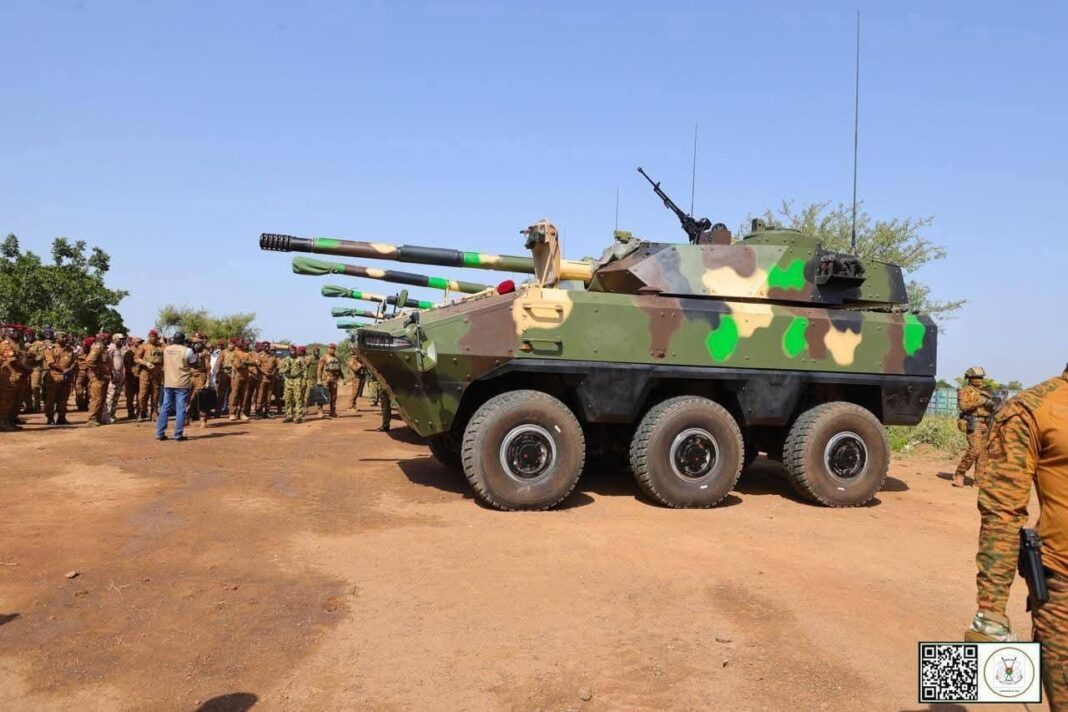
Military and defence reporting has documented the use of Guinea’s Port of Conakry as a major transit corridor for military equipment destined for Mali, including Chinese-made armoured vehicles and air-defence systems.
In April 2026, defence intelligence publication Janes reported that Malian military forces had taken delivery of Chinese-made Yitian-L short-range air-defence systems. Footage examined by the publication showed a military convoy travelling through Bamako along a route commonly used by equipment transported from Conakry towards military bases in Mali.
The equipment, manufactured by China’s state-owned defence company Norinco, is designed to provide protection against certain low-flying aircraft, helicopters and unmanned aerial vehicles.
DefenceWeb also reported that the shipment included additional military vehicles and logistical equipment, illustrating the expanding military supply relationship between China and Mali.
Separately, investigations published in April 2026 by The Sentry, an investigative organisation monitoring illicit financial networks and conflict-related activities, documented the use of Guinea’s Conakry port by Russian cargo ships transporting military equipment towards Mali.
The investigation cited shipping records and satellite imagery to establish that vessels associated with Russian military supply networks had repeatedly docked in Conakry before military equipment was transported overland.
The shipments reportedly included armoured vehicles, tanks, artillery systems, aircraft and electronic warfare equipment.
These developments demonstrate that Guinea has become an important logistical corridor for military supplies entering the Sahel, where governments in Mali, Burkina Faso and Niger are expanding their defence partnerships with China and Russia.
However, available reporting establishes the Guinea transit route more clearly for military supplies destined for Mali than for Burkina Faso. The extent to which Chinese equipment destined specifically for Burkina Faso is transported through Guinea remains to be independently established.
LIBERIA’S BORDER SITUATION ADDS TO SECURITY CONCERNS
The growing military transportation activities through Guinea are attracting attention at a time when Liberia is dealing with its own border-related security challenges with the neighbouring country.
In March 2026, tensions escalated around Sorlumba in Foya District, Lofa County, following disagreements involving Guinean military personnel and Liberian security officers.
The Liberian Government subsequently acknowledged the situation and announced diplomatic engagements with Guinea and Sierra Leone to prevent further escalation.
On March 17, 2026, the Ministry of Information disclosed that Guinea had directed its military forces to withdraw to their previous positions along the border following diplomatic engagements.
The government also announced the suspension of activities by BK Enterprises and other mining operations in the Lofa border area pending a comprehensive investigation by Liberia’s National Security Council.
The situation resurfaced in August when Information Minister Jerolinmek Piah acknowledged renewed tension in the Sorlumba buffer zone involving Guinean military personnel and Liberia’s Joint Security over the location of checkpoints.
Although the government subsequently described the situation as peaceful and stable, the recurring disagreements have raised questions about the long-term resolution of the border issue.
For Liberia, the concern is not necessarily that Guinea’s military partnerships with China or Russia represent an immediate threat. Rather, it is whether the country has sufficient intelligence, diplomatic and security capabilities to monitor developments that could affect its territorial interests.
SHOULD LIBERIA BE CONCERNED ABOUT MILITARY SUPPLIES THROUGH GUINEA?
Security observers may have different interpretations of Guinea’s growing role as a military transportation corridor, but the development presents important questions for Liberia.
The transportation of sophisticated military equipment through Guinea towards the Sahel demonstrates the growing importance of the country’s ports and road networks in regional military logistics.
It also reflects the changing geopolitical environment in West Africa, where China and Russia are expanding their military relationships as traditional Western security partnerships weaken.
Burkina Faso, Mali and Niger, which established the Alliance of Sahel States, have increasingly diversified their military partnerships.
The growing availability of armoured vehicles, air-defence systems, artillery and other military equipment could strengthen the operational capabilities of these governments in their fight against extremist organisations.
However, the increased movement of military equipment across the region also makes intelligence cooperation, customs monitoring and the prevention of illegal arms trafficking increasingly important.
Liberia must therefore understand the nature of these developments rather than assume that military supplies moving through Guinea are intended for use against neighbouring countries.
NATIONAL SECURITY INSTITUTIONS UNDER SCRUTINY
The developments raise questions about whether Liberia’s National Security Council and other intelligence institutions have conducted a comprehensive assessment of Guinea’s expanding role in regional military logistics.
Has the National Security Agency assessed the movement of Chinese and Russian military equipment through Guinea?
Does the Ministry of National Defense have sufficient intelligence on the transportation routes and possible security implications?
Has the government examined whether the changing military environment in the Sahel could create additional security challenges for Liberia?
These questions deserve serious attention from the Boakai administration.
The Armed Forces of Liberia, Liberia Immigration Service and other security institutions must also strengthen coordination along the country’s international borders.
Improved surveillance, intelligence-sharing, communications equipment and border monitoring should form part of a broader national security strategy.
Liberia must also strengthen cooperation with Sierra Leone and Côte d’Ivoire through existing regional security arrangements, particularly the Mano River Union and ECOWAS.
BOAKAI ADMINISTRATION URGED TO PURSUE DIPLOMACY AND BORDER PREPAREDNESS
While Liberia has a legitimate responsibility to protect its territorial integrity, the government must avoid actions that could unnecessarily escalate tensions with Guinea.
Monrovia should pursue high-level diplomatic consultations with Conakry to address border disagreements, improve security cooperation and establish appropriate communication mechanisms concerning military transportation and regional arms trafficking.
The government should also accelerate efforts towards a permanent and mutually recognised border demarcation arrangement.
The African Union and Mano River Union could provide additional support in resolving outstanding disagreements.
Liberia should not enter an arms competition with neighbouring countries. Instead, it must strengthen its defensive capabilities, intelligence institutions and diplomatic engagement.
For a country that endured years of devastating civil conflict, preventing instability and protecting its territorial integrity must remain national priorities.
THE QUESTIONS LIBERIANS DESERVE ANSWERS TO
As military partnerships involving China, Russia and the Sahel countries continue to reshape the regional security environment, Liberians deserve clarity on the government’s preparedness.
What has the National Security Council established about military shipments passing through Guinea?
Has Liberia formally engaged Guinea on the security implications of its growing role as a regional military transportation corridor?
What concrete measures are being implemented to prevent illegal arms trafficking and protect Liberia’s borders?
And, perhaps most importantly, what guarantees exist that the recurring disagreements around Sorlumba will not develop into a more serious security crisis?
The Boakai administration must provide answers.
The issue is bigger than the transportation of military equipment through a neighbouring country. It concerns Liberia’s ability to anticipate emerging security threats, protect its sovereignty and respond to a changing regional military environment.
Liberia must not wait for a security crisis to reach its borders before taking its national security preparedness seriously.