
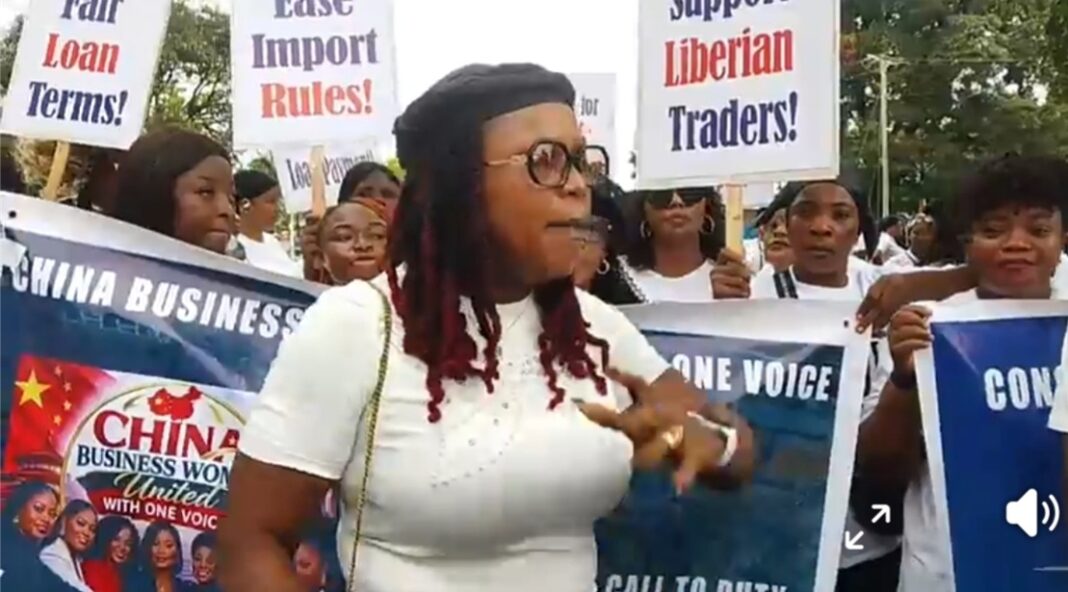
Importers demand urgent government intervention as port congestion, delayed dredging, rising shipping costs and cargo clearance problems threaten businesses and livelihoods.
MONROVIA — A growing crisis at the Freeport of Monrovia has triggered fresh concerns among Liberian importers, particularly women engaged in international trade, who say prolonged delays in the berthing of cargo vessels are threatening their businesses and tying up millions of dollars in commercial investments.
The businesswomen, many of whom import merchandise from China, are accusing relevant port authorities and operators of failing to address operational challenges that have reportedly left some vessels waiting offshore for more than 30 days before being allowed to berth and discharge their cargo.
For these importers, the delay is more than an inconvenience. It means money invested in merchandise remains trapped at sea while shipping expenses, business obligations and other financial commitments continue to accumulate.
The complaints have intensified as traders prepare for the Christmas shopping season, traditionally one of the busiest periods for commercial activities in Liberia.
Operating under the banner of China Business Women United With One Voice/Consortium of Liberia Importers, the businesswomen have called for immediate government intervention, warning that continued delays could force some businesses into financial difficulties.
They are expected to take their concerns to the Liberian Legislature on Tuesday, November 3, demanding that lawmakers investigate the situation and ensure that importers receive meaningful relief.
PORT CONGESTION AND DELAYED DREDGING UNDER SCRUTINY
The controversy has drawn attention to longstanding operational problems at the Freeport of Monrovia, including limited container-yard capacity, delayed dredging, cargo clearance difficulties and rising costs associated with vessel and container delays.
Gbarpolu County Senator Amara M. Konneh has raised concerns about the situation, identifying inadequate container-yard space and delays in dredging the port basin and navigation channel as major factors contributing to the congestion.
According to complaints received by the senator from importers and shipping agents, some Liberia-bound vessels have reportedly been forced to wait for extended periods before entering the port.
There are also reports that certain vessels carrying goods intended for Liberia have been diverted to neighbouring countries, including Côte d’Ivoire and Ghana, where cargo may be handled or transferred before reaching Monrovia.
The reported diversions raise further questions about the efficiency and competitiveness of Liberia’s principal commercial gateway.
For a country that depends heavily on imported merchandise, prolonged delays at the port can have consequences throughout the economy, affecting wholesalers, retailers, market women and consumers.
BUSINESSWOMEN PRESENT FIVE MAJOR DEMANDS
Beyond the reported delays at the port, the importing community says it is facing a combination of financial and regulatory challenges that are making international trade increasingly difficult.
The businesswomen are demanding government intervention in the following areas: prolonged shipping delays, high commercial bank interest rates and transaction charges, short loan repayment periods, excessive taxation and what they describe as unfair competition from foreign traders.
They are particularly concerned about the financial pressure created when imported goods take several months to arrive, leaving traders unable to recover their investments or meet loan obligations on schedule.
They are also requesting that commercial banks provide at least 90 days before loan repayments begin, arguing that importers need sufficient time to receive their merchandise, sell their goods and generate revenue.
Another concern raised by the group involves foreign merchants, particularly Chinese traders, whom they accuse of competing directly with Liberian importers in the same markets.
The businesswomen want the Ministry of Commerce and Industry to examine the situation and ensure that trading regulations are fairly enforced.
These complaints represent the position of the importing group and require further examination by the relevant authorities.
NPA ACKNOWLEDGES OPERATIONAL CHALLENGES
The National Port Authority, under Managing Director Sekou A. M. Dukuly, has previously acknowledged operational difficulties at the Freeport and initiated discussions with relevant stakeholders to identify solutions.
The NPA convened a meeting involving APM Terminals Liberia, shipping companies, customs representatives, importers and other port stakeholders.
During the discussions, concerns were raised about increasing container dwell time, container-yard occupancy approaching capacity, equipment availability and delays in documentation and cargo clearance.
The NPA subsequently established a technical committee headed by Mohammed Calico Lavalie to examine the challenges and recommend measures to improve port operations.
Among the proposed interventions are improved container-yard management, the removal of empty and overstayed containers, better equipment availability, reduced duplication of customs inspections, a truck appointment system and extended cargo-clearance hours.
However, importers are still demanding concrete results, arguing that meetings and committees cannot replace practical solutions to the difficulties affecting their businesses.
APM TERMINALS RESPONDS TO CONCERNS
APM Terminals Liberia, the operator of the container terminal at the Freeport, has also provided information about its operational response.
The company reported that it was discharging more than 800 containers within a 24-hour period.
It also indicated that the normal five-day free period granted to importers had been extended to 14 days to accommodate clearance difficulties.
However, the importers’ complaints raise a broader question about whether the current operational capacity of the terminal is sufficient to accommodate the volume of incoming cargo without prolonged vessel waiting times.
The company and the National Port Authority must explain whether the reported congestion is primarily caused by inadequate infrastructure, operational inefficiencies, customs procedures, delayed cargo collection or a combination of these factors.
SENATE SUMMONS SEVEN INSTITUTIONS OVER PORT CRISIS
The growing concerns have attracted the attention of the Liberian Senate, which has moved to investigate the circumstances surrounding the reported delays and their impact on businesses.
Following an initiative raised by Senator Amara Konneh on October 27, the Senate approved a request for seven major institutions to appear before its Committee of the Whole.
Those summoned include the National Port Authority, APM Terminals Liberia, MEDTECH Scientific Limited, Global Tracking and Maritime Solutions, the Liberia Revenue Authority’s Customs Department, the Ministry of Commerce and Industry, and representatives of the Brokers Union/Customs Brokers Association of Liberia.
The institutions are expected to provide explanations concerning port congestion, dredging, vessel delays, container storage, cargo clearance and the fees imposed on importers.
The Senate’s intervention could provide an opportunity to establish where responsibility lies and whether existing concession obligations and government oversight arrangements are being adequately enforced.
WHO IS RESPONSIBLE FOR THE DELAYS?
At the centre of the controversy is the question of accountability.
The National Port Authority is responsible for the overall administration and development of the port, while APM Terminals operates the container terminal under its concession arrangement.
The Liberia Revenue Authority and customs officials also have responsibilities relating to cargo documentation, inspection and clearance.
Consequently, the government must establish whether the delays are primarily attributable to inadequate port infrastructure, terminal capacity, dredging, customs procedures, shipping arrangements or administrative failures.
It would be premature to assign the entire responsibility to one institution without examining the relevant operational records and contractual obligations.
Nevertheless, the situation demands urgent attention because Liberian traders should not continue bearing the financial consequences of problems they have little control over.
CHRISTMAS SEASON ADDS TO BUSINESSWOMEN’S CONCERNS
The timing of the reported delays is particularly worrying.
With the Christmas trading season approaching, many importers depend on timely shipments to replenish their inventories and meet increased consumer demand.
A vessel remaining offshore for more than a month can disrupt an entire business plan. Importers may miss important selling periods, lose customers and struggle to repay loans taken to finance their merchandise.
The additional expenses associated with shipping delays and container storage may also eventually be reflected in the prices consumers pay in local markets.
For ordinary Liberians already struggling with the cost of living, further increases in the prices of imported goods would create another economic burden.
GOVERNMENT MUST MOVE BEYOND MEETINGS
The Freeport of Monrovia is too important to Liberia’s economy for its operational challenges to remain unresolved.
The government must establish a clear timetable for addressing the congestion, publish the findings of the NPA technical committee and explain the status of dredging and proposed port expansion.
APM Terminals should also publicly explain its terminal capacity, vessel waiting times, equipment availability and measures being implemented to improve cargo handling.
The Liberia Revenue Authority and customs officials must account for any documentation or inspection procedures contributing to delays.
Most importantly, the businesswomen demanding government intervention deserve clear answers about when their goods will be discharged and what measures are available to reduce the financial losses associated with prolonged waiting periods.
The Senate hearing should not become another political exercise that ends with promises and no measurable results.
For Liberian importers, particularly women whose businesses depend on international trade, every additional day their goods remain offshore represents another day of uncertainty and financial pressure.
The central question now is whether the government and port operators can restore confidence in the Freeport of Monrovia before the reported congestion causes even greater damage to businesses and consumers.
Liberia cannot claim to be promoting private-sector growth while the country’s principal commercial gateway is struggling to deliver the efficiency that businesses need to survive.