
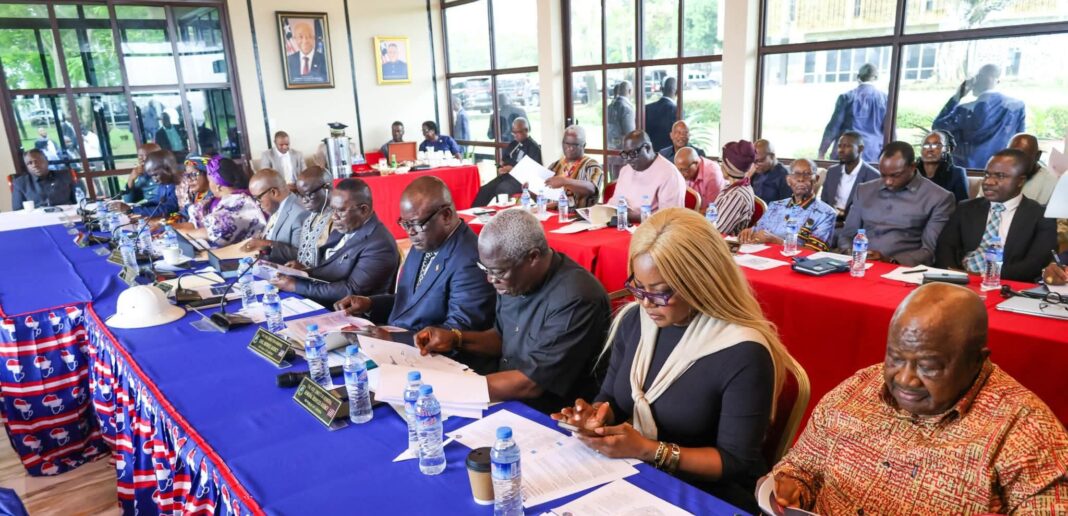
MONROVIA, LIBERIA – The Joseph Boakai administration is moving to tighten oversight of government procurement while expanding access to public contracts for businesses genuinely owned and controlled by Liberians, including enterprises led by women.
The issue dominated discussions at Thursday’s Cabinet meeting at the Executive Mansion, where officials reviewed the performance of public procurement and the ongoing transition from manual processes to Liberia’s electronic government procurement system.
The Cabinet’s position reflects a broader attempt by the administration to make government purchasing more transparent, competitive and accountable while ensuring that public spending generates greater economic benefits inside Liberia.
Officials were briefed by the Public Procurement and Concessions Commission on implementation of the electronic Government Procurement system and procurement performance during Fiscal Year 2026.
The transition to electronic procurement is intended to reduce weaknesses associated with traditional procurement procedures by creating a more transparent and accessible system through which businesses can compete for government contracts.
However, Cabinet acknowledged that the reform is not without problems.
Delays in evaluating bids and executing contracts remain among the challenges confronting the procurement process, while weaknesses in institutional capacity, procurement planning and compliance continue to affect performance.
President Joseph Nyuma Boakai and his Cabinet consequently called for stronger implementation across ministries, agencies and commissions, stressing that government institutions must fully adopt the electronic procurement platform.
The administration also wants the system taken beyond Monrovia.
Cabinet directed attention to popularizing and decentralizing the platform so that businesses across the country can better understand and participate in government procurement opportunities.
For Liberian entrepreneurs, the move could potentially open a wider path into the public contracting system, particularly if access to information and bidding opportunities becomes less concentrated among businesses operating around the capital.
Cabinet also raised a more politically and economically sensitive concern: the use of fronting arrangements.
The practice involves companies being presented as Liberian-owned for purposes of accessing opportunities reserved for Liberian businesses, while actual control or economic benefit may rest with non-Liberians.
Cabinet said procurement policies designed to increase Liberian participation must result in genuine ownership and control by Liberians rather than creating arrangements that merely appear to satisfy local participation requirements.
The government is particularly seeking greater participation by women-owned enterprises, placing their inclusion within its broader procurement reform agenda.
The emphasis comes as the administration attempts to connect public procurement with domestic economic growth rather than treating government contracts solely as administrative transactions.
If fully implemented, the electronic procurement system could provide government with stronger tools for tracking procurement activities while allowing businesses to compete through a more standardized process.
But the effectiveness of the reform will ultimately depend on how consistently ministries and public agencies use the system and whether procurement delays, compliance gaps and alleged fronting arrangements are effectively addressed.
President Boakai has also challenged Cabinet members and heads of public institutions to move beyond approving policies and ensure that government decisions produce measurable improvements in public services.
The latest Cabinet action therefore places both procurement institutions and spending agencies under pressure to demonstrate that reforms are producing practical results for Liberians.
For local businesses, the central question now is whether the government’s push for electronic procurement will translate into a more accessible and genuinely competitive marketplace for public contracts.