Former UP Chairman Turns Fire on Fallah as Political Alliances Shift Ahead of 2029
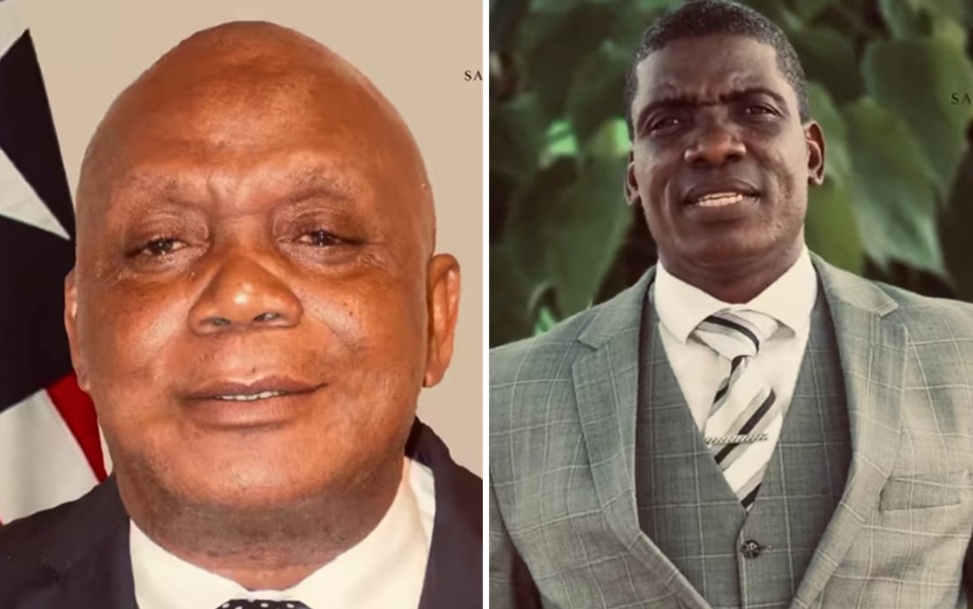
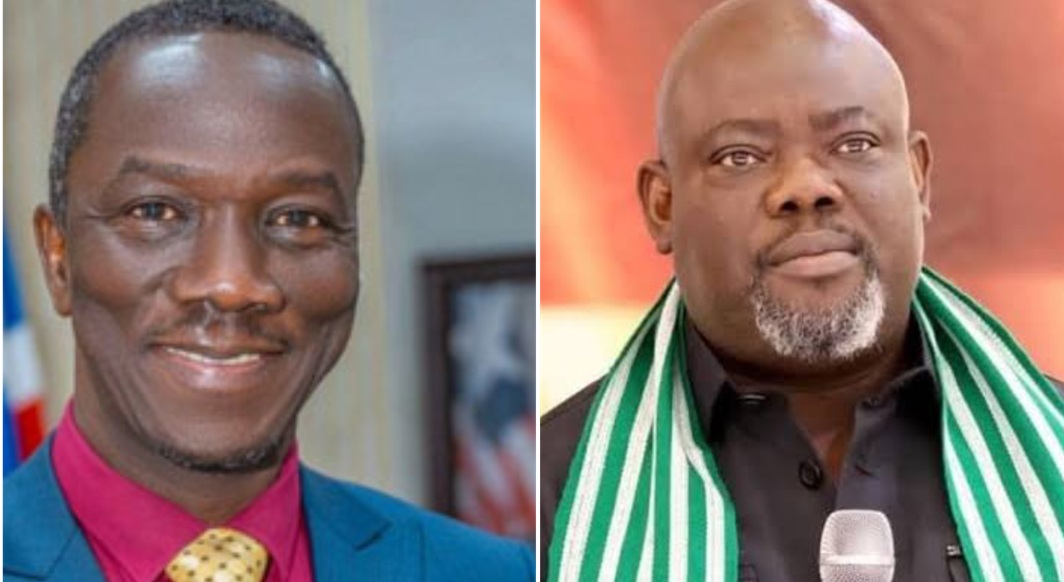
MONROVIA, LIBERIA — Former Unity Party Chairman and former Minister of Mines and Energy Wilmot J. M. Paye has opened a new political front against Deputy Speaker Thomas P. Fallah, and his latest remarks may carry consequences far beyond the two men.
Paye’s criticism comes at a politically sensitive moment for the ruling Unity Party, as President Joseph Nyuma Boakai’s political camp begins organizing for the 2029 elections.
In a recent social-media post, Paye declared that “a thief is nothing but a thief,” describing his unnamed target as a person whose character was allegedly “shaped in thievery, perfected in greed, and wrapped up in corruption.”
Although Paye did not explicitly identify Fallah by name in the post, recent reporting has interpreted the remarks as being directed at the Deputy Speaker, whose political journey from the Coalition for Democratic Change (CDC) into Boakai’s political camp has made him an increasingly visible figure in the ruling coalition.
The allegation should be treated as a political accusation, not a judicial finding. There is no court ruling establishing that Fallah is a “thief,” and Paye’s language remains a claim that would require evidence if it is intended to establish criminal wrongdoing.
But politically, the message is difficult to ignore.
FROM POLITICAL OPPONENT TO BOAKAI ALLY
Thomas Fallah’s political evolution is at the center of Paye’s criticism.
Fallah spent years as a prominent figure within the CDC establishment before eventually breaking with the party and aligning himself with the political forces supporting President Boakai.
That transformation has now placed him in an unusual position.
The same politician who was once attacked by UP supporters is now working alongside the President and has become closely associated with the National Independent Movement for Boakai (NIMBO).
President Boakai appeared with Fallah at the launch and groundbreaking of NIMBO in May 2026, giving the movement and Fallah considerable political visibility.
Paye’s criticism therefore raises a question that goes beyond Fallah personally:
Can political alliances erase yesterday’s accusations, or should politicians be required to explain what changed?
That is a legitimate question for any political party, not only the Unity Party.
PAYE IS NOT AN OUTSIDER
What makes Paye’s intervention particularly significant is that he is not a traditional opposition critic.
He was once chairman of the Unity Party and subsequently served as Boakai’s Minister of Mines and Energy.
President Boakai removed Paye from the ministry in October 2025 and replaced him with former Nimba County Representative R. Matenokay Tingban. The Executive Mansion said the broader changes were intended to strengthen governance, institutional performance, accountability and efficiency.
Since leaving government, Paye has increasingly spoken publicly on political and policy matters.
In June, he criticized Fallah’s NIMBO project, warning UP officials to be cautious about the movement and arguing that Fallah should support Boakai through the Unity Party rather than operate an independent political structure.
Paye has also publicly challenged Vice President Jeremiah Kpan Koung over the administration’s position on concession agreements, showing that his criticisms are not limited to Fallah.
This makes his latest attack part of a broader pattern: a former insider increasingly questioning the direction of the political establishment he once helped lead.
THE PROBLEM FOR THE UNITY PARTY
For the Unity Party, the controversy presents a complicated political dilemma.
On one hand, Fallah has become an important ally in the President’s political camp.
On the other hand, Paye is reminding UP supporters that Fallah did not come from the traditional Unity Party structure. He came from the CDC and spent years opposing the political forces that now surround him.
The question is whether the ruling party can absorb politicians from outside its traditional structure without creating resentment among longtime members who believe they carried the party through its difficult years.
Paye has already warned that NIMBO could become a political structure operating alongside, rather than fully within, the Unity Party. In his June remarks, he compared Fallah’s position to a guest who is accommodated in someone’s house and then declares independence.
That argument exposes a potentially important fault line:
Who owns the political machinery behind Boakai’s 2029 ambitions—the Unity Party, or the broader coalition of political actors now gathering around the President?
THE “POLITICAL REHABILITATION” QUESTION
Liberian politics has repeatedly demonstrated that political enemies can become political allies.
Yesterday’s opponent can become today’s strategist.
Yesterday’s critic can become today’s supporter.
Yesterday’s accusation can disappear when political interests change.
That is precisely why Paye’s intervention has political weight.
If Fallah was once subjected to the “Thief Five” label by UP supporters, what is the party’s position today?
Has the allegation been disproved?
Was it simply political propaganda?
Was new information discovered?
Or has political necessity changed the relationship?
These questions should not be answered by insults from either side. They require evidence and a clear public record.
PAYE’S OWN POLITICAL POSITION
There is another dimension to this confrontation.
Paye himself is now a former government official criticizing an administration in which he once held a senior position.
That inevitably raises questions about whether his criticisms are driven primarily by matters of principle, political disagreement, personal disappointment, or some combination of these factors.
Those questions should also be investigated rather than assumed.
His dismissal from government does not automatically make his criticisms wrong.
But neither does his former position automatically make them correct.
The same standard should apply to Fallah.
If Paye possesses evidence of corruption or other criminal conduct, the appropriate avenue is to provide that evidence to competent investigative and judicial institutions.
If such evidence does not exist, then describing another politician as a “thief” remains a serious political allegation rather than an established fact.
WHAT DOES THIS MEAN FOR BOAKAI?
For President Boakai, the dispute presents a broader challenge of political management.
The President’s coalition now contains people with very different political histories.
Some are longtime UP loyalists.
Others previously belonged to the CDC.
Some fought against Boakai during the 2023 campaign.
Others worked directly to defeat the political establishment from which Fallah emerged.
Now they are working in the same political camp.
That coalition can broaden political support, but it can also create questions about loyalty, influence, party identity and political rewards.
Paye’s public confrontation with Fallah brings those tensions into the open.
THE 2029 QUESTION IS ALREADY HERE
Although the 2029 presidential election remains years away, the political positioning has already begun.
NIMBO is being organized around support for Boakai, while Fallah has emerged as one of its prominent figures. Paye, meanwhile, is warning the Unity Party about what he sees as the implications of allowing an independent political movement to operate around the President.
This means the current dispute may not simply be about Paye and Fallah.
It could be an early argument over who controls the political architecture of the Boakai presidency and who will have influence over the ruling party’s future.
That is why the Unity Party cannot afford to dismiss the controversy merely as another social-media quarrel.
THE QUESTIONS THE UP MUST ANSWER
The political questions are becoming increasingly difficult to avoid:
What is the Unity Party’s relationship with NIMBO?
Is NIMBO an independent movement supporting Boakai, or an emerging political structure operating alongside the UP?
What role should former CDC officials play in shaping the future of a party that spent years opposing the CDC?
How does the UP reconcile its historical criticisms of political opponents with its present-day alliances?
And perhaps most importantly:
Can a governing coalition absorb political converts without losing the confidence of the people who built the party?
Paye has placed these questions squarely on the political table.
Whether his accusations against Fallah withstand scrutiny is another matter entirely.
But his intervention has exposed something larger than a personal feud: the Unity Party is entering a period in which political alliances, party identity and the struggle for influence ahead of 2029 are increasingly becoming intertwined.
For Liberia’s ruling party, the challenge will be to ensure that political realignment does not replace accountability, and that yesterday’s accusations are neither automatically accepted nor conveniently forgotten simply because today’s political interests have changed.
The real test is not who crosses the political aisle. The real test is whether the standards of accountability cross with them.