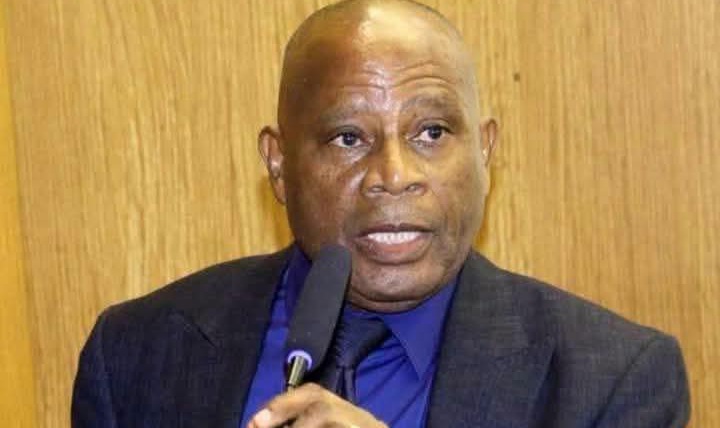
MONROVIA – Senator Augustine Chea has launched a sharp critique of President Joseph Nyuma Boakai’s anti-corruption campaign, questioning whether the government is applying the law evenly or pursuing corruption cases more aggressively when they involve officials associated with the former Coalition for Democratic Change (CDC) administration.
In a commentary titled “The Unequal War on Corruption,” Chea argues that the credibility of Liberia’s anti-corruption campaign is increasingly being tested by the contrasting outcomes of cases involving officials linked to different political camps.
His concerns follow the recent dismissal by Criminal Court “C” of a corruption case involving former Bureau of State-Owned Enterprises Director General Arthur S. Massaquoi and six others.
According to Chea, the court dismissed the case after prosecutors failed to bring the matter to trial within the required statutory period and were unable to provide sufficient justification for the delay.
While the dismissal was without prejudice, meaning the government retains the legal option to re-indict the defendants, Chea contends that the development raises questions about prosecutorial effectiveness and commitment when cases involve individuals associated with the governing Unity Party.
Chea also points to the corruption case involving former Liberia Telecommunications Authority Board Chairman Abdullai Kamara, arguing that the matter similarly encountered procedural and prosecutorial challenges before ultimately ending in an acquittal.
He cautions that the issue is not simply whether individual defendants are guilty or innocent, but whether Liberia’s justice system is demonstrating consistent prosecutorial standards regardless of political affiliation.
Chea contrasts those cases with the prosecution of former Finance Minister Samuel D. Tweah Jr. and others in the US$6.2 million corruption case, which he describes as an example of vigorous enforcement against officials of the former CDC government.
Tweah was acquitted by a jury. However, subsequent allegations of jury misconduct led to further judicial and investigative developments surrounding the verdict.
For Chea, the contrasting experiences raise a fundamental question about the government’s anti-corruption agenda: Is the fight genuinely impartial, or is political affiliation influencing who faces sustained prosecution?
“The test of an anti-corruption campaign is not how aggressively it pursues the opposition. The real test is whether it is willing to prosecute its own,” Chea argues.
He says the Boakai administration must demonstrate that the same prosecutorial determination directed at former CDC officials is also being applied to officials and associates connected to the Unity Party government.
Chea insists that corruption should be treated as a national problem rather than a political weapon.
He argues that no political affiliation should determine “who is pursued, who is protected, or whose case the prosecution/Ministry of Justice allows to die.”
The senator further questions why cases involving former CDC officials appear, in his view, to attract sustained prosecutorial attention, while cases involving individuals linked to the governing establishment have encountered delays, dismissals or acquittals.
He acknowledges that acquittals and dismissals can occur through legitimate judicial processes and do not, by themselves, establish political interference. But he argues that the repeated pattern deserves public scrutiny.
“The corruption fight should not wear party colors; it should be a genuine, impartial fight regardless of political affiliation,” Chea writes.
The senator does not limit his criticism to corruption investigations.
He concludes by alleging that a similar pattern can be seen in the government’s fight against illicit drugs, describing that situation as “more alarming.”