MONROVIA – President Joseph Nyuma Boakai’s proposed US$5.7 billion Master Infrastructure Development Agreement (MIDA) with Bea Mountain Mining Corporation is facing growing opposition from religious leaders, political commentators, civil society organizations and other Liberians, amid mounting questions about its financial terms, the company’s tax obligations, environmental record and treatment of communities affected by its mining operations.
While Liberians desperately need roads, electricity and other basic infrastructure, critics argue that development should not come at the expense of the country’s mineral wealth, public revenues, environmental protection and the rights of citizens living around mining concessions.
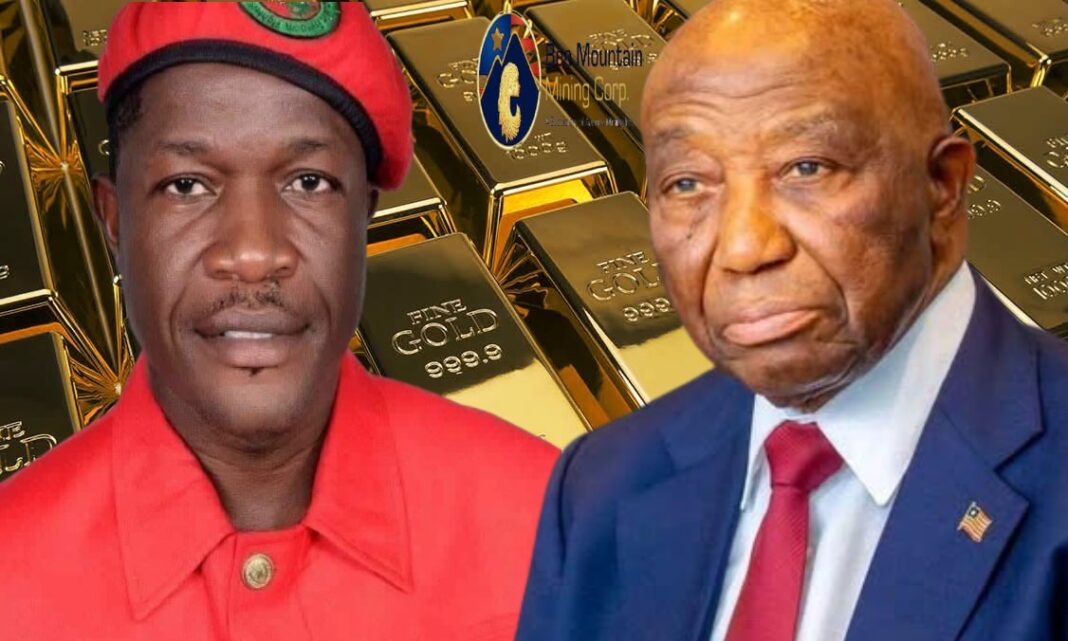
From the Liberia Council of Churches to political commentator Martin Kollie and Economic Freedom Fighters of Liberia leader Emmanuel Gonquoi, the growing message is that the government must reconsider the proposed agreement before committing the country’s future mining revenues to a long-term arrangement.
The controversy is no longer limited to the cost of the proposed infrastructure projects. It has expanded into questions about whether Bea Mountain has fulfilled its existing financial and environmental responsibilities and whether the proposed agreement offers sufficient protection for Liberia.
REEVES CALLS FOR LEGISLATIVE REJECTION
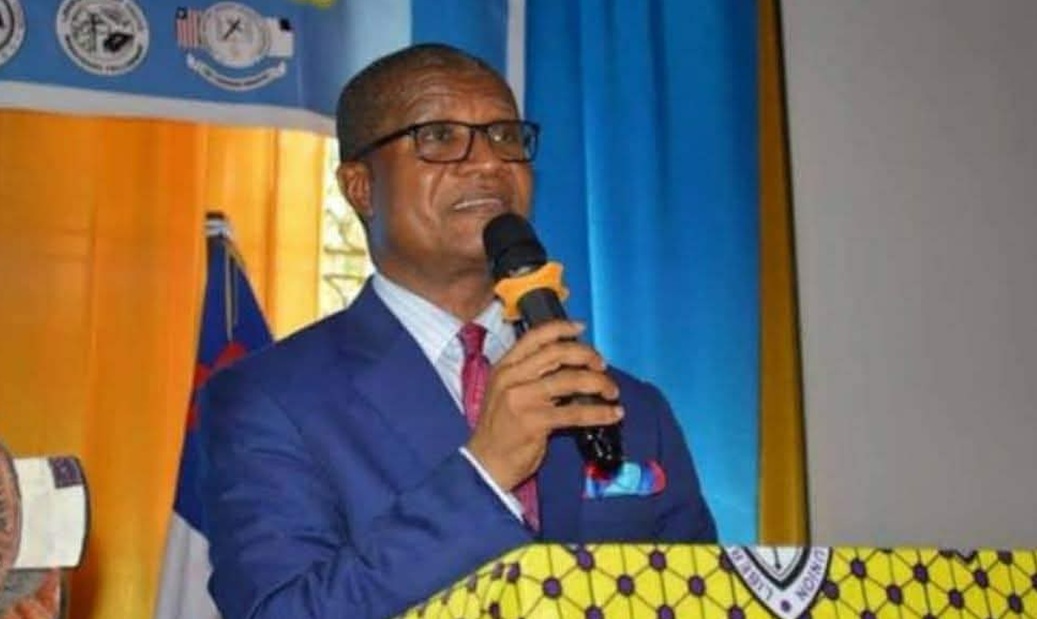
Among the prominent critics is the President of the Liberia Council of Churches, Rev. Dr. Samuel B. Reeves Jr., who has urged lawmakers to withhold ratification of the current draft agreement.
After reviewing the 82-page document, Reeves identified what he described as serious financial and contractual weaknesses that could expose Liberia to substantial long-term obligations.
His concerns include the absence of a clearly defined overall repayment ceiling, the use of future mining-related government revenues to recover infrastructure costs, interest charges, procurement exemptions and inadequate safeguards for public funds.
According to Reeves’ assessment, the eight principal projects carry an estimated base cost of US$4.4513 billion, while additional roads and electricity-grid improvements bring the total to approximately US$5.6813 billion before interest and other possible charges.
He has also raised concern that the draft could allow Bea Mountain to recover project costs through offsets against corporate income taxes, royalties, dividend withholding taxes and dividends due to Liberia from its five-percent stake in the mining operation.
This raises a fundamental question: if public revenues that should support the national budget are used to reimburse the company, how much money will actually reach the Treasury for schools, hospitals, salaries and other essential public services?
Reeves has called on lawmakers to withhold ratification until the identified weaknesses are addressed and adequate financial and contractual protections are established.
KOLLIE: “ABORT IT, MR. PRESIDENT”
Political commentator Martin Kollie has also strongly rejected the proposed arrangement, questioning why Liberia should enter another massive financial commitment with Bea Mountain when questions remain about the company’s previous investment obligations.
Kollie acknowledged that President Boakai may have good intentions to improve electricity and road infrastructure but argued that good intentions should not justify what he considers a harmful agreement.
“Just read the 82-page doc. It’s BAD,” he warned.
In a strongly worded statement, Kollie compared the proposed agreement to “Bea Mountain wrapping feces in a beautiful gift paper and throwing it at us.”
He further questioned the company’s investment history, recalling that Bea Mountain has operated in Liberia since 2001 and that its concession was extended by another 25 years under the previous administration.
Kollie questioned the status of the more than US$500 million investment commitment associated with the previous concession extension and why Liberia should now consider another US$5.7 billion infrastructure arrangement spanning decades.
“It is time for a radical shift across all sectors. Put Liberia First,” he declared, directly appealing to President Boakai to abort the proposed deal.
GONQUOI WARNS AGAINST CORPORATE CONTROL
Another strong voice of opposition has come from Emmanuel C.D. Gonquoi, leader of the Economic Freedom Fighters of Liberia (EFFL), who has called on President Boakai to reject or substantially revise the proposed agreement.
Gonquoi argues that the proposed financing arrangement could give Bea Mountain excessive control over resources intended for national development.
“Bea Mountain can’t give us money as a country and control that same money for projects,” he argued.
He further warned that the arrangement could amount to what he described as “daylight corporate robbery” under the guise of development.
Gonquoi questioned why the government should allow a private mining company to control the financing and implementation of major national infrastructure projects when alternative financing arrangements could be explored.
TAX DISCREPANCIES AND EXEMPTIONS RAISE QUESTIONS
Beyond the proposed infrastructure deal, Bea Mountain’s tax reporting and fiscal obligations have also come under scrutiny, raising questions about whether Liberia is receiving the full financial benefit of its gold resources.
Liberia’s Extractive Industries Transparency Initiative (LEITI), in its FY2023 reconciliation report, identified a US$14.105 million adjustment involving Bea Mountain’s reported “other import duties.”
The report indicated that the amount had been incorrectly reported by the company and that the adjustment was made based on confirmation from the Liberia Revenue Authority.
Although the report does not establish deliberate tax evasion or prove that the entire amount represents unpaid taxes, it documents a significant reporting discrepancy that deserves public explanation.
The same report recorded unreconciled differences involving Bea Mountain, including US$2.663 million in taxes not reported by the company and US$4.070 million in payments not reported by the government agency. The report cautioned that such differences could arise from accounting methods and remained unreconciled.
More questions have emerged over petroleum levies.
In October 2026, Senator Amara M. Konneh, chairman of a special Senate committee reviewing petroleum levies, reported that a preliminary review found Bea Mountain lifted 16.4 million gallons of diesel over nine months without paying the applicable petroleum levies.
Konneh said the preliminary assessment placed the company’s share of the unpaid levies at approximately US$1.8 million, representing 55 percent of the total gap identified in the review.
He said Bea Mountain claimed a duty-free exemption and that the committee would seek the legal basis for that exemption from the Ministry of Finance. The company’s final liability and the legal basis for the exemption require confirmation.
Earlier, River Gee County Senator Francis Dopoh also challenged the road-user charge exemption granted to Bea Mountain, arguing that it could undermine revenue intended for road maintenance and create unequal treatment among mining companies.
Meanwhile, the House of Representatives in April 2026 mandated a joint committee to investigate Bea Mountain’s financial and operational activities. The inquiry includes a review of corporate income tax payments over three fiscal years, verification against Liberia Revenue Authority records and examination of the company’s compliance with its concession agreement.
These separate concerns raise an important question: why should Liberia commit future mining-related revenues to a new multibillion-dollar arrangement without first establishing whether Bea Mountain has fully met its existing tax and financial obligations?
Before any agreement is approved, the government should publish a clear account of the company’s tax payments, exemptions, disputed assessments and outstanding liabilities. Lawmakers must also establish whether the proposed MIDA could further reduce the revenue available to the national budget.
WATER POLLUTION AND ENVIRONMENTAL CONCERNS
The financial controversy is accompanied by serious environmental concerns surrounding Bea Mountain’s New Liberty Gold Mine operations in Grand Cape Mount County.
Investigations by the Associated Press and The Gecko Project, drawing on Environmental Protection Agency records, documented repeated pollution incidents involving chemicals including cyanide, arsenic and copper between 2016 and 2023.
EPA records described incidents in which water sources around the mining operation were affected by chemical releases. In May 2022, a cyanide spill from the mine’s tailings facility was linked to fish deaths in waterways near Jikandor, Marvoe Creek and the Mafa River.
An EPA investigation reportedly found that the company did not promptly notify authorities and affected communities, despite reporting requirements.
In February 2023, another incident involved the release of copper sulphate. Six of nine water samples collected during the investigation reportedly exceeded legal limits for cyanide and copper.
The investigations also reported that EPA inspectors had previously identified problems with wastewater management and access to the company’s laboratory and testing records.
The EPA had recommended penalties following some incidents. The reporting found that only one penalty was imposed, initially assessed at US$99,999 and later reduced to US$25,000.
In response to the investigation, the EPA said corrective measures, including the engagement of an EPA-certified consultant and reinforcement of the tailings dam, had been implemented.
More recently, in 2026, another fish-death incident around Marvoe Creek raised fresh concerns. The EPA traced the contamination to the concession area and laboratory analysis detected cypermethrin. However, the EPA said it had not formally concluded that Bea Mountain itself was responsible for the incident.
Residents have reported fish deaths, damage to livelihoods and concerns about the safety of water sources. Those community reports deserve independent investigation, while claims of illness and specific medical consequences require proper verification.
The environmental record raises a critical question for the government: how can Liberia negotiate another far-reaching arrangement with a mining company without first establishing that existing environmental obligations have been met and that affected communities are adequately protected?
VILLAGERS’ LAND AND HUMAN RIGHTS CONCERNS
Beyond water pollution, residents in communities affected by Bea Mountain’s operations have raised concerns about land rights, compensation, relocation, access to clean water and the protection of their livelihoods.
In July 2025, residents of Ngojah Town in Tewor District, Grand Cape Mount County, petitioned the Supreme Court for a Writ of Prohibition against the Government of Liberia, the Legislature and Bea Mountain.
The petition alleged illegal land seizure, environmental degradation, contamination of rivers and streams, and violations of constitutional property rights. The petitioners sought restrictions on activities including expansion, prospecting, the use of explosives and hazardous chemicals.
These are allegations presented before the Court and should not be treated as final judicial findings.
Residents of Jikandor also raised concerns about the impact of mining operations on their community. A legally binding agreement was reportedly reached in May 2025 for Bea Mountain to relocate and compensate the village following an EPA recommendation. The extent to which that agreement has been fully implemented remains an important issue for public scrutiny.
An investigation by the Associated Press also reported residents’ complaints that blasting damaged their homes, including cracked walls, and that promises of training and opportunities for senior positions had not been adequately fulfilled.
In 2024, protests in Gogoima and Kinjor over mining-related grievances resulted in allegations of police beatings and tear gas. Residents reported deaths, while police denied excessive force. Those allegations require independent investigation and should not be treated as established findings.
These concerns point to a larger issue: development agreements must protect the rights of people whose land, water and livelihoods are directly affected by mining operations.
A multibillion-dollar infrastructure programme cannot be considered successful if communities living around the mines continue to raise unresolved complaints about land, compensation, pollution and access to basic necessities.
CIVIL SOCIETY DEMANDS MINING REFORM
The opposition also comes against the backdrop of concerns raised by a coalition of eight civil society organizations under the CSO Consortium on Minerals, Mining, and Inclusive Sustainable Development.
In October 2026, the coalition called on President Boakai and the Legislature to suspend the allocation and ratification of new mineral development agreements until Liberia reforms and modernizes its mining laws.
The organizations warned that continuing to negotiate long-term mining agreements under the existing legal framework could perpetuate problems involving transparency, accountability, environmental protection and the distribution of benefits to mining communities.
Although that intervention was a general call concerning mining agreements, its concerns have become relevant to the current national debate over the proposed Bea Mountain arrangement.
GOVERNMENT’S DEVELOPMENT PROMISES UNDER SCRUTINY
The Boakai administration has defended the proposed MIDA as a major development initiative designed to address Liberia’s longstanding infrastructure challenges.
According to the government’s presentation, the proposed agreement includes four power plants with a combined generating capacity of 270 megawatts, three reservoirs, major transmission lines, national grid improvements and a 146-kilometer flagship highway.
It also proposes additional funding for road networks across the country.
The government says the arrangement will be financed through additional mining-related revenues generated by higher international gold prices, while Bea Mountain will continue making its regular contributions to the Consolidated Account.
The administration argues that the agreement could reduce reliance on conventional public borrowing while accelerating electricity generation, road construction, employment and industrial development.
But critics say the infrastructure promises cannot be separated from the financial arrangements through which the projects will be delivered.
They want the government to explain the actual cost of the projects, the interest and repayment structure, safeguards against cost overruns, procurement arrangements and the amount of public revenue that could be diverted over the life of the agreement.
They also want the government to explain how it can confidently commit future mining-related revenues when questions remain about tax reporting, exemptions, environmental compliance and the company’s existing obligations to affected communities.
LEGISLATURE FACES A MAJOR TEST
With the formal signing scheduled for November 25, the Legislature is expected to become the next major institution at the center of the controversy.
The growing criticism places responsibility on lawmakers to independently examine the complete agreement rather than simply endorse the government’s development ambitions.
The central question confronting Liberia is not whether the country needs electricity and roads. It clearly does.
The real question is whether the proposed financial and contractual arrangements offer sufficient protection for national revenue, public accountability, the environment and future generations.
For a country rich in natural resources but still struggling with poor roads, limited electricity, unemployment and inadequate public services, the stakes are considerable.
The growing chorus of opposition suggests that the government will face serious demands for transparency and accountability before the proposal can receive legislative approval.
President Boakai may be pursuing an ambitious infrastructure agenda, but development promises alone are not enough to secure public confidence.
Before Liberia commits its mineral wealth to a multibillion-dollar infrastructure arrangement, the government must demonstrate that the agreement protects the Liberian people, that existing tax and concession obligations have been fully accounted for, that environmental concerns and villagers’ rights are addressed, and that the benefits will reach the communities whose resources are being extracted.