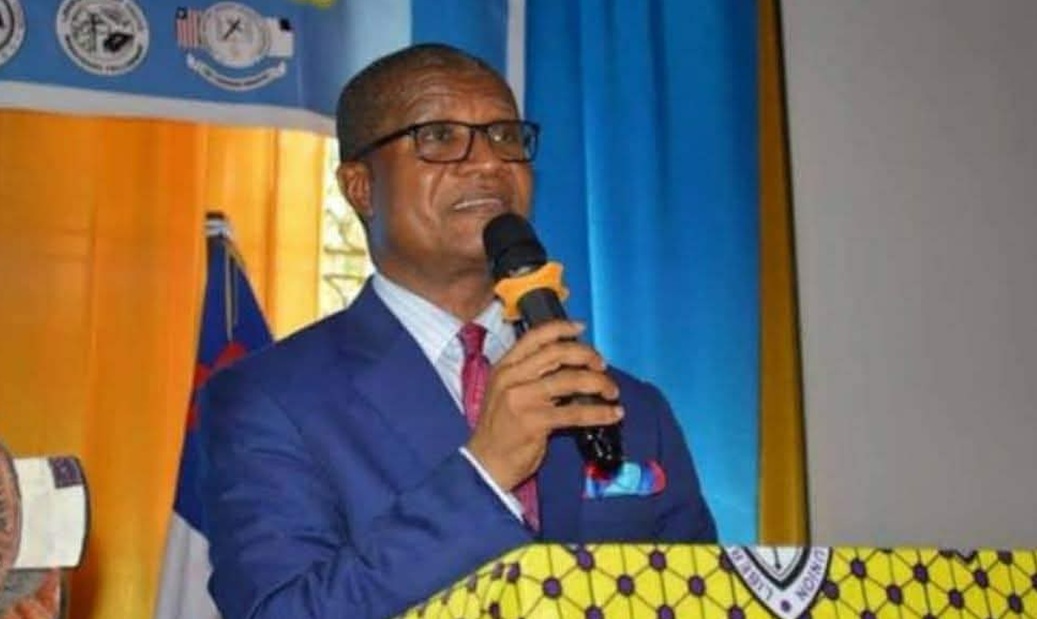
MONROVIA — The Government of Liberia’s proposed US$5.7 billion Master Infrastructure Development Agreement with Bea Mountain Mining Corporation is facing growing scrutiny, following a warning from the President of the Liberia Council of Churches, Rev. Dr. Samuel B. Reeves Jr., who is urging the Legislature to withhold ratification until major financial, legal and accountability concerns are addressed.
The agreement, announced by the government, is intended to expand Liberia’s electricity generation capacity by 270 megawatts, improve the national electricity grid and finance major road construction projects across the country.
While the government presents the arrangement as a major infrastructure development initiative, Rev. Reeves is questioning the financial structure and safeguards protecting the country’s long-term economic interests.
In his assessment of the proposed agreement, the Church leader warns that Liberia could expose billions of dollars in future public revenue to financial obligations without adequate protections against excessive costs, weak oversight and project nonperformance.
His concerns place the proposed agreement at the center of an important national debate: whether the infrastructure benefits being promised justify the financial commitments Liberia may be required to make over several years.
Reeves Questions Financial Structure, Procurement Rules and Protection of Public Revenue
Rev. Reeves argues that the proposed financing arrangement could allow Bea Mountain to recover infrastructure costs through deductions from future mining-related government revenue, with interest.
According to his examination of the draft agreement, the arrangement would involve a revolving US$500 million financing facility. As the company recovers eligible costs through revenue offsets, the facility would be replenished.
However, he estimates that the eight principal projects have a base cost of approximately US$4.4513 billion, with another US$1.23 billion allocated for additional roads and grid improvements. This brings the projected programme to approximately US$5.6813 billion, before interest, indexation and possible cost overruns. FrontPageAfrica
One of his principal concerns is that the draft does not establish a comprehensive ceiling on the total amount Liberia could ultimately pay.
He also warns that the proposed arrangement could allow Bea Mountain to offset certain corporate income taxes, royalties, withholding taxes, dividends and other government revenue against infrastructure costs.
If implemented as described, this could reduce the actual cash available to the national treasury for other public services, including healthcare, education and other development priorities.
The critical question is whether Liberia is exchanging future public revenue for infrastructure at a cost that has been independently verified and competitively established.
Procurement Concerns: Why Should the Financier Also Control Construction?
Another major concern involves the proposed construction arrangements.
Rev. Reeves questions provisions in the draft that reportedly designate MAPA as the exclusive initial contractor and exempt the contractor and associated engineering, procurement and construction contracts from Liberia’s ordinary public procurement and concessions requirements.
This raises an important question about the separation of financing and project execution.
If Bea Mountain is providing financing through the proposed arrangement, why should Liberia not independently select qualified construction companies through transparent international competitive bidding?
Who determines the cost of each project? Who verifies contractors’ invoices? Who ensures that the government receives value for money?
These questions become particularly important when billions of dollars in future public revenue could be committed to repaying the infrastructure costs.
Rev. Reeves also raises concerns about the General Auditing Commission’s ability to examine the actual costs incurred by Bea Mountain and its contractor.
He argues that Liberia needs stronger independent auditing and verification mechanisms before committing public revenue to the arrangement. FrontPageAfrica
Concerns Over Project Delivery and Community Protection
Beyond the financing arrangements, the Church leader is questioning whether the proposed agreement contains sufficient guarantees to ensure that the infrastructure will actually be completed and deliver the promised benefits.
His analysis identifies concerns about project completion deadlines, contractor liability, performance guarantees and provisions under which infrastructure could be deemed accepted if government authorities fail to object within specified periods.
He also warns that the construction of major reservoirs and hydropower facilities could affect communities, landowners and livelihoods.
Accordingly, he is calling for stronger provisions on resettlement, compensation and community participation.
On employment, he wants binding commitments that guarantee Liberians meaningful access to construction jobs, technical training and business opportunities arising from the multibillion-dollar programme.
He maintains that infrastructure development must benefit ordinary citizens rather than simply create business opportunities for contractors and investors. FrontPageAfrica
Government Defends the Agreement as a Major Development Initiative
Meanwhile, the Boakai administration is presenting the proposed agreement as a major effort to address Liberia’s longstanding infrastructure challenges.
According to the Ministry of Information, the arrangement will direct additional mining-related revenue toward infrastructure development, while Bea Mountain continues making its regular contributions to the government’s Consolidated Account.
The government says the programme will be implemented over five years, with the biomass power plant and transmission lines targeted for completion within two years.
It also argues that the financing approach is intended to reduce pressure on Liberia’s public debt while expanding electricity generation, improving transportation and creating employment opportunities.
The formal signing is scheduled for November 25, 2026, after which the agreement is expected to be submitted to the Legislature for consideration. The Ministry of Information
However, the government’s development objectives do not eliminate the need for independent examination of the agreement’s financial and legal provisions.
Legislature Faces Critical Decision
With the proposed agreement heading toward legislative consideration, lawmakers will face the responsibility of determining whether the financial structure adequately protects Liberia’s long-term interests.
The concerns raised by Rev. Reeves are particularly significant because the draft reportedly leaves important financial and technical documents unavailable for independent assessment, including detailed payment milestones and technical specifications.
Until these documents are disclosed, it will be difficult for legislators and the public to independently establish whether the proposed construction costs are reasonable and whether the repayment arrangements offer sufficient protection.
The Legislature must therefore examine the complete agreement, including its annexes, contractor arrangements, financing terms and revenue-offset provisions.
Bea Mountain and the government should also publicly respond to the specific concerns raised by the Liberia Council of Churches.
For Liberia, the central issue is not simply whether 270 megawatts of electricity and hundreds of miles of roads are needed. It is whether the country can secure those benefits without exposing future generations to poorly defined financial obligations.
A US$5.7 billion development programme deserves more than a signing ceremony and promises of transformation. It requires transparency, independent cost verification, enforceable performance guarantees and clear evidence that the Liberian people will receive value for the public revenue committed.