By Socrates Smythe Saywon | Smart News Liberia
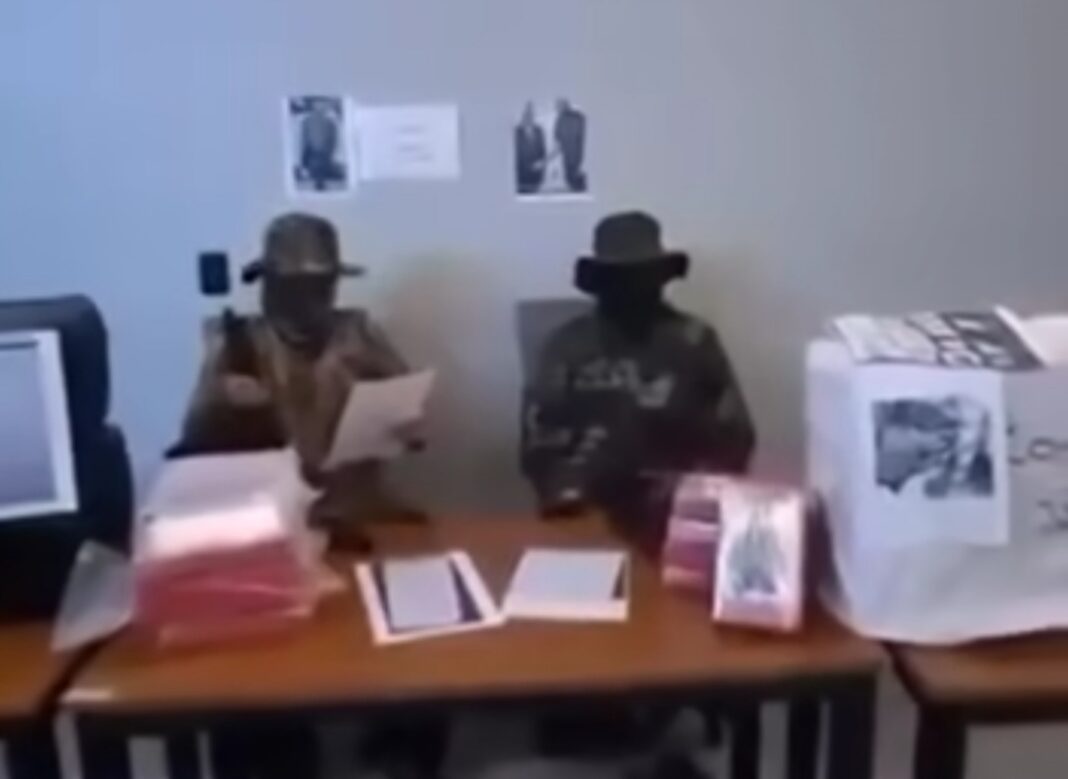
MONROVIA – A viral video purportedly released by an alleged transnational drug cartel has ignited widespread public debate and heightened national security concerns in Liberia after accusing President Joseph Nyuma Boakai, members of the First Family, and the Unity Party-led government of accepting millions of dollars in bribes to allow the country to serve as a transit point for international drug trafficking.
The video, which has spread rapidly across social media, also allegedly demands the release of cocaine reportedly valued at nearly US$1 billion and issues what appears to be a direct threat against Liberia’s sovereignty if its demands are not met. While the allegations remain unverified, the video’s circulation has intensified public scrutiny of Liberia’s ongoing anti-drug campaign and prompted calls for a thorough investigation into both its authenticity and the claims it contains.
Responding to the growing controversy, the Ministry of Justice issued a statement dismissing the allegations as “false and malicious” and reaffirming the government’s commitment to pursuing the ongoing transnational narcotics investigation without political interference.
The Ministry said it found it necessary to address what it described as misinformation because of heightened public interest surrounding the investigation.
According to the Ministry, an internal investigation was immediately launched after allegations surfaced that money had allegedly been offered in an attempt to influence the release of individuals in police custody.
The investigation established that a Liberia National Police officer received and retained money from an individual without reporting the matter to his superiors or to members of the Joint National Security Investigative Task Force.
However, authorities said investigators found no evidence that Liberia National Police Inspector General Gregory Coleman received the money, authorized the transaction, directed it, or had prior knowledge of it.
The Ministry therefore dismissed allegations implicating the Inspector General as baseless.
As part of disciplinary measures, the implicated officer has been removed from the Joint National Security Investigative Task Force, relieved of his duties, and is now facing disciplinary and possible criminal proceedings under Liberian law.
The government reiterated its policy of zero tolerance for corruption, insisting that no individual, regardless of position, nationality, political affiliation, or influence, will be shielded from accountability where credible evidence establishes criminal responsibility.
The Ministry further emphasized that the broader narcotics investigation will continue independently and professionally while urging Liberians to refrain from circulating unverified information capable of undermining due process and public confidence in the justice system.
The government’s response has generated mixed reactions across social media, where Liberians continue to debate the video’s authenticity and its possible motive.
Former Liberia Drug Enforcement Agency Deputy Director General for Operations Hassan Fadiga argued that attention should focus not only on what was said in the video but also on why it was produced and who stands to benefit from its circulation.
According to Fadiga, although the video may not appear to be AI-generated, its messaging bears characteristics of what he described as a carefully orchestrated propaganda effort.
He suggested that repeated references to the President’s son and the deliberate display of photographs of President Boakai and another individual appeared intended to shape public opinion rather than present verified evidence.
Fadiga further argued that individuals affected by the government’s intensified crackdown on suspected drug trafficking networks could be attempting to redirect public attention by linking the President’s family to the investigation.
Drawing on his experience at the Liberia Drug Enforcement Agency, he said he was unaware of any verified evidence connecting any of President Boakai’s children to drug trafficking and cautioned against treating unverified allegations as established facts.
Former Finance and Development Planning Minister Samuel D. Tweah Jr. also weighed in, urging President Boakai to treat the matter as a serious national security issue.
In a public statement, Tweah said information technology experts had reportedly concluded that the circulating video was not AI-generated, although he did not identify the experts or provide supporting evidence.
He urged the government to authenticate the video because of the threats allegedly directed at Liberia and noted that the recording reportedly gave authorities 24 hours to release Colombian nationals currently in government custody.
Tweah described the alleged ultimatum as dangerous and advised the President to thoroughly investigate the video’s origin.
While expressing hope that the claims would ultimately prove false, he stressed that the government has a constitutional obligation to protect Liberia against external threats and reassure citizens through a transparent investigation.
The controversy has once again placed Liberia’s anti-drug campaign under intense public scrutiny following several major narcotics seizures and arrests involving international suspects in recent months.
Although the Ministry of Justice has categorically rejected allegations against the Inspector General and defended the integrity of the Joint National Security Investigative Task Force, questions surrounding the origin, authenticity, and intent of the viral video remain unanswered.