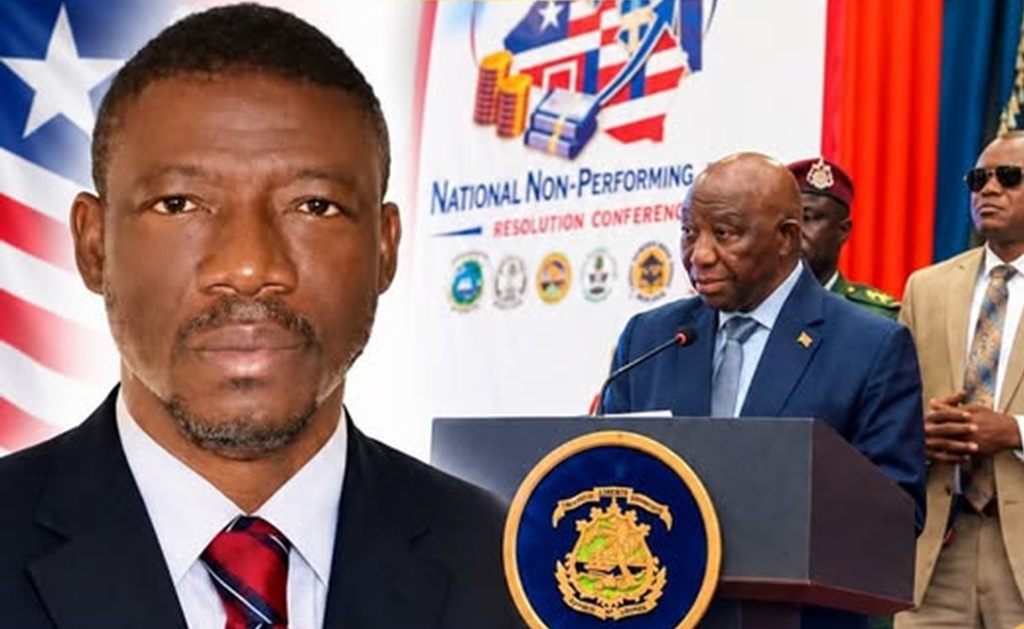
MONROVIA, LIBERIA — Former Education Minister George K. Werner has challenged Acting Solicitor General Cllr. Abraham Boimah Sillah to apply the same standards of scrutiny he demanded from prosecutors in the 2022 Alexander B. Cummings case to the indictment involving former Vice President Jewel Howard-Taylor and other defendants.
In a critical commentary, Werner recalled Sillah’s role as defense counsel for opposition leader Alexander B. Cummings during the criminal proceedings concerning the Collaborating Political Parties’ framework document, arguing that the principles of accuracy, completeness, and evidentiary fairness should remain consistent regardless of who is prosecuting or defending a case.
Sillah, now serving as Acting Solicitor General under President Joseph Nyuma Boakai, recently defended the government’s position on the current prosecution, assuring the public that evidence would be presented against each defendant and that the charges were not politically motivated.
Werner said the assurance deserved consideration but argued that public confidence also depended on the accuracy and clarity of the indictment itself.
“You have changed sides of the courtroom. Carry the standard with you,” Werner urged Sillah, calling on the government’s legal leadership to examine and address inconsistencies identified in the charging document.
Werner Recalls Cummings Proceedings
Werner pointed to the 2022 proceedings against Cummings, in which Sillah led the defense and challenged the prosecution’s handling of WhatsApp conversations presented as evidence.
According to a March 30, 2022, report by FrontPageAfrica, prosecutors acknowledged that pages had been omitted from the WhatsApp material, describing the omission as inadvertent before submitting the missing pages to the court.
Werner acknowledged the distinction between the defense’s allegations and the prosecution’s explanation, noting that the reported omission did not, by itself, establish deliberate misconduct.
Nevertheless, he argued that the episode illustrated why prosecutors must ensure that evidence is presented accurately and in context.
He maintained that words extracted from a larger conversation can lose their intended meaning when surrounding passages are omitted, making completeness and proper interpretation essential to a fair trial.
Werner said Sillah, who once demanded answers from the prosecution on behalf of an accused person, should now demonstrate the same commitment to scrutiny in his government position.
Questions Surrounding the New Indictment
Werner also addressed Sillah’s explanation that the current document is an indictment rather than a re-indictment.
According to Sillah’s explanation, earlier proceedings involving some of the suspects, including Howard-Taylor, involved police charges before a magistrate, and the indictment superseded the earlier charge sheet.
Werner said that distinction should be respected, emphasizing that criticism of the government’s handling of a case must itself be accurate.
However, he argued that explaining the procedural status of a charging document does not resolve questions about the clarity and consistency of its contents.
In his separate examination of a copy of the indictment made available to him, Werner said he identified inconsistencies and ambiguities requiring clarification. He acknowledged that he had not independently compared the copy with a certified court document.
He also cautioned that his observations concerned the document’s written account and did not establish that the alleged events never occurred.
The significance of any discrepancy, he argued, must be assessed against the evidence and applicable legal procedures.
Calls for Accountability Under New Justice Leadership
Werner noted that Sillah’s appointment as Acting Solicitor General took effect on September 11, 2026, while reporting placed the resulting arrest writ on October 7.
He argued that the Ministry of Justice’s leadership bears institutional responsibility for ensuring that allegations advanced in its name are carefully reviewed, even when individual officials did not personally draft every paragraph.
According to Werner, the appropriate response to legitimate questions is not to dismiss them but to examine the document, explain ambiguities, and seek corrections through the proper legal process where necessary.
He stressed, however, that identifying an inconsistency does not automatically invalidate an indictment, as clerical errors, ambiguities, and substantive contradictions can have different legal consequences.
The government has maintained that it will present evidence against the defendants at the appropriate stage of the proceedings. The absence of detailed evidence during a public briefing does not, by itself, establish that prosecutors lack evidence.
The allegations must ultimately be tested through the judicial process, with each defendant entitled to a fair hearing.
Due Process and Public Confidence
Werner argued that Liberia’s efforts to combat drug trafficking and other serious crimes should not come at the expense of procedural fairness.
He said the public has a legitimate interest in effective prosecution, while defendants are entitled to clear allegations, reliable evidence, and due process.
He also called on President Boakai’s administration to allow prosecutors to follow the evidence, correct mistakes, and reconsider allegations that cannot be sustained.
Werner’s central argument is that the principles demanded of prosecutors in one case should not be abandoned when political circumstances change.
He recalled that Sillah once represented an accused person and challenged the government to account for its evidence. Now serving within the government’s legal establishment, Sillah faces a different responsibility: ensuring that prosecutions advanced under his leadership meet the same standards of accuracy and fairness.
“Cllr. Sillah, remember what you asked of the state in the Alexander Benedict Cummings case,” Werner urged.
He called on the Acting Solicitor General to examine the indictment, reconcile its inconsistencies, pursue necessary corrections through lawful procedures, and prove the allegations against each defendant.
For Werner, the issue is not whether the government should prosecute suspected criminal conduct, but whether it can do so with documents and evidence capable of withstanding judicial scrutiny.
As the proceedings continue, the ultimate determination of the allegations rests with the courts, not political statements or public commentary.