
By Our Reporter | Smart News Liberia
MONROVIA – The national debate surrounding the acquittal of former Finance Minister Samuel D. Tweah in the high-profile economic sabotage trial continues to intensify, with growing legal and political arguments emerging over whether the government can challenge the jury’s verdict before the Supreme Court of Liberia. Tweah was acquitted on Friday, May 8, 2026, by Criminal Court “C,” a decision that has sharply divided public opinion across the country.
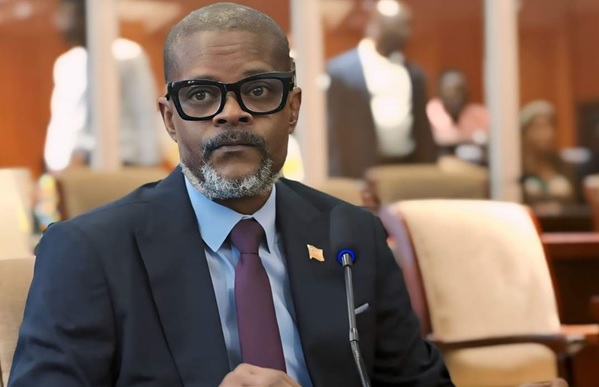
While some critics of the former minister have urged the Executive Branch under President Joseph Nyuma Boakai to pursue further legal action, Sinoe County Senator Augustine Chea has strongly argued that the acquittal is legally final and protected under Liberia’s double jeopardy laws. In a detailed legal commentary released days after the verdict, Senator Chea insisted that attempts to reopen the case against Tweah are “fundamentally mistaken.”
Chea explained that many public discussions suggesting that appeals filed by convicted co-defendants could somehow invalidate Tweah’s acquittal do not reflect established criminal appellate principles. According to him, appellate courts generally review only the judgments properly brought before them on appeal, meaning Tweah’s acquittal remains outside the scope of any future proceedings involving other defendants.
“The proposition advanced in certain legal commentaries that an appeal by the convicted defendants could automatically disturb or nullify former Finance Minister Samuel Tweah’s acquittal does not accurately reflect ordinary principles of criminal appellate procedure,” Chea wrote. He stressed that a jury acquittal, once legally rendered, is ordinarily final and shielded by constitutional protections against double jeopardy.
The senator further emphasized that the Supreme Court may choose to affirm, reverse, modify, or vacate convictions involving the appealing defendants, but such actions would not ordinarily reopen the acquittal of a co-defendant who has already been found not guilty. Chea maintained that Tweah’s case satisfies all the legal conditions necessary for finality, including trial before a properly constituted jury, attachment of jeopardy, and the formal return of a not guilty verdict.
Citing Section 3.2 of Liberia’s Criminal Procedure Law, Chea argued that the law expressly bars retrial following an acquittal. He referenced past Supreme Court opinions, including Koffa v. Republic and U.S. Trading Co. v. Johnson-Morris, which reinforced the constitutional doctrine of double jeopardy in Liberia. “Once the jury acquitted Tweah, double jeopardy precludes any retrial or appeal by the prosecution. It’s a done deal,” Chea asserted.
The Sinoe County lawmaker also defended the broader principle behind the doctrine, warning that allowing prosecutors to repeatedly challenge acquittals would undermine the integrity of the justice system. He argued that if prosecutors were permitted to appeal acquittals and seek new trials, defendants would effectively face repeated prosecution for the same allegations, something Liberia’s Constitution seeks to prevent. “Prosecution is not meant to convict but to ensure that justice is done,” he declared.
Beyond Tweah’s acquittal, Senator Chea also addressed the conviction of former National Security Advisor Jefferson Kanmoh for criminal facilitation. Chea argued that prosecutors failed to establish beyond reasonable doubt that Kanmoh knowingly and intentionally assisted in any unlawful diversion or criminal conversion of the alleged US$6.2 million tied to emergency electoral security funding.
According to Chea, the prosecution relied heavily on circumstantial claims, including allegations that Kanmoh assigned a security code to the Financial Intelligence Agency and informed co-defendants about the availability of emergency security funds. However, he contended that these actions merely reflected administrative coordination within government and did not amount to criminal conduct. He maintained that criminal facilitation under Liberian law requires proof that the accused knowingly aided the commission of a felony with criminal intent.
Chea additionally criticized what he described as insufficient and speculative evidence presented during the trial. Referencing several Supreme Court precedents, including Hans Caperhat Williams v. Republic of Liberia, Nyazee Barway v. Republic of Liberia, and Jappa v. Republic of Liberia, the senator argued that criminal convictions cannot legally rest upon conjecture, association, or uncorroborated testimony. He concluded that Kanmoh possesses “a compelling and well-founded appeal” and suggested that the lower court itself could vacate the verdict if it determines that the evidence failed to meet the constitutional standard of proof beyond reasonable doubt guaranteed under Article 21(h) of the Liberian Constitution.