September 19, 2003, marked a significant turning point in Liberia’s history. It was the day the international community made a crucial commitment to a nation that had suffered through over a decade of conflict.
On this day, the United Nations Security Council reached a unanimous decision, recognizing that Liberia’s fragile peace could no longer be left to the whims of its armed factions.
There are moments in a nation’s history when its future hangs in the balance, teetering between hope and despair. For Liberia, September 19, 2003, was one such moment.
Howbeit, within the United Nations Security Council chamber in New York, representatives from the world’s powerful nations made a choice that would significantly shape Liberia’s post-war future.
They passed Resolution 1509, which established the United Nations Mission in Liberia (UNMIL), allowing for the deployment of up to 15,000 military personnel, 1,115 civilian police officers, and additional civilian support.
The resolution was adopted unanimously. The world had chosen to engage with Liberia—not through mere words or diplomatic gestures, but through the presence of soldiers, police, humanitarian workers, and the substantial backing of the United Nations.
The mission aimed to uphold the ceasefire and peace process, safeguard civilians and UN personnel, facilitate humanitarian aid and human rights support, and assist in reforming Liberia’s security institutions. Additionally, it was charged with aiding in the training of a new national police force and the restructuring of the country’s military. This was the promise that emerged from September 19.
To grasp the significance of that day, one must reflect on the Liberia that the world was stepping into—a nation weary from the ravages of war.
In 2003, Liberia was not just a nation grappling with political strife; it was a nation rising from the ashes of destruction.
The two civil wars that ravaged Liberia for over 14 years resulted in nearly 250,000 deaths, as reported by UN peacekeeping records, with the majority of casualties being civilians.
The conflict devastated institutions, displaced countless individuals, and left the country’s security framework in tatters.
By the summer of 2003, the situation had reached a critical point. Monrovia had turned into a war zone, with civilians caught in the crossfire.
Humanitarian workers faced immense challenges in reaching those in need. The state was buckling under the immense pressure of ongoing warfare.
The international community could no longer ignore that Liberia’s crisis was not just an internal issue. In fact, the UN Security Council had already recognized in August 2003 that the conflict posed a threat to international peace and security, as well as to stability in West Africa.
On August 1, they authorized a multinational force to support the ceasefire and lay the groundwork for a more enduring UN stabilization mission.
Then, a significant political shift occurred. Charles Taylor stepped down from the presidency on August 11, 2003. His exit, along with the peace agreement reached in Accra, created a fragile opportunity for Liberia to break free from its cycle of violence.
But a peace agreement on paper was not sufficient for Liberia; the country needed support to maintain peace on the ground. That support came in the form of UNMIL.
The resolution passed on September 19 called for the transfer of authority from the ECOWAS-led ECOMIL force to UNMIL starting October 1.
However, the United Nations did not arrive in Liberia unaware of the previous turmoil. West Africa had already taken action. ECOWAS had sent troops during Liberia’s crisis, and the Security Council praised the regional organization for its swift and professional response. Thus, the international peace effort was a collaborative endeavor: Liberians striving for peace, West Africans stepping in to halt the violence, and the United Nations gearing up to take on a more significant stabilization role.
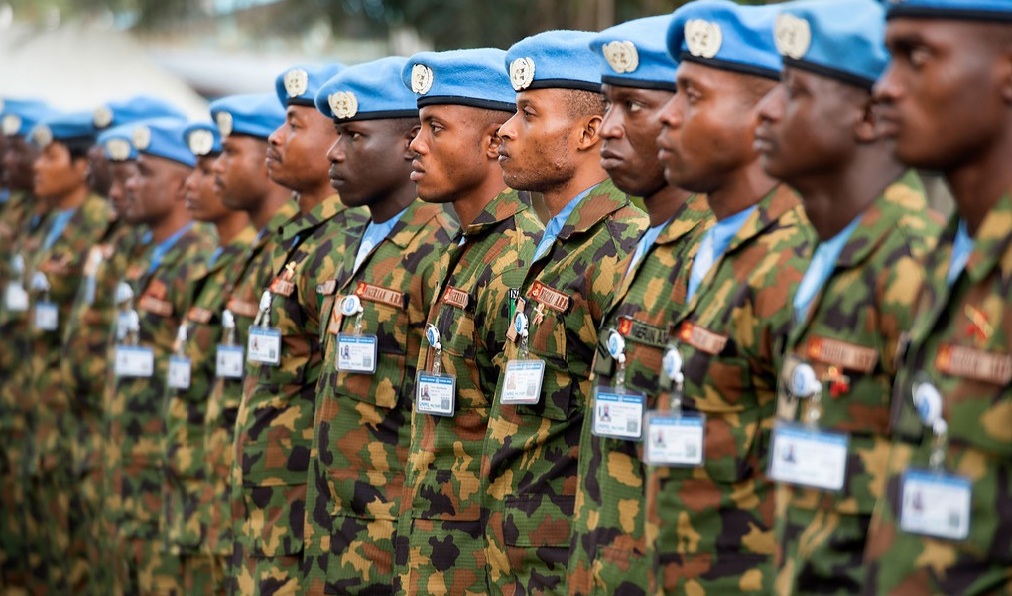
On October 1, the transition was made official. Around 3,500 West African troops from ECOMIL were re-designated as UN peacekeepers, becoming part of the new UNMIL operation.
The blue helmets had arrived, marking the beginning of a new chapter for Liberia. The disarmament of combatants was crucial.
One of the biggest challenges was addressing the needs of those who had fought for years. Lasting peace was impossible if thousands of former fighters remained armed, organized, and without jobs.
Consequently, UNMIL took a proactive role in disarmament, demobilization, and reintegration efforts.
The statistics reveal a significant narrative. Throughout its mission, UNMIL successfully disarmed and demobilized over 100,000 former combatants, while also collecting more than 20,000 weapons and upwards of five million rounds of ammunition. This was not merely a bureaucratic task; each weapon surrendered meant one less tool that could reignite Liberia’s conflict.
Every ex-combatant who traded a gun for the chance at a civilian life symbolized another step forward for the nation.
UNMIL also played a crucial role in facilitating three presidential and legislative elections in Liberia—in 2005, 2011, and 2017. The 2005 election was particularly momentous, as Liberians cast their votes and elected Ellen Johnson-Sirleaf, Africa’s first elected woman president.
Once recognized globally for its warlords, child soldiers, and refugee camps, Liberia was starting to reshape its identity as a nation capable of peaceful political transitions through elections.
However, it’s important to acknowledge that the peace achieved belonged to the Liberians as well. It would be misleading to frame the narrative as if the United Nations single-handedly rescued Liberia.
While the international community offered remarkable support, it was the Liberians who made peace a reality. Women in Liberia marched for change, religious leaders called for an end to violence, civil society advocated for peace, political figures engaged in negotiations, and communities welcomed back returning fighters. Families worked tirelessly to rebuild their lives from the ground up. Ordinary Liberians consistently showed a crucial truth often overlooked in discussions about the civil wars: those who endured the most suffering were also the ones who yearned for peace the most.
UNMIL had the capability to deploy soldiers, patrol roads, monitor ceasefires, and assist in institutional reforms. However, it could not create Liberia’s yearning for peace; that was a responsibility that rested solely with the Liberian people.
The significance of September 19, 2003, may not lie in the events of that day but rather in what transpired years later, particularly when the peacekeepers finally departed.
On June 30, 2016, UNMIL successfully transferred primary security responsibilities to the Liberian authorities. Then, on March 30, 2018, after nearly 15 years of service, UNMIL officially concluded its mandate.
The mission began at a time when Liberia’s security institutions were in ruins due to war, and it ultimately left the responsibility for security in the hands of the Liberians. This transition was the true measure of success.
Could Liberia maintain peace without the presence of peacekeepers? The answer will never be flawless. Peace is not about achieving perfection. However, Liberia has made significant progress since the days of 2003.
That’s why September 19 should not just be seen as the anniversary of a UN resolution; it should serve as both a warning and a promise.
The warning is clear: peace should never be taken for granted. The promise lies in the fact that nations can emerge from even the darkest chapters of their history when their citizens, neighboring countries, and the global community are willing to invest in peace.
Yet, there is another crucial lesson—perhaps the most vital one. While peacekeepers can assist a nation in achieving peace, it is ultimately the responsibility of its people to sustain it.
The United Nations eventually withdrew its personnel and equipment. Foreign troops returned home, and the international mission concluded.
But Liberia remained, along with the responsibility. The duty to resolve political conflicts without resorting to violence. The duty to honor elections. The duty to enhance the judicial system. The duty to reform security institutions. The duty to provide young people with hope that their future can be built in Liberia, rather than through violence or emigration.
The responsibility to ensure that the atrocities of the past remain just that—history. This is why September 19, 2003, holds a significant place in Liberia’s national memory.
It marked the day when the world responded to Liberia’s desperate plea for assistance. It was a moment when the international community acknowledged that Liberia’s pain was important—not just to its citizens, but to West Africa and the global community as a whole.
This day also initiated a mission that would disarm over 100,000 fighters, facilitate elections, rebuild security institutions, and guide Liberia through one of the most remarkable post-war transformations in Africa.
But perhaps the most fitting tribute to that historic day is not by celebrating the presence of foreign troops, but rather by celebrating their withdrawal. Because the true measure of success for a peacekeeping mission is not the prolonged presence of peacekeepers, but the day they are no longer needed.
September 19, 2003, was the day the world stepped in to maintain peace in Liberia. Nevertheless, the enduring challenge for Liberia is to ensure that the peace, which the world helped safeguard, is never again jeopardized by its own people.