
MONROVIA – Cllr. Moriah Yeakula of the opposition Alternative National Congress has struck a nerve with a sharp and sarcastic critique that mirrors the daily frustrations of ordinary Liberians. Writing on Thursday, February 5, 2026, she questioned the Unity Party government’s narrative of progress under President Joseph Nyuma Boakai, exposing a widening gap between official claims and lived reality.
At the core of Yeakula’s message is a simple but damning observation. Government announcements no longer align with what people experience in the markets, on the roads, and in their homes. Rice is publicly announced at thirteen United States dollars, yet sold for fourteen dollars fifty. Fuel prices are reduced on paper, but transport fares stubbornly remain the same. These contradictions reveal weak enforcement and a government that struggles to translate policy into impact.
Economic confusion has become routine. Liberians are told the economy is improving, yet hunger is visibly rising. Markets are crowded, but sellers complain of few buyers. This is not growth. It is stagnation disguised as activity, where movement exists without purchasing power and survival replaces progress.
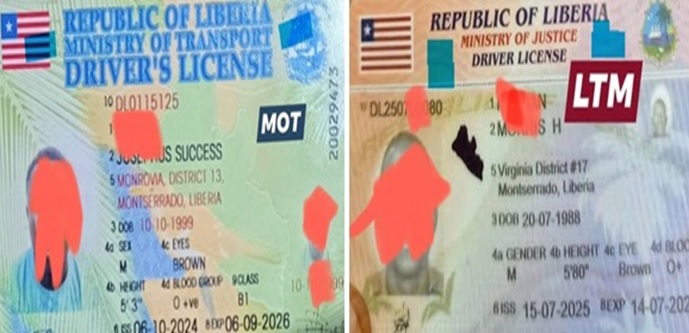
Governance failures deepen the sense of disorder. One entity is awarded a contract, yet two different institutions issue driver’s licenses. Agencies that were supposedly harmonized are suddenly reversed. These are not clerical errors. They are symptoms of an administration unable to coordinate itself or enforce clarity across public institutions.
Security and state authority also appear conflicted. The Armed Forces of Liberia are constitutionally tasked with protecting the state, yet citizens complain of displacement and intimidation. When state protection feels like coercion, confidence in national institutions begins to crumble.
The government’s yellow machines, once paraded as symbols of infrastructure revival, have become metaphors for empty spectacle. They arrived with fanfare, were displayed for public consumption, and quietly returned to sender. Development cannot be built on optics alone. Roads, farms, and livelihoods require sustained execution, not staged performances.
Agricultural policy further exposes the contradiction. Farm-to-market roads are celebrated, yet most produce still enters Liberia through Guinea Road. This reality undercuts official claims of agricultural revival and exposes how little domestic production has actually improved.
Currency and energy stability tell the same story. Officials speak of a strengthening Liberian dollar, yet the exchange rate hovers around one hundred eighty-six to the United States dollar. Electricity is described as stable, but load-shedding continues at the Liberia Electricity Corporation, choking businesses and households alike.
Yeakula’s tone may be humorous, but her critique is serious. Her closing remark about returning to family law underscores a deeper frustration. Professionals, citizens, and institutions are left to fend for themselves while government messaging drifts further from reality.
Under President Joseph Nyuma Boakai and the Unity Party, Liberia is not suffering from a lack of promises. It is suffering from a surplus of contradictions. Until governance delivers consistency, enforcement, and tangible relief, Yeakula’s line will continue to echo across the country, as rescue is being confused with progress.