By Socrates Smythe Saywon | Smart News Liberia
MONROVIA – Amara Konneh, Senator of Gbarpolu County, has publicly alleged that he is being politically sidelined within the administration of President Joseph Nyuma Boakai amid growing competition for influence around the presidency.
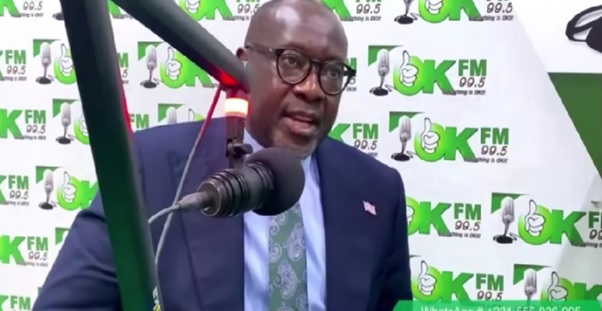
Speaking Tuesday, May 5, 2026, on OK FM’s “OK Conversation” program hosted by Julius Jeh, Konneh claimed that some individuals within the ruling Unity Party government see him as a threat because of the level of influence he once held during the administration of former President Ellen Johnson Sirleaf.
According to Konneh, several political figures close to President Boakai fear that his presence and policy experience could shape decision-making at the Executive Mansion, creating internal resistance against him.
“They saw Amara Konneh as the obstacle, the same influence he had with Ellen. He’s about to start it here,” the senator stated during the interview.
Konneh disclosed that the tension dates back to the 2023 presidential runoff election, when then-candidate Boakai reportedly asked him to help coordinate efforts to protect the Unity Party’s votes and secure victory in the second round.
He explained that the request was based on his previous role in helping consolidate support for former President Sirleaf during the 2011 elections.
“When people saw what I did, President Boakai made one request. He said, ‘I want you to help me protect the vote,’” Konneh recounted.
The senator said he accepted the role without seeking political favors or government promises in return, unlike other political actors and coalition partners who negotiated positions and concessions during the election period.
“I never made any demand to Uncle Joe, and he never made any promises to me,” Konneh said. “I decided on my own to give them space to reap the benefit of their labor.”
According to him, after spending seven years away from Liberia working internationally, he intentionally avoided entering what he described as a struggle for influence within the new government.
Konneh revealed that he formally withdrew from the presidential transition team shortly before its conclusion in order to avoid conflicts of interest and focus on his responsibilities in the Liberian Senate.
He said his decision was partly intended to preserve his independence in evaluating presidential nominees appearing before the Senate for confirmation hearings.
The senator also linked the growing friction to diplomatic arrangements made during President Boakai’s post-election engagements in Washington, D.C., where limitations on delegation size reportedly created disputes among political figures seeking visibility and proximity to the president-elect.
According to Konneh, some individuals interpreted his involvement in organizing high-level appointments as evidence that he was positioning himself to regain the kind of influence he once exercised under the Sirleaf administration.
“This is where the fight started from,” he alleged, claiming that political actors subsequently began spreading negative narratives about him behind the scenes.
Konneh maintained that he returned to Liberia with “good intentions” and a desire to serve the country rather than compete for political control or personal influence.
“I have a family. I have my children. I came to serve the country,” he emphasized during the interview.
The Gbarpolu lawmaker further hinted that the issues he discussed publicly represent only a fraction of deeper tensions within the administration.
“There’s a whole lot to reveal at the right time. This is just the tip of the iceberg,” Konneh declared, suggesting that more details could emerge in the future regarding internal dynamics within the Boakai government.