By Socrates Smythe Saywon | Smart News Liberia
MONROVIA – The Government of Liberia has allocated US$2 million annually to support the establishment of a War and Economic Crimes Court (WECC), reinforcing a renewed national push toward accountability for atrocities committed during the country’s civil conflict. The WECC Office, headed by Jallah A. Barbu, is leading efforts to operationalize the court.
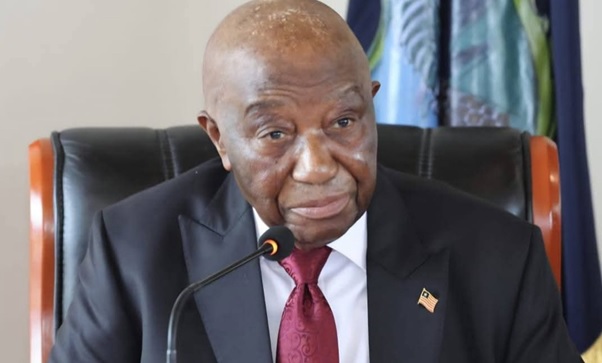
The funding announcement, made by Deputy Information Minister Daniel O. Sando, comes alongside the issuance of Executive Order No. 164 by President Joseph Nyuma Boakai, which extends the mandate of the WECC Office for an additional year.
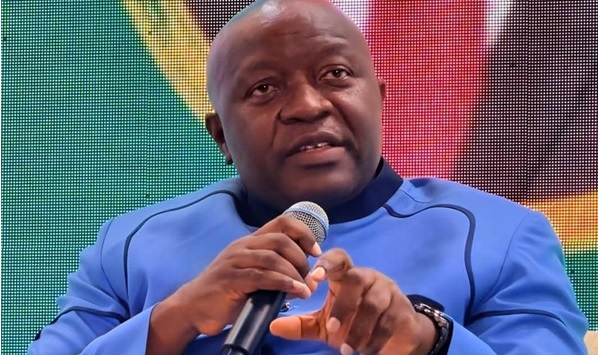
Speaking at a Ministry of Information press briefing on Tuesday, May 5, 2026, Daniel O. Sando disclosed that the funds will be administered as a grant under the Ministry of Justice, with quarterly disbursements of US$500,000 to support the steady operations of the court’s preparatory office.
Sando emphasized that the funding reflects the government’s determination to transition from policy discussions to concrete action. “This allocation demonstrates the government’s commitment to ensuring the establishment of the War and Economic Crimes Court becomes a reality,” he stated.
The renewed mandate under Executive Order No. 164 provides the legal and administrative framework for the Office tasked with designing and operationalizing both the War and Economic Crimes Court and a proposed National Anti-Corruption Court.
According to the Executive Order, the Office has already made significant progress, including drafting two key pieces of legislation for submission to the Legislature: one establishing the War and Economic Crimes Court and the other creating a National Anti-Corruption Court.
President Boakai, in the Order, stressed that these efforts reflect Liberia’s broader commitment to justice, reconciliation, and the fight against impunity. The initiative also aligns with the country’s obligations under international treaties and conventions on human rights and accountability.
The Order further mandates the Office to continue consultations with international partners and funding institutions to mobilize resources necessary for the courts’ full establishment and long-term sustainability.
At the same time, Sando noted that the Office is required to operate with transparency and accountability, including submitting quarterly operational and financial reports to the Office of the President through the Ministry of Justice.
“The Office will ensure that all activities are documented and reported in line with the highest standards of accountability,” Sando said, adding that these reports will also be subject to independent verification and audits by authorized government institutions.
Under the implementation timeline outlined in Executive Order No. 164, the Office must, within 60 days, present a comprehensive resource mobilization and stakeholder engagement plan, detailing potential funding partners and strategies for collaboration.
Additionally, the Office is expected to intensify engagement with the Legislature within 90 days to support the passage of the draft bills, while developing full operational frameworks, including administrative, logistical, and financial plans, within 120 days.
The Executive Order also introduces a structured reporting regime, requiring quarterly updates beginning in July 2026, as well as a mid-term review within six months to assess progress and challenges.
Sando highlighted that the semi-independent status of the Office is intended to shield its operations from political interference, ensuring that its work remains guided strictly by legal principles and professional standards.
The establishment of the War and Economic Crimes Court traces back to recommendations from Liberia’s Truth and Reconciliation Commission, which documented widespread human rights abuses during the country’s 14-year civil war that claimed an estimated 250,000 lives.
Despite years of delays under previous administrations, the Boakai government’s latest actions signal a renewed determination to address longstanding demands for justice from victims and civil society groups.
President Boakai, through Executive Order No. 164, reaffirmed that the continued existence of the Office is critical for coordinating international support, advancing legislative processes, and ensuring that all preparatory steps lead to the full operationalization of the courts.