By Staff Writer | Smart News Liberia
MONROVIA – Former Liberia Council of Churches President Kortu Brown has raised serious concerns about Liberia’s economic management, governance approach, and growing political tension, calling for transparency, responsible leadership, and renewed national unity.
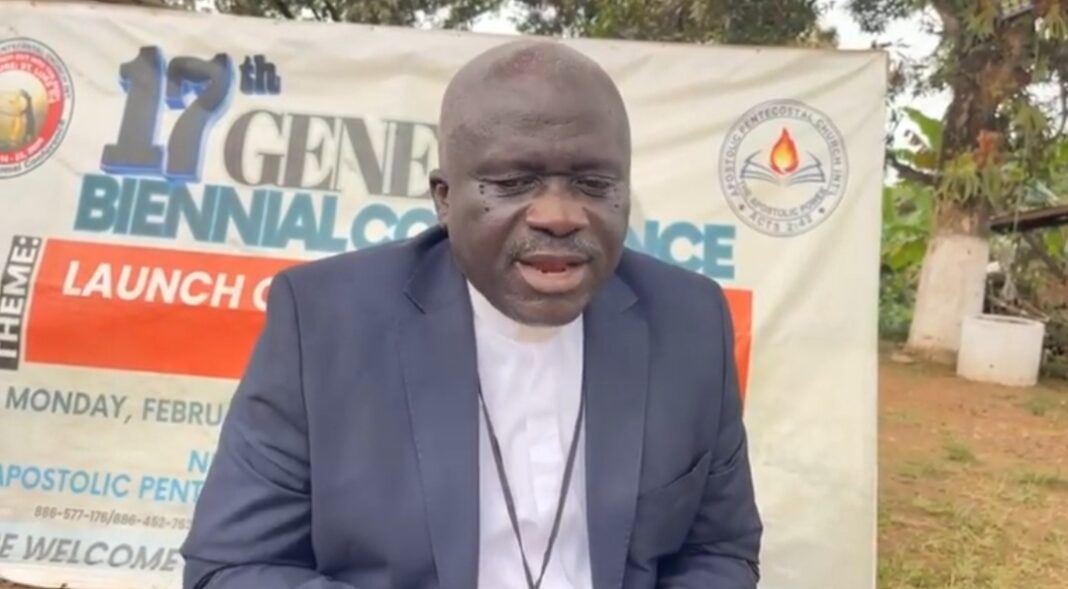
Speaking to journalists on Sunday, May 3, 2026, at the New Water in the Desert Apostolic Church in Brewerville, outside Monrovia, Kortu Brown reflected on a wide range of national issues, warning that decisions in the financial sector must be handled with caution to avoid far-reaching consequences for the country.
He stressed that economic decisions, particularly those involving the financial system, should always be taken in the best interest of the Liberian people. “If you don’t do it the right way, of course, there will be consequences, economic consequences and financial consequences,” Kortu Brown cautioned.
The bishop pointed to ongoing developments at the Central Bank, emphasizing the need for clarity and accountability in financial policies. He urged authorities to clearly communicate their intentions and the implications of their actions to the public.
“We need to hear more and more why they want to do what they are doing and how they intend to do it,” he said, noting that transparency would help reduce public anxiety and build confidence in government decisions.
Referencing past financial controversies, Brown expressed concern over the lack of clarity surrounding previous monetary issues, including the widely debated “missing billions.” He questioned the country’s ability to avoid repeating similar situations.
“Do we know the full story?” he asked, stressing that ambiguity in financial matters undermines public trust and complicates accountability efforts.
On the state of the economy, Brown described conditions as increasingly difficult for ordinary Liberians, highlighting rising hardships and the need for government officials to better explain efforts aimed at addressing economic challenges.
“One of my disappointments is that you don’t hear much from the people who are in the economy,” he said, pointing to what he described as a persistent “information dissemination deficit” across successive administrations.
The bishop urged economic managers to engage more actively with the public through regular updates and media appearances, noting that effective communication is essential to maintaining public confidence during challenging times.
Beyond economic issues, Brown also expressed concern about Liberia’s political climate, warning that national discourse is becoming increasingly divisive and intolerant. He called for restraint and constructive engagement among political actors.
“Our national discourse is increasingly becoming more acrimonious,” he observed, emphasizing that such trends could undermine democratic progress if left unchecked.
Addressing border tensions involving Liberia and neighboring Guinea, Brown encouraged the government to continue prioritizing dialogue while improving communication with affected communities. He stressed that citizens living along border areas deserve timely updates.
“We should encourage the government to say more in a more responsible way,” he noted, adding that silence or limited information can heighten fear and uncertainty among citizens.
Brown also weighed in on recent legislative tensions involving expelled Montserrado County District #10 Representative Yekeh Kolubah, describing actions against dissenting lawmakers as indicative of growing intolerance. He urged leaders to respect differing views and avoid actions that could deepen political divisions.
In his concluding remarks, Bishop Brown called on all Liberians to promote peace, tolerance, and engagement as the country approaches another Independence Day. “We need to sustain the peace, stay engaged, and be tolerant,” he said, urging collective responsibility in addressing Liberia’s challenges.