By Socrates Smythe Saywon | Smart News Liberia
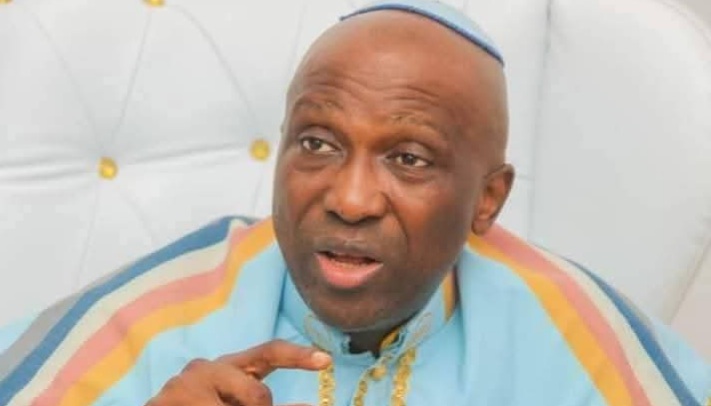
MONROVIA, LIBERIA – A controversial sermon by Nigerian Bishop Primate Elijah Ayodele has triggered intense debate in Liberia, with politicians, commentators, and ordinary citizens questioning both the substance and motive behind his remarks about President Joseph Nyuma Boakai and the country’s future.
In a viral video circulating widely on social media, particularly Facebook, Ayodele described President Boakai as “confused” and “tired” and predicted that Liberia would experience continued confusion until 2029.
“Your president is confused. So the economy of the country is confused. Everything about the country is confused. So confusion from now till 2029 in Liberia. The man is tired,” Ayodele declared during his Sunday, June 7, 2026 church service.
The comments immediately generated strong reactions across Liberia and transformed what may have been intended as a prophetic message into a wider debate about prophecy, politics, sovereignty, and the role of foreign religious figures in the affairs of independent nations.
For many Liberians, the issue is not whether President Boakai deserves criticism. In a democracy, criticism of public officials is expected and necessary. The concern is whether a foreign cleric’s prediction of prolonged national confusion contributes anything constructive to Liberia’s development or merely inflames political tensions at a time when the country continues to consolidate its democratic gains.
The timing of the remarks has also raised eyebrows.
Although Liberia’s next presidential election remains years away, political calculations for 2029 are already beginning to emerge. Against that backdrop, Ayodele’s comments have inevitably been viewed through a political lens, especially by those who believe his public pronouncements about Liberia have consistently favored one political camp over another.
Among those who reacted sharply was Senator Abraham Darius Dillon.
“The Nigerian ‘Man of God’! I was beginning to take interest in his ‘prophecies’ against Liberia and our President. I was initially concerned until all his ‘prophecies’ on Liberia from the 2023 presidential election and of recent started to pop again,” Dillon wrote.
The senator did not stop there.
“From all the videos and photos I have seen about that ‘Man of God’, it is clear he loves former Pres. Weah. They are good friends and political partners! And clearly, the ‘Man of God’ does not love Pres. Boakai, so all his ‘prophecies’ are seen and delivered as such.”
Dillon’s criticism reflects a concern shared by many Liberians. When a religious leader repeatedly comments on the political affairs of a foreign country, questions naturally arise regarding objectivity and motivation.
Whether Ayodele intended his remarks as a spiritual warning or a political observation, perception matters. Once prophetic declarations become entangled with partisan narratives, skepticism becomes inevitable.
Senator Amara Konneh was equally direct.
“I’m seeing videos of a Nigerian ‘Man of God’ saying President Boakai is tired and predicting a crisis for Liberia. All well-meaning Liberians should condemn this. This man needs to redirect his focus to his own country and the issues in Nigeria.”
Konneh’s statement raises an important point that deserves serious consideration.
Nigeria, Africa’s largest economy and most populous nation, continues to grapple with significant domestic challenges. Millions of Nigerians face economic hardship, inflation, unemployment, insecurity, kidnappings, and growing concerns over the cost of living. Across several regions, citizens continue to demand stronger governance, improved security, and greater economic opportunities.
Against this backdrop, some Liberians are asking why a prominent Nigerian religious figure appears more focused on forecasting Liberia’s future than addressing the numerous challenges facing his own country.
The question is not intended to dismiss Ayodele’s right to express an opinion. Rather, it highlights a broader issue of priorities.
If religious leaders are called to be voices of hope and moral guidance, should they not first direct their energies toward helping address the struggles affecting their own communities?
Political commentator Henry P. Costa delivered perhaps the most emotional response.
“Never again shall we go back to war and chaos in this country of ours. May God Almighty strike him down for his false doomsday prophecy against our beloved Motherland.”
Costa’s reaction highlights just how sensitive such statements can be in Liberia.
Unlike countries that have enjoyed decades of uninterrupted peace, Liberia carries the painful memories of civil conflict. References to national crisis, instability, or prolonged confusion are not merely political talking points. They touch on wounds that many Liberians have spent years trying to heal.
This is precisely why words from influential figures must be weighed carefully.
Religious leaders occupy a unique position in society. Their influence extends beyond politics and often reaches into the spiritual and emotional lives of millions of people. Because of this influence, their statements can inspire hope, reconciliation, and unity, while at the same time having the potential to deepen anxiety and division.
The Bible contains numerous examples of prophets warning nations and leaders. However, those warnings were often accompanied by calls for repentance, justice, reform, and moral renewal. The purpose was not simply to predict disaster but to encourage positive change.
That distinction matters.
Many Liberians who watched Ayodele’s viral video were left asking what practical purpose was served by telling an entire nation that confusion would dominate its future until 2029.
What solutions were offered?
What path forward was suggested?
What message of hope accompanied the prediction?
These questions remain largely unanswered.
Liberia certainly faces serious challenges. Economic difficulties persist. Youth unemployment remains high. Infrastructure deficits continue to slow development. Corruption remains a concern for many citizens. These are legitimate issues that deserve attention and debate.
But acknowledging challenges is not the same as declaring an entire nation doomed to confusion.
Such declarations risk overshadowing the progress Liberia has made since the end of its civil war. They risk undermining confidence in democratic institutions. And they risk reinforcing narratives of hopelessness at a time when many Liberians are working to build a more stable future.
Ultimately, Liberia’s destiny will not be determined by viral prophecies, social media trends, or foreign political commentary.
It will be determined by the choices made by Liberians themselves.
President Boakai’s administration will be judged by its performance, policies, and ability to deliver tangible improvements in the lives of citizens. The opposition will be judged by the credibility of its alternatives and its commitment to democratic engagement. And the Liberian people will continue to exercise their right to determine their country’s future through elections and civic participation.
As the nation gradually moves toward another election cycle, one thing remains clear: Liberia needs constructive criticism, honest debate, and responsible leadership.
What it does not need are predictions that appear to condemn an entire nation while offering little more than controversy.
Bishop Ayodele’s remarks have undoubtedly triggered debate. Whether that debate ultimately strengthens Liberia’s democracy or merely fuels political divisions may depend on how Liberians choose to respond.
For now, many citizens appear united on one point. Liberia’s future should be shaped by the actions, aspirations, and determination of Liberians, not by imported prophecies of confusion and despair.