By Socrates Smythe Saywon | Smart News Liberia
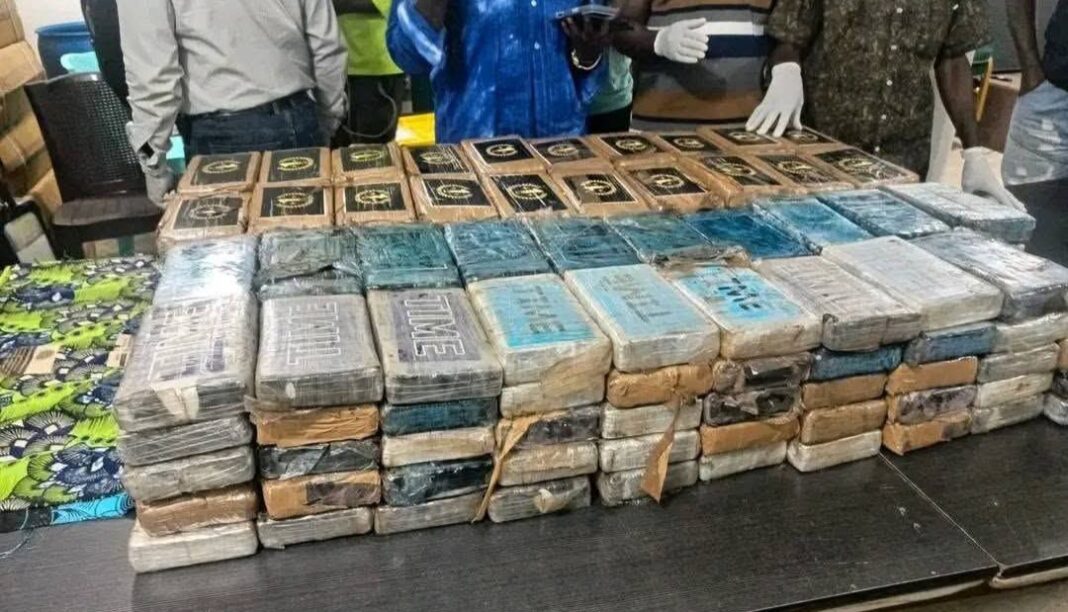
MONROVIA, LIBERIA- The interception of 198 compressed plates of cocaine at Roberts International Airport should be celebrated as a major operational success for Liberia’s security apparatus. Yet beyond the headlines, the seizure raises troubling questions about the depth of organized drug trafficking networks operating within Liberia and the vulnerabilities that continue to make the country attractive to international narcotics syndicates.
According to Liberia Drug Enforcement Agency (LDEA) Officer-in-Charge DCP Fitzgerald T.M. Biago, the June 8, 2026 operation resulted in the seizure of cocaine concealed in six cargo boxes that were reportedly destined for export through Brussels Airlines. The narcotics carried an estimated street value of more than US$19 million, making it one of the most significant drug interceptions in recent years.
“Today, the Liberia Drug Enforcement Agency announces a breakthrough in Liberia’s fight against transnational drug trafficking,” DCP Biago declared during a press briefing on June 9.
Indeed, the operation deserves recognition. It demonstrates that intelligence gathering, interagency coordination, and airport security vigilance can produce results when properly executed. The LDEA’s announcement also highlights the role played by Joint Security officers assigned to Roberts International Airport, whose actions prevented the shipment from reaching international markets.
But while Liberians should commend the seizure, they should also ask difficult questions.
How did nearly US$20 million worth of cocaine reach the point of export before being detected? How long had the network allegedly been operating? Who financed the operation? Who facilitated the movement of such a massive quantity of narcotics? And perhaps most importantly, how many similar shipments may have escaped detection in the past?
Drug trafficking is rarely the work of isolated individuals. Operations involving hundreds of kilograms of cocaine and millions of dollars typically require sophisticated networks, logistical support, financial backing, and, in some cases, the exploitation of institutional weaknesses. The sheer size of this seizure suggests that authorities may be confronting something larger than an ordinary smuggling attempt.
DCP Biago acknowledged as much when he revealed that investigations remain active.
“Investigations are actively underway, and persons of interest have been identified. The LDEA remains fully committed to ensuring that every individual connected to this criminal network is identified, investigated, and prosecuted in accordance with the law,” he stated.
That commitment will now be tested.
Liberians have witnessed major announcements before. High-profile arrests and dramatic seizures often generate public attention, only for investigations to fade from public view. The true measure of success will not be the quantity of drugs displayed before cameras but whether investigators can dismantle the network behind the shipment and secure successful prosecutions.
The stakes extend far beyond law enforcement statistics.
Drug trafficking has become one of the most dangerous threats confronting Liberia’s social and economic future. While international traffickers view countries as transit routes and profit centers, local communities often bear the consequences through addiction, crime, youth vulnerability, and the erosion of public trust in institutions.
DCP Biago attempted to address those concerns directly.
“This operation sends an unequivocal message: Liberia is not a transit point, marketplace, or haven for drug traffickers,” he asserted.
The statement is encouraging. However, declarations alone will not convince either Liberians or the international community. What will send a truly unequivocal message is sustained enforcement, transparent investigations, successful prosecutions, and the dismantling of the financial structures that sustain drug trafficking operations.
The seizure also places renewed focus on Liberia’s airports, seaports, and border crossings. Criminal organizations continuously search for weak links in global security systems. If Liberia is to avoid becoming a preferred route for transnational drug networks, security reforms must remain aggressive, intelligence operations must be strengthened, and accountability must be enforced at every level.
The successful interception at Roberts International Airport proves that Liberia’s security agencies can deliver results. Yet it also exposes the magnitude of the challenge they face.
The cocaine may have been stopped before leaving the country, but the larger battle is only beginning. The public now awaits answers, arrests, prosecutions, and evidence that this operation represents more than a single victory. It must become part of a broader campaign to ensure that Liberia is not merely intercepting drugs but dismantling the criminal networks that seek to use the country as a gateway for international narcotics trafficking.