By Socrates Smythe Saywon | Smart News Liberia
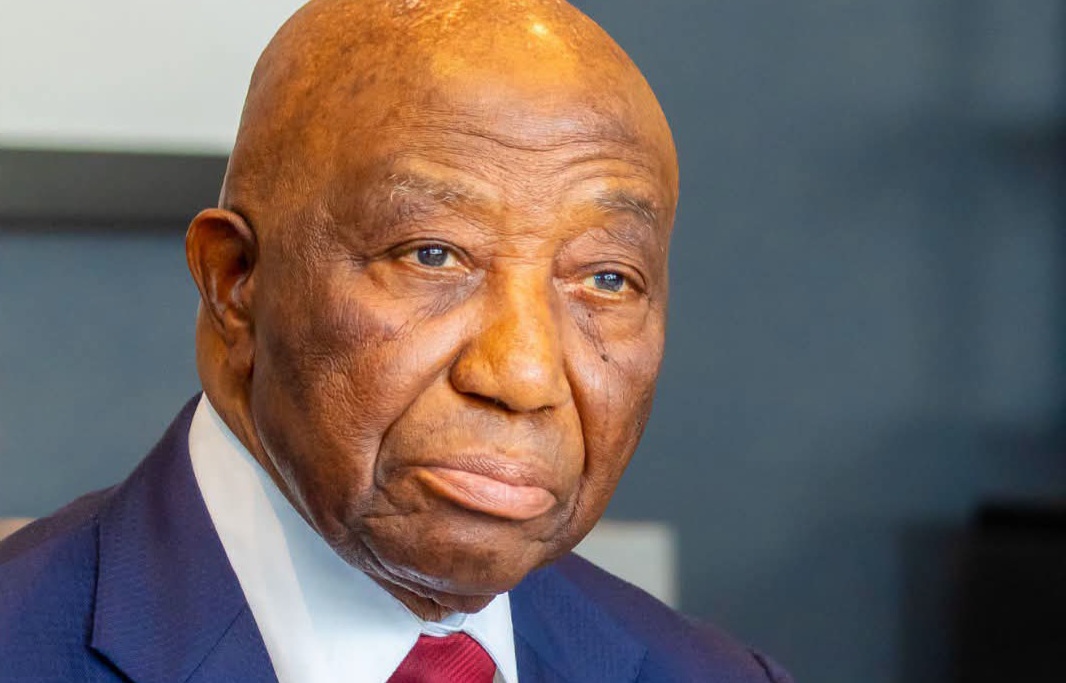
MONROVIA – President Joseph Nyuma Boakai’s decision on Tuesday, August 11, 2026, to remove Deputy Commissioner of Police Fitzgerald T. M. Biago as Director General of the Liberia Drug Enforcement Agency and suspend him indefinitely from the Liberia National Police marks a consequential moment in Liberia’s war against narcotics.
The decision, announced after a National Security Council meeting, follows a Ministry of Justice investigation that reportedly did not establish Biago’s involvement in illegal narcotics trafficking, but identified what the government described as ethical concerns warranting further investigation.
That distinction matters.
It means Biago has not been established by the government’s investigation as a drug trafficker. But it also means the matter is far from closed.
And this is where the debate raised by activist Martin K. N. Kollie becomes important.
Kollie has welcomed President Boakai’s action, describing it as evidence of political will and a zero-tolerance approach to drug trafficking and impunity. But he sharply disagrees with the characterization of the findings as merely “ethical concerns.”
Kollie alleges that Biago received a grey Toyota Hilux pickup from individuals he describes as being connected to a drug cartel and argues that such an alleged benefit warrants examination under Liberia’s anti-drug, public service ethics and criminal laws.
Those allegations, however, remain allegations unless established through competent legal proceedings.
The government’s investigative finding, as presented by the President’s office, has not established Biago’s involvement in illegal narcotics trafficking. That finding should not be casually dismissed. At the same time, an investigation identifying ethical concerns should not automatically end the public inquiry, particularly where the alleged conduct involves a senior official of the very institution charged with combating narcotics.
The Grey Vehicle Question
The most serious unresolved issue is therefore not simply whether Biago personally trafficked drugs.
It is whether he received a valuable benefit from individuals connected to the narcotics trade and, if so, whether that benefit influenced, compromised or was intended to influence the performance of his official duties.
Liberia’s Code of Conduct contains provisions governing bribes, gifts and offers intended to influence public officials. Section 9.1 prohibits public officials from receiving or encouraging bribes or casual gifts connected to their official duties, while Section 9.4 requires officials to report circumstances involving benefits or gifts that could constitute attempts to influence official action.
That makes the circumstances surrounding any alleged vehicle gift a matter deserving of clear answers.
Who provided the vehicle?
Who owned it?
When was it transferred?
Was it declared?
What was its value?
What relationship existed between the giver and Biago?
What official decisions, if any, followed the alleged transfer?
And most importantly, was the vehicle connected in any way to the narcotics investigation?
These are questions that cannot be answered through political statements, social media arguments or competing narratives. They require evidence.
Boakai’s Test Is Bigger Than Biago
President Boakai deserves recognition for taking action against a senior security official while an investigation remains unresolved.
But the decision will mean little if it becomes the end of the process rather than the beginning of a deeper institutional examination.
Liberia’s recent drug crisis has exposed vulnerabilities that go beyond individual officers.
The country has witnessed major cocaine seizures, investigations involving security personnel and growing concerns about the ability of criminal networks to penetrate institutions responsible for protecting the state.
The LDEA itself has previously announced disciplinary and criminal proceedings against officers accused of compromising drug investigations. In May, the agency said four officers assigned at Roberts International Airport had been dismissed and referred for prosecution over alleged tampering with seized cocaine.
The agency also acknowledged that the June seizure of approximately 237.6 kilograms of cocaine at Roberts International Airport had been elevated to a Joint National Security Investigation because of its potential transnational and organized-crime dimensions.
These developments suggest that the country’s drug problem cannot be reduced to street-level dealers or foreign traffickers.
The more uncomfortable question is whether criminal networks have found vulnerabilities inside institutions.
If they have, changing one director will not dismantle the network.
Accountability Must Follow the Evidence
Kollie’s strongest argument is not necessarily his conclusion about Biago’s alleged criminal liability. It is his demand that the investigation should not stop at an administrative finding.
That demand deserves serious consideration.
If evidence exists that a public official received a valuable asset from a person connected to narcotics trafficking, investigators should establish the source of the asset, the circumstances surrounding its transfer and whether it influenced official conduct.
If the evidence does not support criminal charges, the public should be told that clearly.
If it does, prosecutors should act.
That is what due process and accountability require.
The danger lies at either extreme.
It would be wrong to convict Biago in the court of public opinion based solely on allegations. It would be equally troubling to dismiss legitimate questions about a senior anti-drug official simply because the government did not establish his direct involvement in trafficking.
The two issues are not the same.
No Sacred Cows
President Boakai has repeatedly declared that drugs constitute a national security and public health threat. His latest decision will now be measured by whether that declaration applies equally to powerful officials and ordinary suspects.
The President’s action has already produced a significant institutional consequence: Major General (Retired) Daniel Dee Ziankahn has been nominated to take over the LDEA, pending Senate confirmation.
But Ziankahn will inherit more than an agency.
He will inherit a credibility crisis.
His first responsibility must be to demonstrate that the LDEA can investigate drug networks without fear, favor or political interference. That includes examining allegations involving members of the security establishment itself.
Liberia cannot credibly wage war against narcotics while leaving unanswered questions about whether those entrusted with fighting the trade have themselves been compromised.
The government must therefore publish as much of the Ministry of Justice investigation as legally permissible, identify the specific ethical concerns involving Biago and explain what further investigation will now establish.
Anything less risks creating another cycle in which officials are removed, headlines fade and the deeper networks remain untouched.
The message from the Boakai administration should be simple: No official is guilty without evidence, but no official is beyond investigation.
That is the standard Liberia needs.
The drug war cannot be won through seizures alone. It requires clean institutions, credible investigations, independent prosecution and accountability that reaches wherever the evidence leads.
President Boakai has taken the first step.
Now Liberia needs to see whether he is prepared to take the harder ones.