By Socrates Smythe Saywon | Smart News Liberia
Civil Law Court judge warns that tribal favoritism, intimidation, fabricated allegations, and misuse of public authority threaten democracy, reconciliation, and national development in Liberia
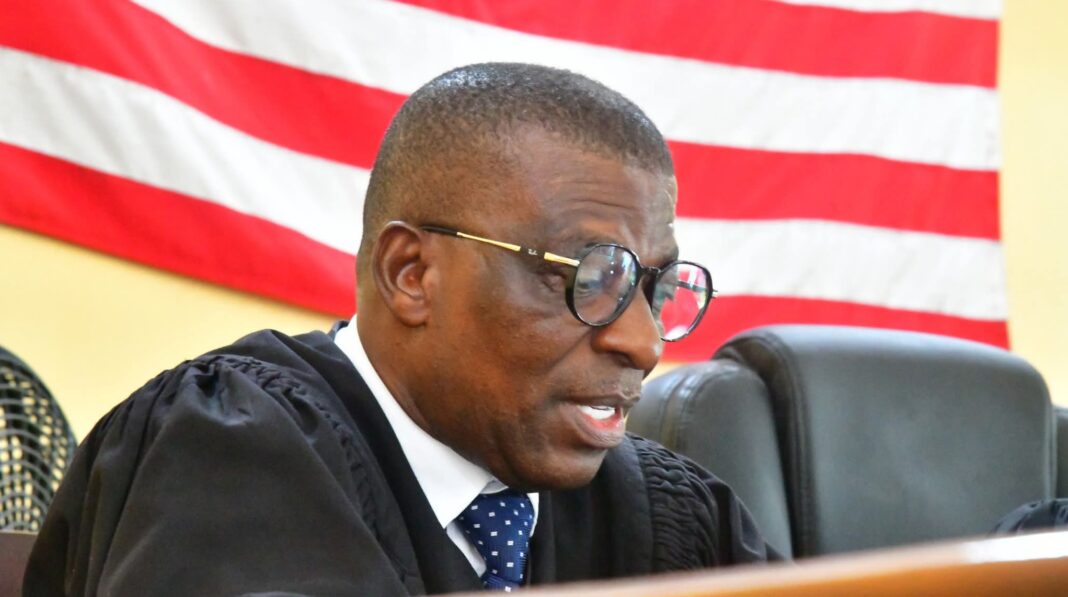
MONROVIA – Delivering one of the Judiciary’s most pointed critiques of governance and institutional conduct in recent years, Resident Circuit Judge J. Kennedy Peabody of the Sixth Judicial Circuit, Civil Law Court for Montserrado County, on Monday warned that abuse of power, tribal favoritism, intimidation, fabricated allegations, and the misuse of public institutions are fueling a dangerous “vicious cycle of hatred” that threatens Liberia’s democracy, reconciliation, and national development.
Speaking during the opening of the June 2026 Term of the Sixth Judicial Circuit, Civil Law Court in Montserrado County, Peabody used the occasion not merely to declare the court open for business but to issue a broader warning about the dangers of injustice, exclusion, and the normalization of abuses of authority within public institutions.
Addressing Chief Justice Yamie Quiqui Gbeisay, members of the Supreme Court, judges, lawyers, government officials, and the public, Peabody centered his remarks on the theme: “The Vicious Cycle of Hatred and Its Threat to Democracy, Reconciliation, and National Development.”
Drawing from Liberia’s troubled past, including the April 12, 1980 coup and the country’s fourteen years of civil conflict, Peabody argued that national crises do not emerge without cause.
“Those dark chapters of our history were fueled by accumulated grievances, inequality, abuse of office, suppression of dissent, tribal exclusion, and the persistent denial of fairness and dignity to fellow citizens,” he said.
According to Peabody, when justice is denied and people are subjected to humiliation, false accusations, and unequal treatment, the consequences can extend far beyond individual victims.
“When people are denied justice, unlawfully suppressed, humiliated, or punished through fabricated accusations and misuse of authority, they do not easily forget,” he warned. “Wounds unattended become bitterness; bitterness becomes hatred; hatred becomes division; and division ultimately destroys peace, reconciliation, and national development.”
While Peabody refrained from naming specific individuals or institutions, his remarks touched on concerns that have increasingly surfaced in public discourse regarding governance, political loyalty, workplace intimidation, and the abuse of authority.
In one of the most striking portions of his address, he challenged public officials to reflect on whether favoritism and exclusion have become embedded within institutions.
“We must ask ourselves these difficult questions: When public officials favor only their kinsmen, tribesmen, friends, or loyal associates above more competent citizens or employees, is that not nepotism and corruption?” he asked.
He also questioned workplace practices that encourage mistrust and surveillance among employees.
“When employees are used as spies to eavesdrop on fellow employees, is that leadership or intimidation?” Peabody asked.
The veteran legal practitioner described such practices as more than administrative shortcomings, arguing that they represent deeper moral failures capable of poisoning institutions and weakening public trust.
“In my view, these are clearly substantial issues and are not merely administrative failures; they are moral failures that poison institutions and divide society,” he declared.
Peabody further warned that public office must never be transformed into a tool for personal revenge, intimidation, or retaliation against perceived opponents.
“Public authority must never be used as a weapon for personal revenge, vendetta, intimidation, or the settling of private disputes,” he said. “Officials who occupy positions of trust must remember that power is temporary, but the consequences of injustice are lasting.”
He stressed that the law must remain above personal interests and cautioned against the manipulation of institutions for personal gain.
“No official should use his or her office to tarnish the reputation of another person without substantial evidence. No authority should manipulate processes, manufacture falsehoods, distort facts, or weaponize institutions against subordinates merely because of personal disagreements or grievances,” Peabody said.
The judge also raised concerns about the broader implications such conduct could have on Liberia’s democratic system, warning that constitutional democracy is endangered when authority is used to suppress criticism and silence dissent.
“A constitutional democracy survives because it can withstand scrutiny, criticism, truth, and accountability,” he stated. “But when authority begins to circumvent the law, abuse due process, intimidate subordinates, and suppress dissent through fear and misinformation, democracy itself is placed in danger.”
According to Peabody, one of the greatest threats confronting any society is the normalization of abuse of office. He noted that history repeatedly demonstrates the damage caused when institutions become instruments of retaliation rather than justice.
“The greatest threat to any society is the normalization of abuse of office,” he said, warning that trust between citizens and institutions inevitably erodes when public authority is misused.
Throughout his address, Peabody repeatedly emphasized that no public official is immune from accountability.
“No one is above reproach. No office is permanent. No authority is eternal,” he declared.
He argued that unresolved grievances do not disappear simply because those responsible hold positions of power.
“Truth buried under intimidation does not disappear. The grievances of victims hidden under the rug of power do not vanish before God or before history,” he said.
Peabody urged leaders across government and public institutions to exercise humility, fairness, restraint, and integrity in the discharge of their responsibilities.
“Leadership must never become bullying. Authority must never become oppression. Governance must never become personal warfare against perceived enemies,” he cautioned.
He further warned that societies pay a heavy price when people are repeatedly humiliated, marginalized, falsely accused, or denied equal treatment.
“When people are repeatedly humiliated, falsely accused, marginalized, or denied fairness, society plants the seeds for future conflict,” he said.
In what appeared to be one of the most sobering warnings of his address, Peabody noted that the consequences of injustice often extend beyond one generation.
“Victims may remain silent today, but future generations inherit those grievances. Children grow up remembering how their parents were mistreated. Communities remember who abused power. The hatred quietly survives and reproduces itself from one generation to another.”
According to him, such lingering resentment undermines reconciliation, weakens democracy, discourages investment, destroys relationships, and obstructs national development.
“This endless cycle of hatred undermines reconciliation, weakens democracy, discourages investment, destroys relationships, and obstructs national development,” he warned.
Peabody called for a renewed commitment to democratic principles rooted in fairness, equality, due process, truth, and respect for human dignity.
“The rule of law must prevail over the rule of personalities,” he declared, emphasizing that courts and public institutions must remain places where “truth prevails over manipulation, evidence prevails over fabrication, and justice prevails over personal vendetta.”
As Liberia continues to confront debates surrounding accountability, governance, and public confidence in state institutions, Peabody’s remarks are expected to resonate far beyond the courtroom.
His message was unequivocal: Liberia’s future cannot be built upon hatred, tribalism, intimidation, favoritism, falsehood, abuse of office, and institutional injustice.
Instead, he urged Liberians to reject the misuse of authority for personal scores, reject manufactured lies and unlawful punishment, and embrace a future grounded in justice, reconciliation, accountability, and equal treatment under the law.
“Peace is sustained not merely by silence, but by justice,” Peabody concluded.
For the Civil Law Court judge, Liberia’s long-term stability and prosperity will depend on whether leaders choose justice over vengeance, truth over falsehood, and reconciliation over division before the grievances of today become the conflicts of tomorrow.