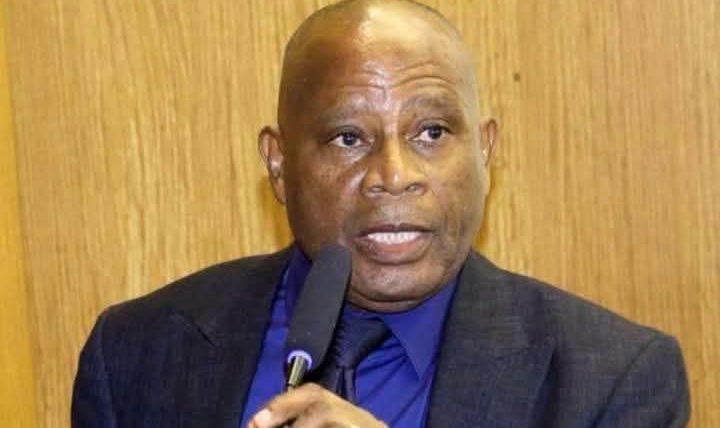
MONROVIA — Senate Judiciary Committee Chair Cllr. Augustine Chea has sharply questioned the decision by the Liberia National Police to invite Gbarpolu County Senator Amara Konneh for questioning, arguing that the move could amount to retaliation against a lawmaker who has demanded accountability over Liberia’s multimillion-dollar cocaine investigations.
In a statement issued on Wednesday, August 19, 2026, Chea asked why Police Inspector General Gregory Coleman and the ruling Unity Party are pursuing Senator Konneh, particularly when Konneh’s public comments have centered on questions about the identities of alleged high-level actors behind the country’s recent drug cases.
Chea said the police cannot reasonably assume that Senator Konneh personally knows the identities of major drug cartel members simply because he, like other members of the public, has questioned why lower-level suspects have been arrested while alleged higher-level actors remain at large.
He argued that the allegation of high-level state involvement in the drug trade did not originate with Konneh but with Coleman himself.
According to Chea, Coleman publicly stated that “key state-actors” were connected to the drug trade, making it the responsibility of the police chief to substantiate and pursue those serious allegations.
Chea also pointed to Coleman’s separate allegation that money from a drug cartel had reached members of the media. He noted that Coleman has yet to provide the evidence requested by the Press Union of Liberia or announce arrests based on the allegation.
“The IGP therefore bears responsibility for substantiating and pursuing the serious allegations he made,” Chea argued.
He said Senator Konneh’s demand that the alleged “key state-actors” be identified should not automatically be interpreted as evidence that the senator personally knows their identities or possesses evidence against them.
Rather, Chea said, Konneh’s statements can reasonably be viewed as political criticism and a demand for accountability, particularly in light of Coleman’s own public allegations.
“It does not automatically become a criminal offense simply because the police disagree with it,” Chea maintained.
The senior senator further invoked Article 15(c) of the Liberian Constitution, which protects the public’s right to information concerning government and its functionaries.
Chea argued that the constitutional protection makes it particularly important for public officials and law-enforcement agencies to tolerate legitimate questioning and criticism rather than use police powers against those demanding answers.
He went further to suggest that Coleman himself should be subjected to scrutiny over the allegations he has publicly made.
“It is the IGP who should be under investigation,” Chea said, arguing that Coleman should not be placed beyond scrutiny while a legislator questioning the police investigation is summoned to identify alleged cartel members.
The Senate Judiciary Committee chair warned that if police cannot identify an independent criminal offense committed by Konneh, using law-enforcement powers against him because of his criticism could amount to what he described as “retaliatory justice.”
Chea defined retaliatory justice as the use of law-enforcement machinery to intimidate or silence critics rather than to pursue genuine criminal accountability.
He said such an approach would raise serious constitutional concerns because legislative oversight and legitimate criticism should not be transformed into criminal conduct simply because they are uncomfortable for government officials.
The comments add to growing political tensions surrounding Liberia’s investigation into recent cocaine seizures involving more than 4,200 kilograms of suspected cocaine with an estimated combined value of about US$336 million.
The cases have generated intense public debate over the identities of individuals allegedly behind the shipments, the role of security personnel and the independence of ongoing investigations.
Chea’s intervention places the focus not only on Senator Konneh’s police invitation but also on whether the allegations publicly made by the police leadership are being pursued with the same urgency being applied to those demanding answers.
“Strange things are happening again!” Chea concluded.