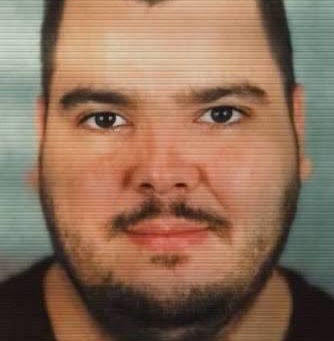
Liberia’s alleged role in the regional operations of Europe’s most-wanted drug trafficker, Jos Leijdekkers, as questions persist over the nearly four-tonne cocaine shipment discovered near Monrovia.
MONROVIA, LIBERIA — A major investigation by British newspaper The Guardian has raised serious questions about Liberia’s possible connection to the regional operations of Dutch cocaine fugitive Jos Leijdekkers, one of Europe’s most-wanted drug traffickers, after reporting that he returned to neighbouring Sierra Leone from Liberia on July 20, 2026—just one day before Liberian authorities announced the seizure of nearly four tonnes of cocaine near Monrovia.
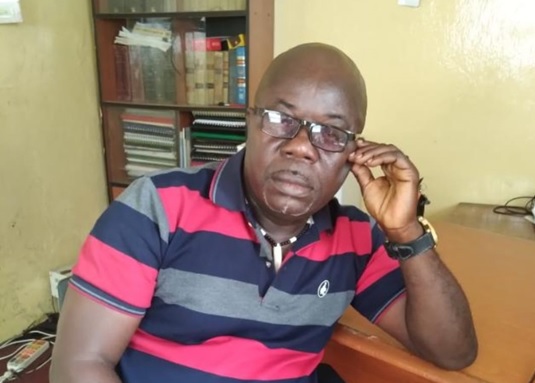
Liberian Investigative Journalist Lyndon J. Ponnie Sr. Examines The Guardian’s Report.
The report, published on October 14, 2026, alleges that Leijdekkers has expanded his criminal network beyond Sierra Leone into other West African countries, including Liberia, Guinea-Bissau and Ghana.
Drawing on interviews with intelligence and police sources across two continents, The Guardian described a sophisticated trafficking network allegedly operating across national borders, with access to influential individuals, extensive logistical capabilities and the ability to move large quantities of cocaine towards European markets.
For Liberia, the most consequential allegation is not simply that the Dutch fugitive visited the country. It is the reported timing of his departure, the proximity of that movement to the announcement of the massive cocaine seizure, and an alleged association between him and a man arrested in connection with the shipment.
These details raise questions about whether Liberia was used as a storage, transit or operational point within a wider international trafficking network.
However, the reported timing and associations do not, by themselves, establish that Leijdekkers owned the seized cocaine or directed the operation.
A DAY BEFORE LIBERIA ANNOUNCED ITS BIGGEST DRUG BUST
According to The Guardian, sources said Leijdekkers returned to Freetown, Sierra Leone’s capital, from Liberia on July 20, 2026.
The following day, July 21, Liberian authorities announced the discovery of almost four tonnes of cocaine near Monrovia in what was described as the largest drug seizure in the country’s history.
The newspaper placed the two events within its broader investigation into Leijdekkers’ alleged criminal operations across West Africa.
The reported sequence is significant: the fugitive was said to have returned to Sierra Leone from Liberia on the day immediately preceding the public announcement of the enormous cocaine seizure.
But the distinction between the date of a seizure and the date it was announced publicly is important. The Guardian’s account does not establish that the drugs were physically seized on July 21 or that Leijdekkers knew when authorities would announce the discovery.
Nevertheless, the reported timing warrants scrutiny by Liberian investigators.
Authorities should establish whether the fugitive entered Liberia, where he travelled, whom he met and whether his movements had any connection to the people, vehicles, properties or logistics associated with the cocaine shipment.
Such questions are particularly important because international trafficking networks frequently operate across borders, using different individuals and locations to organise shipments, store drugs and arrange transportation.
THE MAN ALLEGEDLY RECOGNISED AS A LEIJDEKKERS ASSOCIATE
Perhaps one of the most significant details in The Guardian’s account concerns a man arrested in connection with the cocaine discovered near Monrovia.
The newspaper reported that sources recognised the arrested man as someone who had previously been seen with Leijdekkers in Freetown.
If independently corroborated, that reported association could provide investigators with a lead for examining possible connections between the Dutch fugitive’s network and the Liberian seizure.
However, being seen with a suspected criminal does not, on its own, establish participation in criminal activity. Nor does an alleged association prove that the individual was acting on Leijdekkers’ instructions.
Investigators would need to examine communications, financial transactions, travel records, shipping documents, witness testimony and other admissible evidence to determine whether a direct connection exists.
The key questions are whether the two men communicated before the shipment was discovered, whether they shared business or financial interests, and whether the arrested suspect had any role in acquiring, storing or transporting the cocaine.
The Guardian’s report provides a lead that deserves investigation. It does not constitute a judicial finding that Leijdekkers controlled the Liberian shipment.
A NETWORK ALLEGEDLY EXPANDING ACROSS WEST AFRICA
The Guardian’s investigation portrays Leijdekkers as a fugitive whose influence allegedly extends well beyond Sierra Leone.
The newspaper reported that operating bases associated with his network had been established in Liberia and Guinea-Bissau, with activity also extending into Ghana.
It further alleged that Leijdekkers and associates used diplomatic passports to travel across the region with relative ease.
Witnesses quoted by the newspaper described Liberian police officers applauding his convoy as it crossed the border.
If independently verified, that account would raise serious questions about border security, official conduct and whether individuals associated with international criminal networks received assistance while travelling through Liberia.
The allegation requires a careful and independent investigation. The Guardian’s account does not establish the identities of the officers involved, the circumstances of the reported incident or whether any laws were violated.
Nor should an allegation concerning particular officers be treated as proof that the entire Liberian police institution participated in criminal activity.
Nevertheless, the possibility that a wanted international fugitive could move through Liberia while accompanied by a convoy deserves the attention of immigration authorities, the Liberia National Police and the Liberia Drug Enforcement Agency.
If the reported movement occurred, investigators should establish how it was facilitated and whether the relevant authorities had prior intelligence concerning the fugitive.
THE NEARLY FOUR-TONNE COCAINE SHIPMENT
The July seizure became one of the most consequential drug investigations in Liberia’s recent history.
Authorities discovered almost four tonnes of cocaine in Duazon, near Monrovia, with two foreign nationals reportedly arrested in connection with the operation.
Subsequent reporting by international news organisations put the value of the seized drugs at approximately US$317 million, although official valuations have varied across reports.
The operation raised questions about how such a large quantity of cocaine could be transported into Liberia, stored at a property and remain undetected until authorities intervened.
The seizure also highlighted the importance of investigating the entire trafficking chain, rather than limiting inquiries to the people physically found with the drugs.
Investigators must establish the shipment’s origin, the identity of its financiers, the intended destination, the individuals responsible for arranging transportation, and whether local or foreign intermediaries facilitated the operation.
The Guardian’s account introduces an additional line of inquiry: whether individuals associated with Leijdekkers’ alleged regional network had any involvement in the Liberian operation.
That question remains distinct from the established fact that a major cocaine seizure occurred.
The public should not be told that the Dutch fugitive definitively owned the drugs unless investigators produce evidence substantiating that conclusion.
A SEPARATE COCAINE CASE AT ROBERTS INTERNATIONAL AIRPORT
The Duazon seizure was not the only major cocaine investigation confronting Liberia in 2026.
On June 8, Liberian authorities discovered approximately 237.6 kilograms of cocaine at Roberts International Airport. The shipment had reportedly been falsely declared as Maggi seasoning cubes and was valued at more than US$19 million.
In a July 7 report, The Guardian covered the charging of five suspects in connection with that separate operation.
Liberian police subsequently indicated that the airport shipment had originated in Sierra Leone and was bound for the United Kingdom.
Reuters later reported that Inspector General of Police Gregory Coleman acknowledged a link between the airport shipment and Leijdekkers, although he did not provide full details. Coleman also said investigators had not established a connection between the airport case and the much larger Duazon seizure and believed the cocaine involved came from different sources.
That distinction is critical.
The airport shipment and the Duazon operation involved different quantities, circumstances and investigations. Evidence linking one shipment to a particular trafficking network cannot automatically be applied to the other.
The Guardian’s October investigation brings the Duazon seizure into the wider discussion of Leijdekkers’ alleged regional activities. But establishing whether the two Liberian cases share personnel, financing or logistical arrangements requires evidence from the investigations themselves.
The central investigative question is whether Liberia experienced two separate trafficking operations or whether evidence will reveal connections between individuals operating within a wider regional network.
At present, the cases should not be treated as one operation without corroborating evidence.
WHY LIBERIA MATTERS TO THE ALLEGED NETWORK
The Guardian’s investigation suggests that Liberia may have significance beyond serving as a possible transit point for cocaine moving between South America and Europe.
The newspaper alleged that operating bases associated with Leijdekkers’ network had been established in the country.
If substantiated, the existence of such bases would raise concerns about the use of Liberian territory for storing drugs, coordinating shipments, moving personnel or conducting financial transactions connected to international trafficking.
But the precise meaning of an “operating base” must be established. It could refer to a location used for logistics, a property used to store drugs, an intermediary’s business premises or a broader network of individuals operating in the country.
The report does not, by itself, identify all the alleged bases, establish their ownership or demonstrate that Liberian officials knowingly facilitated their activities.
Those gaps create an important investigative responsibility for Liberian authorities.
The government should establish whether any properties, transport companies, warehouses, shipping agents, financial intermediaries or other businesses in Liberia were used by the alleged network.
Where evidence warrants it, investigators should examine property records, corporate ownership, financial flows, immigration records and communications between suspects in Liberia and individuals operating in neighbouring countries.
The objective should be to establish facts, identify criminal responsibility and protect legitimate businesses from being unfairly implicated by association.
THE INTERNATIONAL DIMENSION
Leijdekkers is not simply a local suspect whose activities can be investigated within one national jurisdiction.
The Guardian described an alleged criminal enterprise involving West African locations and European cocaine markets.
Its account also discussed a major maritime seizure involving the vessel Arconian, which Spanish authorities intercepted off the coast of Morocco in May 2026.
The newspaper reported that the vessel had departed from Freetown carrying a vast cocaine shipment. It described the seizure as a major financial blow to Leijdekkers’ alleged trafficking operation.
The maritime case illustrates the scale of the international law-enforcement challenge: investigators must follow the movement of vessels, identify cargo owners and financiers, establish the role of intermediaries and determine who organised the shipment.
For Liberia, effective cooperation with Dutch, Spanish, British and regional law-enforcement authorities could help determine whether people involved in other trafficking cases have connections to the Liberian seizures.
Such cooperation should include the exchange of legally obtained intelligence, financial investigations, verification of travel movements and the tracing of communications between suspects.
Liberia should not wait until another enormous shipment is discovered before examining whether international trafficking networks have established durable operations within its borders.
WHAT DID LIBERIAN AUTHORITIES KNOW?
The Guardian’s account raises questions that the Liberian government should answer publicly, to the extent permitted by ongoing investigations.
First, did Liberian authorities know that Leijdekkers had visited the country?
Immigration and security agencies should establish whether records exist confirming his entry, departure, route and travel documents.
Second, was intelligence about his alleged presence shared with Liberian authorities?
The government should clarify whether it received warnings from international partners concerning the fugitive’s movements or alleged activities in the region.
Third, has the government investigated the reported border incident?
The allegation that police officers applauded his convoy deserves verification. Authorities should identify the officers involved, establish the circumstances and take appropriate action if misconduct is proven.
Fourth, what evidence links the arrested suspects to the alleged regional network?
The public deserves an evidence-based account of the investigation, subject to legitimate restrictions intended to protect prosecutions and witnesses.
Fifth, have investigators traced the money behind the shipment?
Identifying the people who financed the drugs and arranged their transportation may be more important than identifying only those found at the storage location.
Sixth, are there other properties or businesses under investigation?
Authorities should establish whether the Duazon seizure was an isolated discovery or part of a wider operation involving other locations.
These questions do not presume wrongdoing by any named official or institution. They identify the issues that must be resolved if Liberia is to understand the full scale of the trafficking threat.
THE GOVERNMENT’S CREDIBILITY IS AT STAKE
The discovery of nearly four tonnes of cocaine placed Liberia under international scrutiny. The Guardian’s subsequent investigation has intensified that scrutiny by reporting that Leijdekkers returned to Sierra Leone from Liberia a day before the announcement of the seizure.
President Joseph Boakai has previously declared that Liberia would not be used as a safe haven, transit point, warehouse, financial centre or operational base for criminal networks engaged in narcotics trafficking.
That position sets a clear standard against which the government’s response should be measured.
The relevant test is not whether the government makes a strong public statement. It is whether investigators can establish how the drugs entered the country, who controlled them, who financed the operation and whether any public officials or private businesses assisted the traffickers.
If the evidence establishes criminal involvement, prosecutions should follow through the courts, with the rights of accused persons respected.
If allegations prove unfounded, the government should make that clear as well.
A credible investigation must be capable of following evidence wherever it leads, regardless of the nationality, political connections or financial resources of the people involved.
A VISIT, A HISTORIC SEIZURE AND UNANSWERED QUESTIONS
The Guardian’s October 14 investigation has placed Liberia within a disturbing account of alleged cocaine trafficking across West Africa.
Its most striking claim is that Jos Leijdekkers returned to Sierra Leone from Liberia on July 20, 2026, one day before Liberian authorities announced the seizure of nearly four tonnes of cocaine near Monrovia.
The newspaper also reported that a man arrested in connection with the Liberian shipment had previously been seen with Leijdekkers in Freetown, while witnesses described Liberian police officers applauding the fugitive’s convoy as it crossed the border.
Taken together, these allegations justify serious scrutiny. They do not, however, establish that Leijdekkers owned the seized cocaine, directed the Duazon operation or received assistance from any specific Liberian official.
Those questions require independent verification and a transparent investigation.
For Liberia, the challenge is larger than one fugitive or one shipment. It concerns the country’s ability to prevent international criminal networks from exploiting its borders, businesses and institutions.
The public deserves answers about what happened in July, what investigators have established since then and whether the authorities have identified other people connected to the alleged network.
The question now confronting Liberia is straightforward: Was the country merely a place the fugitive reportedly visited, or did elements of an international trafficking network use Liberian territory to conduct business?
The evidence—not speculation, political pressure or official assurances—must provide the answer.