MONROVIA, LIBERIA — The political drama surrounding former President George Manneh Weah’s return to Liberia recently has been the talk of the town in Monrovia for several days now.
Supporters greeted the former president with enthusiasm, and videos of the event spread rapidly online, sparking discussions about what many are calling Weah’s “eating show.”
However, another kind of spectacle emerged — one focused on figures rather than food.
US$1 billion
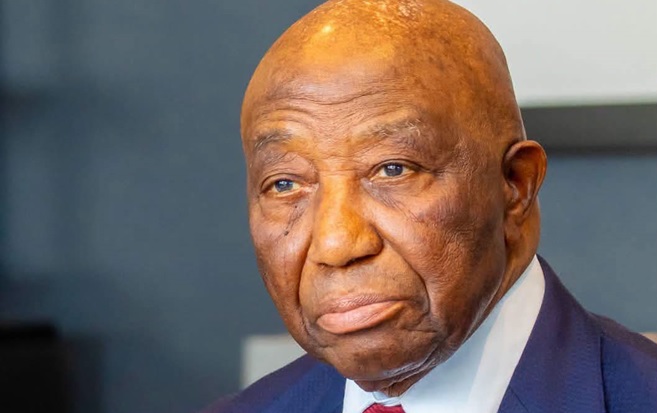
As Liberia achieved a historic milestone in domestic revenue for the first time, the Boakai administration made its stance clear: if the opposition has an “eating show,” the government now boasts a billion-dollar receipt.
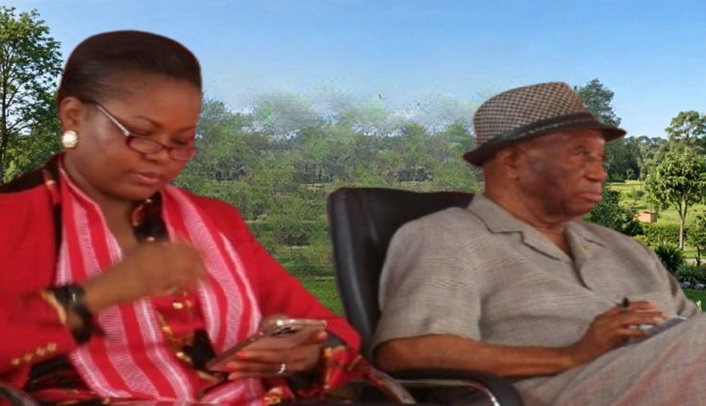
This bold statement came from a senior political adviser to President Joseph Nyuma Boakai, MacDella Cooper, who took to Facebook to celebrate the milestone with a striking remark: “Now this is what I call ‘EATING SHOW!!’”
The post quickly turned what could have been a mundane fiscal update into a significant political statement.
The presidential adviser proclaimed that the Boakai administration, through the Liberia Revenue Authority (LRA), had officially surpassed the US$1 billion mark in government revenue collection — framing this achievement as proof of enhanced compliance, improved revenue management, and what the adviser referred to as the president’s political determination.
In this context, the “eating” was not about food, but rather about the influx of money into the government’s treasury.
From viral spectacle to fiscal spectacle
The timing couldn’t be more politically charged. Weah made his return to Liberia on September 2, greeted by a large crowd of supporters.
At his Jamica Resort property afterward, the former president expressed that he wasn’t surprised by the warm reception, emphasizing his understanding of the affection Liberians still hold for him.
His return sparked politically intense moments in Monrovia, with reports of opposition supporters jeering at President Boakai as his convoy moved through the Rehab area while they awaited Weah’s arrival.
Weah quickly stepped back into the political arena, criticizing the Boakai administration for its approach to the rule of law and the case involving former Vice President Jewel Howard-Taylor. Amidst this backdrop, the announcement of a billion-dollar milestone carries significant political weight.
The LRA had been steadily nearing this achievement. On August 18, Commissioner General James Dorbor Jallah reported domestic collections of around US$904.7 million, bringing Liberia close to this historic mark.
By September 14, the LRA’s data indicated consolidated domestic revenue of about US$1.00048 billion, officially crossing the threshold.
The Executive Mansion hailed this accomplishment as a historic first for Liberia, marking the first time in the country’s 179-year history that it raised over US$1 billion in domestic revenue within a single year without relying on borrowing or foreign aid.
“Every single dollar” becomes the message
Cooper’s Facebook post did more than just celebrate the milestone. It aimed to clarify the political significance of the billion dollars.
The post expressed gratitude to LRA Commissioner General Dorbor Jallah and his revenue teams, highlighting that the funds collected should ultimately lead to improvements in infrastructure, public services, and government programs.
This message aligns with the LRA’s own public communications. When the Authority was nearing the milestone in August, Jallah warned that the US$1 billion should not be seen as an endpoint, but rather as a tool to enhance Liberia’s capacity to fund schools, healthcare facilities, roads, and other vital services.
President Boakai echoed this sentiment in his remarks on September 15, stating, “Behind every dollar stands a Liberian,” and emphasized that the government’s priority must now be to ensure that this record revenue results in tangible benefits for ordinary Liberians.
This sets the stage for the political debate surrounding the billion-dollar figure, as collecting the funds is one narrative, but demonstrating to Liberians how the money is utilized is another challenge altogether.
The real “eating show”
The President senior political adviser’s provocative phrase may carry significant implications. For a long time, Liberia’s political discourse has been rife with accusations about who is “eating” the nation’s resources.
However, the Boakai camp is now trying to flip that narrative. Their message is clear: if Liberia is going to have an “eating show,” let the focus be on development.
They want to see visible roads, schools, clinics, and public services, allowing taxpayers to understand where their money is going.
The government has a historic opportunity to make this case, but simply having the numbers doesn’t build roads, equip hospitals, or place teachers in classrooms. It provides the financial means to achieve those goals.
According to the LRA’s strategic plan, the Authority aims not just to increase revenue but also to enhance compliance, modernize revenue systems, and boost Liberia’s ability to fund its development.
One billion dollars – and one enormous test
The billion-dollar milestone arrives in Liberia during a particularly intense political climate. On one side, there’s a former president whose comeback shows he still has a significant political base and whose actions have thrust him back into the national dialogue.
On the other side is the current administration, keen to prove that its governance can be reflected in tangible economic and fiscal successes.
The difference between the two could not be more pronounced. Weah’s return produced the crowds.
Boakai’s latest headline is the billion-dollar collection
One is a spectacle of political allegiance, while the other serves as a figure in state revenue. The pressing political question now is whether this second display can be transformed into something tangible for the people of Liberia.
After the celebrations, the social media posts, the news headlines, and any champagne that might be popped, the average Liberian will inevitably pose the age-old political question: “What’s in it for me?”
This is where the real billion-dollar narrative begins. Perhaps this is the ultimate challenge that the Boakai administration will need to address