MONROVIA, LIBERIA – As Liberia moves toward the 2029 elections with the ruling Unity Party and opposition Congress for Democratic Change already occupying central positions in the country’s political debate, a new challenge is emerging beyond traditional campaigning: the ability of artificial intelligence to manufacture convincing political information and distribute it at extraordinary speed.
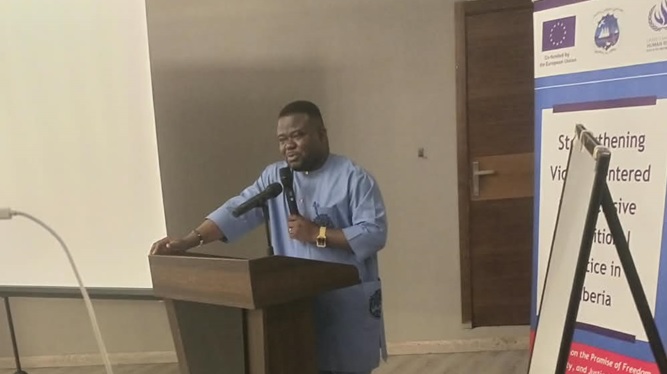
NAYMOTE Liberia Executive Director Eddie Jarawolo is warning that Liberia must prepare for that challenge now rather than waiting until the 2029 campaign is fully underway.
In his intervention titled “AI and Elections: Liberia Must Prepare Now,” posted on his official Facebook page on Friday, September 18, 2026, Jarawolo argues that artificial intelligence could fundamentally change the country’s electoral information environment by making it easier to produce fake videos, clone voices, fabricate official statements and target voters with deceptive information.
The warning comes against the backdrop of an increasingly defined political rivalry.
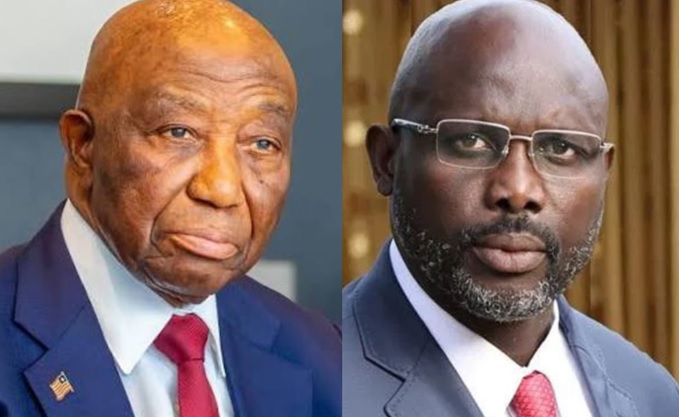
The Unity Party of President Joseph Nyuma Boakai currently controls the national executive, while the Congress for Democratic Change, associated with former President George Manneh Weah, remains the country’s principal opposition political force.
The two parties were separated by less than 8,000 votes in the first round of the 2023 presidential election, according to NEC’s official results. Weah received 804,087 votes while Boakai received 796,961.
Weah has since confirmed his intention to seek another presidential term in 2029, adding a new dimension to the political contest between the former president’s opposition movement and the incumbent UP administration.
That political environment makes information integrity an increasingly important electoral issue.
A political contest involving large and highly engaged partisan audiences can provide fertile ground for false information to spread rapidly, particularly when voters receive political news through social media, messaging applications and other digital platforms.
Artificial intelligence could make that challenge more difficult.
A fabricated speech could be made to appear as though it came from President Boakai.
A cloned voice could falsely appear to come from former President Weah.
A manipulated video could portray either political figure making statements that were never made.
A fake NEC announcement could be designed to look sufficiently official that voters share it before checking whether it originated from the Commission.
The danger is not limited to one party.
Any political candidate, party, election official or institution could become the target of AI-generated misinformation.
International IDEA has identified deepfakes, synthetic audio and AI-enabled microtargeting among emerging risks to elections, while also recognizing that AI can provide legitimate benefits to election administration.
This creates a difficult environment for voters.
Traditional political misinformation can sometimes be challenged by comparing a statement with an authentic recording, document or official announcement.
AI-generated material can make that verification process considerably more difficult because the false content itself can be manufactured to resemble the original.
Jarawolo is therefore calling for the NEC to establish trusted verification mechanisms before the 2029 election period becomes politically intense.
His proposals include stronger cybersecurity, official digital verification channels, monitoring and rapid-response mechanisms, staff training and simulations designed to test the country’s ability to respond to AI-generated electoral crises.
The need for such preparation is particularly relevant because the NEC has already identified technological advancement and misinformation as challenges that must be addressed as part of its 2026–2030 strategic plan. The Commission says the plan is intended to modernize Liberia’s electoral system, strengthen institutional capacity and deepen public confidence ahead of 2029.
The emerging CDC-UP contest adds another layer to that challenge.
If political competition becomes increasingly intense, the distinction between legitimate campaign messaging and fabricated material could become more consequential.
But the issue should not be framed as an AI threat belonging exclusively to the CDC or UP.
The same technology could be used against either political organization.
A fabricated message targeting the UP could create unnecessary controversy around the government.
A fabricated message targeting the CDC could generate anger among opposition supporters.
A fake election announcement could create confusion among supporters of multiple candidates simultaneously.
That is why the primary defense must come from institutions trusted to verify electoral information independently of political affiliation.
Jarawolo’s proposal places the NEC at the center of that responsibility.
He argues that the Commission should have reliable digital platforms where citizens can immediately confirm whether an election-related statement, result, directive or announcement is genuine.
The media would also have an important role in slowing the spread of false information by verifying material before publication and directing audiences toward authenticated sources.
Political parties themselves could become part of the solution by establishing mechanisms for quickly confirming whether controversial statements attributed to their candidates or officials are genuine.
The objective would be to prevent an information vacuum from developing during moments of political tension.
If voters cannot quickly determine what is authentic, false information can fill the gap.
That is particularly important during election periods, when citizens may be making decisions based on rapidly changing information.
Jarawolo therefore argues that Liberia must neither fear nor reject AI.
Instead, the country must understand the technology, establish rules for its responsible use and build defenses against its misuse.
With the UP in government, the CDC in opposition and former President Weah already declaring his intention to contest in 2029, the country’s political environment is entering another competitive phase.
Whether other parties and candidates ultimately reshape that contest remains an open political question.
But one issue is already clear from Jarawolo’s warning and the NEC’s own strategic planning. The integrity of election information will be as important to Liberia’s 2029 democratic process as the integrity of the ballot itself.