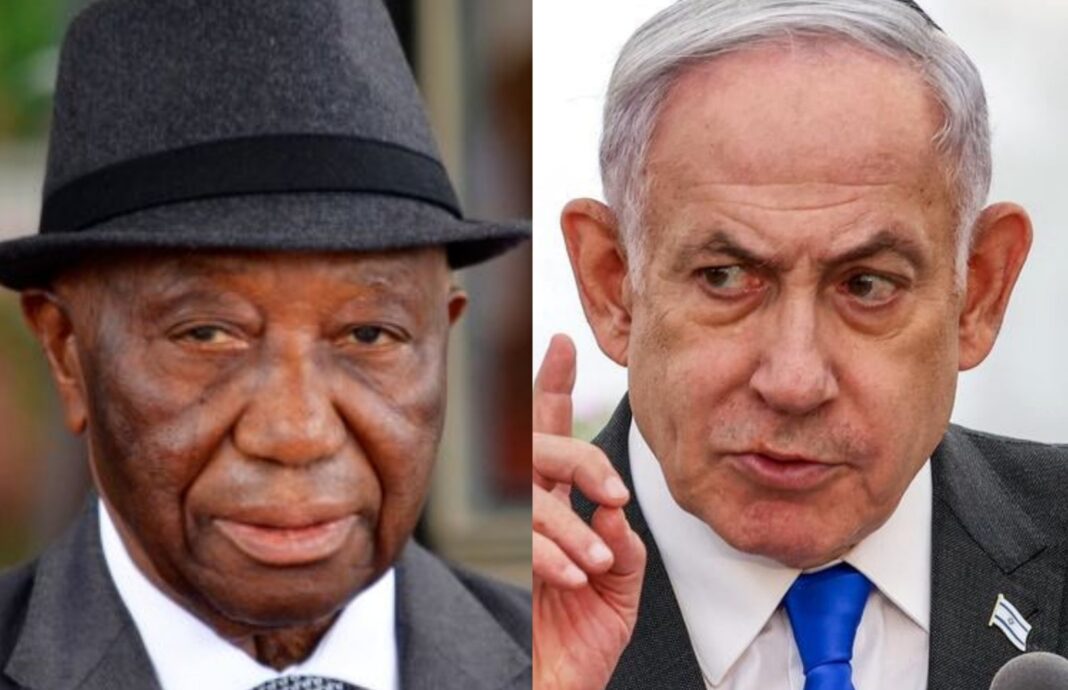
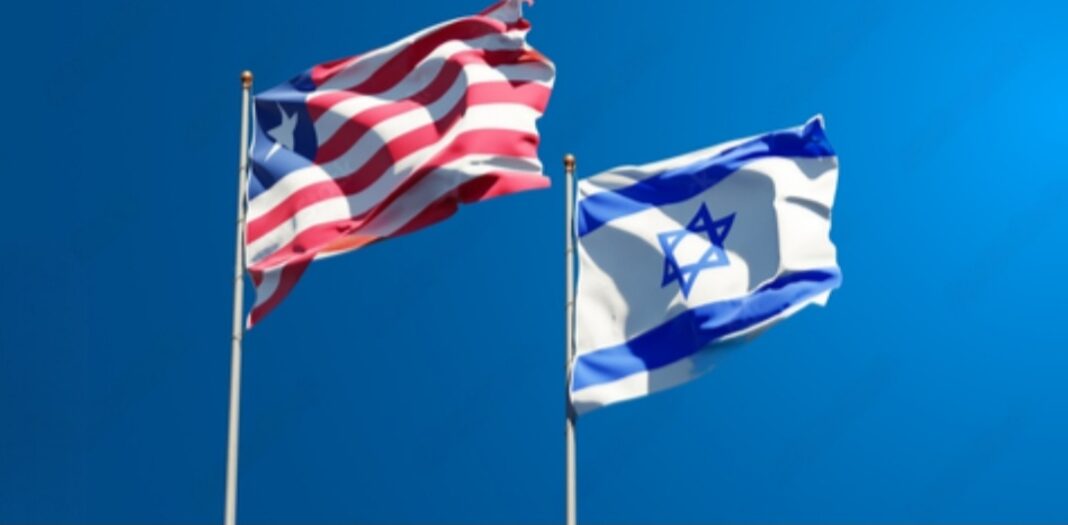
MONROVIA — Long before Liberia’s current debate over Israel, Palestine and its position at the United Nations, Monrovia and Jerusalem had forged a relationship that was unusually close for two countries separated by thousands of miles.
That relationship was not built solely on diplomacy. It produced infrastructure, agricultural assistance, medical expertise, scholarships, technical training, security cooperation and private investment at critical periods in Liberia’s development.
A review of historical documents and Liberian government records by Liberian investigative journalist Lyndon Ponnie, Sr. reveals a relationship whose depth is often forgotten — and whose legacy remains visible across Monrovia.
A FRIENDSHIP BORN WITH ISRAEL
Liberia was among the countries that voted in 1947 for the UN partition plan for Palestine, which proposed separate Jewish and Arab states. Liberia subsequently established diplomatic relations with Israel in 1954.
The relationship deepened during the presidency of William V. S. Tubman.
Israel’s then Foreign Minister Golda Meir visited Liberia during the Tubman era and, according to Liberia’s Foreign Ministry, was honored by the Gola people as a Queen Mother.
By 1959, Liberia and Israel had signed a Treaty of Friendship, declaring lasting friendship between the two countries and their peoples.
But the relationship was about much more than ceremonies and treaties.
THE EXECUTIVE MANSION CONNECTION
Perhaps the most visible symbol of the relationship is Liberia’s Executive Mansion.
Constructed between 1960 and 1963 and dedicated in January 1964, the building has long been associated with Israeli construction expertise. Liberia’s government has identified Israeli companies as participants in major construction projects of the Tubman era, including the Executive Mansion.
Other major structures identified by Liberian authorities as having Israeli involvement include the Ducor Palace Hotel, Monrovia City Hall and the Temple of Justice.
Liberia’s Ministry of National Defense has also stated that Israeli private businesses were involved in the construction of the former Defense Ministry building.
The historical record therefore points to a significant Israeli role in Liberia’s infrastructure development — although it would be inaccurate to suggest that Israel alone financed or built every one of these projects.
ISRAEL AND THE OPEN DOOR POLICY
Israel’s contribution extended into economic development.
Liberia’s Defense Ministry says Israeli assistance was connected to President Tubman’s Open Door Policy, which sought to attract foreign investment and stimulate development beyond Monrovia.
Agriculture became a major area of cooperation.
Israeli experts brought agricultural knowledge to Liberia, while Liberians received opportunities for training in Israel.
That cooperation continued decades later.
Under the Weah administration, Israeli experts worked with Liberian farmers and technicians, including in aquaculture, while later agreements focused on rice production and adding value to commodities such as rubber, oil palm and cassava.
For a country that continues to spend heavily on food imports, the agricultural dimension of the Israeli relationship remains particularly relevant.
MEDICINE AND EDUCATION
The relationship also entered Liberia’s medical sector.
Historical records show Israel responding to Liberia’s request for medical specialists, including assistance in developing ophthalmic services and eye clinics and training Liberian medical personnel.
Education was another pillar.
Liberian students received opportunities to study and train in Israel, while Israeli development programs later provided scholarships and technical training in agriculture and related fields. Liberia’s Foreign Ministry has described scholarships, agricultural programs, health assistance and technical cooperation as longstanding elements of the relationship.
SECURITY COOPERATION
The partnership eventually expanded into security.
In 2024, Liberia’s Defense Ministry said it was seeking stronger cooperation with Israel in areas including intelligence training and Coast Guard capabilities.
That marked a continuation of a relationship that has repeatedly adapted to Liberia’s changing needs.
THE RELATIONSHIP WAS NOT ALWAYS SMOOTH
Despite its extraordinary history, Liberia’s relationship with Israel was not uninterrupted.
Liberia broke diplomatic relations with Israel following the 1973 Yom Kippur War, amid the wider diplomatic realignment of many African states.
Relations were later restored.
In 1984, Israeli President Chaim Herzog visited Monrovia, and the two governments discussed cooperation involving agriculture, roads, electricity and other development projects.
The episode demonstrated that the relationship had survived a major diplomatic rupture.
WHAT DID LIBERIA GIVE ISRAEL?
The relationship was never entirely one-sided.
For Israel, Liberia was an important early African diplomatic partner at a time when the newly established Jewish state was seeking relationships across the continent.
Liberia’s early support at the United Nations and its diplomatic ties with Israel gave Jerusalem an important opening into Africa.
Liberia, meanwhile, gained access to Israeli expertise, technology, training and investment.
It was therefore a relationship built around mutual diplomatic and developmental interests, even though the benefits were not always equal or permanent.
FROM FRIENDSHIP TO A MORE COMPLICATED PRESENT
Today, the relationship has entered another complicated phase.
Liberia remains historically connected to Israel, but its contemporary foreign policy also recognizes Palestinian political rights and supports a two-state solution.
That creates a delicate diplomatic balance for Monrovia, particularly now that Liberia is serving on the UN Security Council for 2026–2027.
Liberia must navigate its historic relationship with Israel alongside its ties with the United States, the African Union, Arab and Muslim countries and the wider international community.
That does not necessarily represent a rejection of Israel.
Rather, it reflects how dramatically Liberia’s foreign-policy environment has changed since the Tubman era.
THE HISTORY LIBERIANS SHOULD NOT FORGET
From the Executive Mansion and Ducor Palace to agriculture, medicine, education and technical training, the historical record shows that Israel was an important partner in several chapters of Liberia’s development.
But the record also deserves careful treatment.
Israel did not build modern Liberia alone. Liberian governments, citizens and professionals, along with American, European, African and other international partners, also played major roles.
Nor was every Israeli-linked project a gift from the Israeli government; some involved private Israeli companies and commercial arrangements.
What the record does establish is that Liberia and Israel developed an unusually deep relationship at a formative period in both countries’ histories.
The question for Liberia today is not whether that history existed.
It clearly did.
The more difficult question is whether Monrovia can preserve the practical and diplomatic benefits of that historic relationship while independently navigating today’s deeply divided international debate over Israel and Palestine.
From Tubman’s Liberia to the Liberia of today, the relationship with Israel has survived friendship, rupture, reconciliation and changing geopolitics. Its history remains written not only in diplomatic archives — but in some of the most recognizable landmarks of Monrovia.
By Lyndon Ponnie, Sr., Liberian Investigative Journalist