How Monrovia Went From Helping Open Africa’s Door to Israel to Criticizing Its Policies at the UN
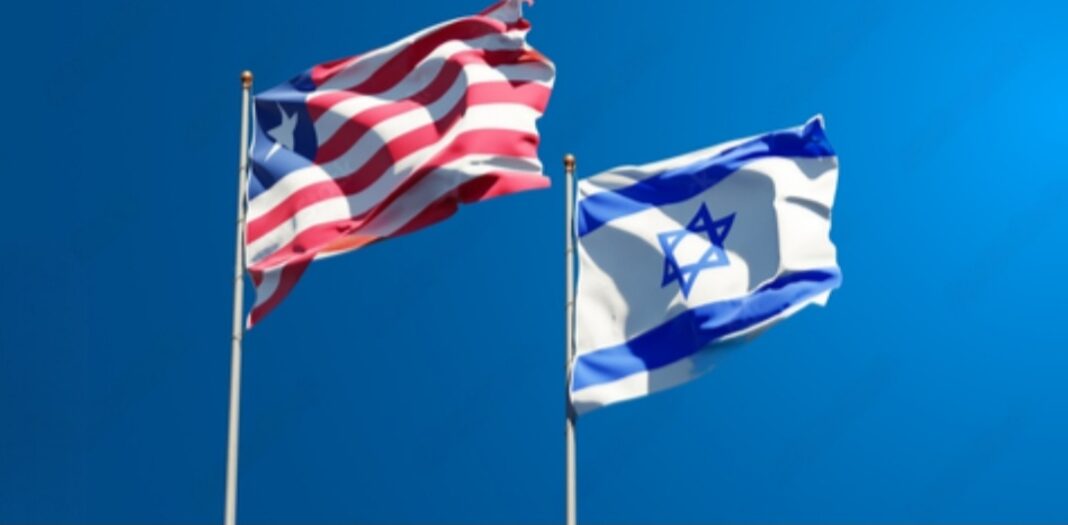
MONROVIA — Few diplomatic relationships carry the historical irony of Liberia and Israel.
Nearly eight decades ago, Liberia stood among the countries that voted at the United Nations in favor of the 1947 partition plan for Palestine — the resolution that proposed separate Jewish and Arab states. Liberia was one of only 33 countries to support the plan, while 13 voted against it.
That vote placed Liberia on the side of the emerging Jewish state at a decisive moment in history.
Today, however, Liberia’s diplomatic language toward Israel is considerably more complicated.
Liberian investigative journalist Lyndon Ponnie, Sr. examines historical documents and reports, tracing the intriguing and increasingly complicated diplomatic position in which Liberia finds itself today.
As a member of the United Nations Security Council for 2026–2027, Liberia has publicly expressed deep concern over developments in the Palestinian territories and has called for a political pathway toward a two-state solution, while simultaneously reaffirming Israel’s right to security.
The question, therefore, is not simply whether Liberia is “pro-Israel” or “pro-Palestine.”
The more important question is this:
What happened to one of Israel’s earliest African friends?
A FRIENDSHIP THAT GOES BACK TO 1959
Liberia’s relationship with Israel is not a recent diplomatic arrangement.
On April 9, 1959, Liberia and Israel signed a Treaty of Friendship in Monrovia.
The treaty went beyond ordinary diplomatic recognition. Its first article declared that there would be “perpetual peace and firm and lasting friendship” between Israel and Liberia and between their peoples. The agreement entered into force in 1961.
That document is important because it demonstrates the depth of the relationship at the beginning of Israel’s diplomatic engagement with independent African states.
Liberia was not merely another country establishing relations with Israel.
It was one of the African countries that helped give Israel an opening on a continent that was then overwhelmingly under colonial rule.
LIBERIA’S HISTORIC POSITION
Liberia’s 1947 vote is particularly significant.
At the time, most of Africa had not yet achieved independence. Liberia, one of the continent’s two independent states, was already participating in the UN debate over Palestine.
When the General Assembly voted on November 29, 1947, Liberia voted YES.
The proposed partition was subsequently accepted by the General Assembly by 33 votes to 13, with 10 abstentions.
Israel declared independence the following year.
That historical record makes Liberia’s current diplomacy worth examining closely.
Because today’s Monrovia is operating in a completely different geopolitical environment from the Liberia of President William V. S. Tubman.
FROM TUBMAN’S FRIENDSHIP TO TODAY’S TWO-STATE LANGUAGE
Liberia’s contemporary position does not amount to a formal rejection of Israel.
Indeed, Liberia’s recent Security Council statements explicitly recognize Israel’s right to security while also supporting Palestinian political rights and statehood aspirations.
In May 2026, Liberia told the Security Council that it remained deeply concerned about the deteriorating situation in the occupied Palestinian territories and the widening cycle of violence.
At another Security Council meeting, Liberia called for a credible and irreversible pathway toward a two-state solution and said Palestinian political rights and Israel’s security are objectives that need not be contradictory.
That is a very different diplomatic formulation from simply taking Israel’s side.
But it is equally different from declaring Israel an enemy.
THE QUESTION RAISED BY THE UN WALKOUT
That distinction becomes particularly important following Liberia’s reported absence from, or participation in, the mass diplomatic protest surrounding Israeli Prime Minister Benjamin Netanyahu’s UN General Assembly address.
A reported tally identified Liberia among dozens of delegations that were absent or left the chamber.
That episode should not be interpreted automatically as Liberia abandoning its historic relationship with Israel.
Nor should it be presented as proof that Liberia considers Israel a national threat.
The more defensible interpretation is that Liberia is increasingly positioning itself within the broader international debate over Israel’s conduct in Gaza and the Palestinian territories.
And that creates a remarkable historical contrast.
Liberia once helped give the emerging State of Israel international diplomatic legitimacy. Today, Liberia is publicly demanding that international law and Palestinian political rights also be respected.
WHAT HAS CHANGED?
The answer lies partly in Liberia’s changing international environment.
The Liberia of the 1950s was a small independent African republic navigating a world dominated by the Cold War, European colonialism and emerging African nationalism.
Today’s Liberia operates within the African Union, a much larger community of independent African states, and a United Nations in which the Palestinian question has become one of the most persistent diplomatic issues.
Liberia must therefore balance several relationships at once:
Israel.
The United States.
The African Union.
The Arab and Muslim world.
The Palestinian leadership.
And the broader international community.
For Monrovia, none of these relationships can simply be ignored.
AND THEN THERE IS AMERICA
There is another layer to the story.
Liberia’s relationship with Israel cannot be completely separated from its unusually close historical relationship with the United States.
Both countries have maintained longstanding ties with Washington, while the United States remains Israel’s most important international ally.
That makes Liberia’s foreign-policy balancing act particularly delicate.
Liberia can criticize Israeli policies without necessarily becoming anti-Israel.
It can support Palestinian statehood without becoming anti-American.
And it can defend Israel’s security while opposing actions it believes violate international law.
The challenge for Monrovia is therefore one of diplomatic consistency.
THE BIG QUESTION FOR LIBERIA
The issue confronting Liberia is not whether it must choose between Israel and Palestine.
Its own recent statements suggest that Monrovia is advocating a two-state framework in which Palestinian political rights and Israeli security coexist.
The bigger question is whether Liberia can maintain that position consistently.
If Liberia invokes international law in relation to Palestine, will it apply the same principle to other conflicts?
If it supports Palestinian statehood, will it continue maintaining the historic friendship embodied in the 1959 treaty with Israel?
If it recognizes Israel’s right to security, will it also consistently demand protection of Palestinian civilians?
And, perhaps most importantly, can Liberia preserve its historic relationships with both Israel and the United States while becoming more vocal about Palestinian rights?
These are not easy diplomatic questions.
But they are precisely the questions Liberia’s new role on the Security Council makes impossible to avoid.
A RELATIONSHIP THAT HAS CHANGED — BUT NOT DISAPPEARED
The historical record does not support describing Liberia and Israel as enemies.
Quite the opposite.
Liberia was an early supporter of the partition plan, established diplomatic relations with Israel early, and signed a formal Treaty of Friendship with the Israeli state in 1959.
What has changed is the political context surrounding the relationship.
Liberia’s present position increasingly reflects the African and international demand for Palestinian political rights while still recognizing Israel’s security concerns.
That makes the story of Liberia and Israel less a story of friendship ending than one of friendship being tested by a changing world.
For a country with Liberia’s unique historical connection to both the United States and Israel, the coming years may reveal whether Monrovia can preserve its historic friendships while pursuing a foreign policy increasingly centered on international law, Palestinian statehood and a negotiated two-state settlement.
The irony is difficult to miss: Liberia helped open Africa’s diplomatic door to Israel nearly 80 years ago. Today, Liberia sits at the UN table helping debate what the future of Israel and Palestine should look like.