Jury Disbandment Delays Trial as Samuel Tweah Case Raises Questions About Allegations of Jury Tampering When the State Loses
MONROVIA, LIBERIA — Liberia’s justice system faces an uncomfortable question: Are allegations of jury tampering becoming a recurring explanation for prosecutorial failures in high-profile criminal cases, particularly when the State loses—or appears to be losing—a case?
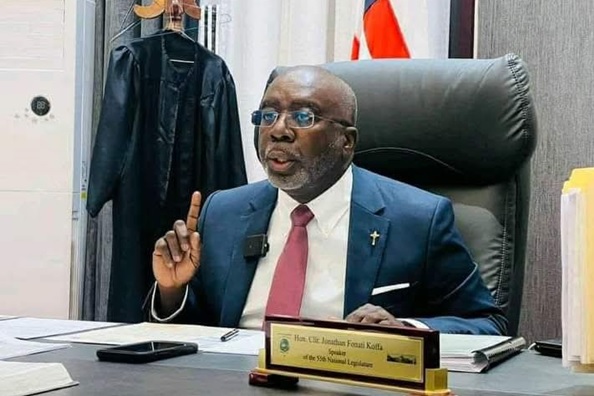
The Capitol Building arson trial involving former House Speaker Cllr. Jonathan Fonati Koffa brings this question into sharp focus. The controversy surrounding the disbandment of the original jury, the resulting procedural setbacks, and the continuing uncertainty facing the accused has intensified concerns about the fairness and credibility of the proceedings.
The issue becomes even more significant when considered alongside the case involving former Finance Minister Samuel D. Tweah, whose acquittal has also become part of the national debate about jury integrity and the administration of criminal justice.
There have also been reports of alleged jury tampering in a drug case in Margibi County. However, based on the information currently available, it is not possible to determine the precise facts, the identity of the parties involved, whether any investigation has been completed, or whether a court has made findings establishing misconduct. Such reports should therefore be treated as allegations—not proven facts—until supported by official records, credible evidence, or judicial findings.
When the State fails to secure a conviction, is the problem necessarily a corrupt jury—or could it be a failure to prove the allegations beyond a reasonable doubt?
That is the question the Supreme Court of Liberia must help clarify.
IS JURY TAMPERING BECOMING AN EXCUSE FOR PROSECUTORIAL FAILURE?
In the Koffa arson trial, Judge Roosevelt Z. Willie disbanded the original jury and declared a mistrial following allegations that the jury had been compromised. The decision disrupted the proceedings and triggered a legal challenge that ultimately reached the Supreme Court.
In August 2026, the Supreme Court rejected the defense’s petition for a writ of prohibition, allowing the trial to proceed.
But that ruling did not determine Koffa’s guilt or innocence, nor did it resolve the broader public debate about the consequences of the jury’s disbandment.
The Samuel Tweah case raises a related question. Following Tweah’s acquittal, Chief Justice Yamie Quiqui Gbeisay Sr. publicly raised concerns about jury corruption, including findings associated with an investigation into the acquittal proceedings.
Reports of alleged jury tampering in a Margibi County drug case make the need for careful, evidence-based analysis even more important. A report, complaint, or public allegation does not by itself establish that jurors were bribed, threatened, influenced, or otherwise compromised. The relevant questions include whether authorities conducted a lawful investigation, what evidence was collected, whether any suspects were charged, and whether a court made findings after giving all parties an opportunity to be heard.
Taken together, the Koffa and Tweah matters show why jury tampering must be addressed seriously but carefully. In one case, the jury was disbanded before a final verdict; in the other, an acquittal prompted public concerns about possible jury corruption. These are not identical circumstances, and they should not be treated as proof of a general pattern without verified evidence. Yet both cases raise the same institutional question: How should Liberia respond when the integrity of a jury is questioned without undermining the presumption of innocence or the finality of lawful verdicts?
Those concerns deserve serious attention. A corrupt jury threatens the administration of justice and must not be tolerated.
However, another danger must also be considered: the possibility that allegations of jury tampering could become a convenient explanation whenever the prosecution fails to obtain the outcome it seeks.
An acquittal does not automatically prove that a jury was corrupt. Nor does a jury’s decision to question the prosecution’s evidence establish misconduct.
The prosecution bears the burden of proving its case. If its evidence is insufficient, the law provides for acquittal. If there is credible evidence of jury corruption, the matter must be investigated and addressed through the appropriate legal procedures.
These are two different issues, and they must not be confused.
The Supreme Court should therefore clarify the legal standards governing allegations of jury tampering, the evidence required to establish such misconduct, and the circumstances in which a jury may properly be disbanded or its verdict challenged.
Without clear and consistently applied standards, public confidence in criminal trials could suffer.
THE COST OF DISBANDING A JURY
In the Koffa case, the disbandment of the jury has pushed the proceedings backward, prolonging uncertainty for defendants who have not been convicted.
The State has a legitimate responsibility to prosecute those it believes committed the December 18, 2024, Capitol Building arson. But that responsibility does not override the accused persons’ right to a fair and timely trial.
The government says it possesses evidence linking the defendants to the crime. The question is whether that evidence can withstand scrutiny in court.
The prosecution must present its witnesses and evidence, allow meaningful cross-examination, and establish guilt beyond a reasonable doubt.
It cannot substitute allegations of jury misconduct for proof of the underlying criminal charges.
Likewise, the defense’s concerns about the process must be assessed through the law, not accepted automatically as established facts.
The objective should be a fair determination of the charges—not an endless cycle of proceedings, objections, and delays.
THE CHIEF JUSTICE MUST HELP RESTORE PUBLIC CONFIDENCE
Chief Justice Gbeisay’s concerns about jury corruption raise an important institutional question. If the problem is serious enough to threaten confidence in the jury system, Liberia needs a transparent explanation of its scope and the safeguards necessary to address it.
But the public also deserves clarity about the emerging pattern in which jury misconduct becomes a central issue following controversial outcomes in high-profile prosecutions.
Are these cases demonstrating proven instances of jury corruption? Or are there circumstances in which weaknesses in the prosecution’s evidence must also be examined?
The answers must come from documented facts and judicial findings, not speculation.
The Supreme Court should explain how courts can distinguish genuine jury tampering from legitimate jury scrutiny of evidence, and how the rights of accused persons can be protected when a jury is disbanded.
The objective should not be to shield corrupt jurors or protect defendants from legitimate prosecution. It should be to ensure that neither the State nor the defense can manipulate the judicial process.
JUSTICE OR RAW POWER?
The Koffa arson trial is about more than the destruction of the Capitol Building. It is also about whether Liberia’s justice system can demonstrate that criminal proceedings are determined by evidence and law rather than institutional pressure or political considerations.
The seriousness of the alleged crime does not diminish the defendants’ constitutional protections. Equally, the political sensitivity of the case does not establish that the prosecution is acting improperly.
But when a jury is disbanded, proceedings are delayed, and jury corruption becomes a central issue in other prominent cases, the judiciary must recognize the importance of public confidence.
The State must prove its allegations. The defense must be allowed to challenge the evidence. And allegations of jury tampering—including those reported in the Margibi County drug case—must be supported by credible evidence and addressed under consistent legal standards.
The Supreme Court must help establish where legitimate efforts to protect jury integrity end and the danger of using jury-tampering allegations to explain prosecutorial setbacks begins.
Liberia needs accountability for the Capitol Building fire. It also needs a justice system in which acquittals are respected when the State fails to prove its case and genuine jury corruption is addressed when established.
Neither outcome should depend on political influence or institutional power.
The government says it has the evidence against Koffa and his co-defendants.
Then let that evidence be tested in court.
And if the State believes a jury has been compromised, let it establish that claim through credible evidence and due process.
Because justice cannot be measured simply by whether the government secures a conviction. It must also be measured by whether the law is applied fairly when the government loses.