Government records only US$1.335 million in dividend receipts against US$14.074 million projected as public corporations fall short of their financial obligations; taxpayers and domestic revenue collections carry the burden of financing the national budget
MONROVIA, LIBERIA — While ordinary Liberians continue to face poor roads, inadequate electricity, unemployment and limited access to essential public services, three government-owned institutions expected to contribute millions of dollars to the national treasury failed to deliver most of their projected dividends in 2025.
The National Port Authority (NPA), Liberia Petroleum Refining Company (LPRC) and National Fisheries and Aquaculture Authority (NaFAA) were collectively expected to contribute US$12.85 million to government revenue. But according to the Auditor General’s report on the Government of Liberia’s Consolidated Fund Accounts for the 2025 fiscal year, only US$799,000 was recorded from the three institutions.
The combined shortfall was approximately US$12.051 million.
Across all dividend categories, the government’s performance was even worse. The national budget projected approximately US$14.074 million in dividend receipts, but the Auditor General recorded only US$1.335 million, leaving a shortfall of approximately US$12.739 million.
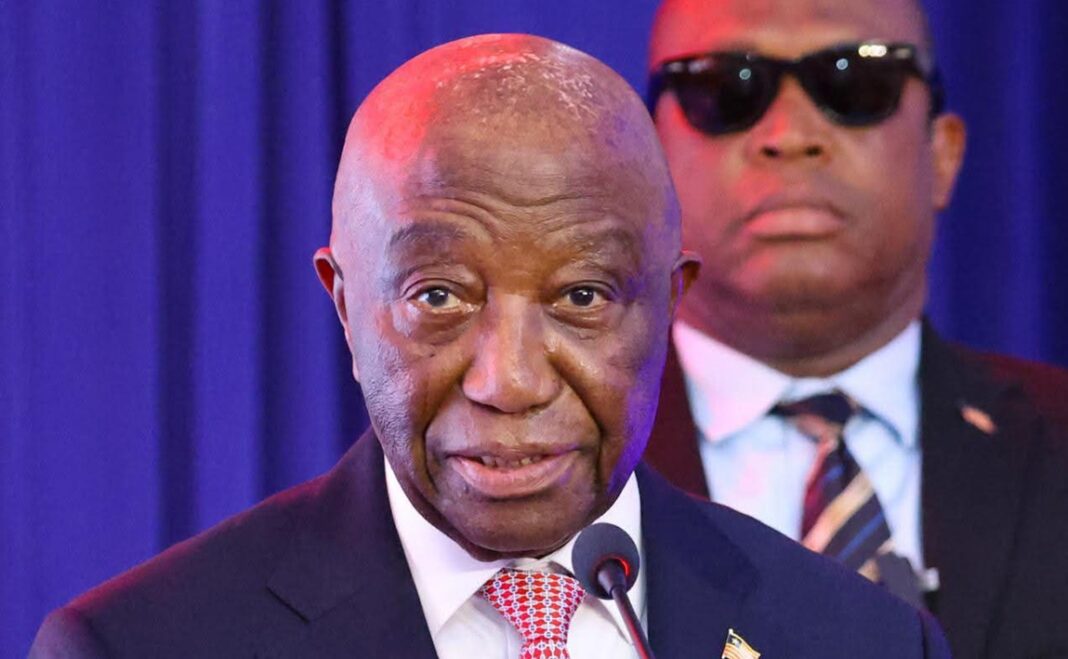
The figures raise serious questions about the financial accountability of public corporations and the oversight exercised by President Joseph Nyuma Boakai’s administration.
Why were millions of dollars expected from public institutions not transferred to the national treasury? Were the institutions unable to pay because of financial difficulties, or did their management fail to meet their obligations? Did the Ministry of Finance demand payment? And what action, if any, has President Boakai taken against institutions that failed to deliver the revenue included in his government’s national budget?
These are questions that deserve answers, particularly when the government depends heavily on domestic revenue to finance national development and public services.
Millions expected, but little delivered
The 2025 government financial records identify three institutions whose dividend contributions fell significantly below their budget projections.
The National Port Authority was expected to contribute US$5.85 million but recorded no dividend payment.
The National Fisheries and Aquaculture Authority was expected to contribute US$2 million but also recorded zero.
The Liberia Petroleum Refining Company was expected to contribute US$5 million but delivered only US$799,000, leaving approximately US$4.201 million below its projected contribution.
Together, these institutions were expected to provide US$12.85 million, but the government recorded just US$799,000.
The wider dividend account shows that government received approximately US$1.335 million against US$14.074 million budgeted. In other words, roughly nine out of every ten dollars expected from dividends were not recorded as received.
These figures are contained in the Auditor General’s review of actual government receipts against the approved 2025 budget.
The figures do not automatically establish that the agencies violated the law. A budgeted dividend is a revenue projection, not necessarily a legally declared dividend or an unconditional payment obligation. Whether a corporation can distribute dividends depends on its audited financial position, applicable laws, board decisions and government ownership arrangements.
But when the government includes millions of dollars in its national budget, it has a responsibility to explain why the expected revenue did not materialize.
NPA: US$43.68 million in reported revenue, but no dividend recorded
The National Port Authority presents one of the most significant cases in this investigation.
A review of its four quarterly management financial reports shows that the NPA reported approximately US$43.68 million in revenue during 2025.
The authority reported US$10.202 million in the first quarter, US$8.805 million in the second quarter, US$12.055 million in the third quarter and US$12.620 million in the fourth quarter.
Its 2025 annual report also disclosed that cargo throughput increased to approximately 12.3 million metric tons, representing a 10.7 percent increase over 2024. The authority operates the Freeport of Monrovia and the ports of Buchanan, Greenville and Harper.
Yet the Auditor General recorded no dividend receipt from the NPA against the US$5.85 million projected in the national budget.
The NPA’s revenue figure must not be mistaken for net profit or cash available for distribution. The corporation reported substantial operating expenses and approximately US$60.17 million in accounts receivable at the end of December 2025. Receivables are money owed to the authority, not money already collected and available in its bank accounts.
Nevertheless, the financial performance raises important questions.
Did the NPA declare a dividend for 2025? If not, was the decision based on operating costs, debts, outstanding receivables or other financial obligations? Did the Ministry of Finance approve the non-payment? Was the government formally notified?
The authority must explain why a corporation reporting tens of millions of dollars in annual revenue made no recorded dividend contribution against the government’s US$5.85 million projection.
The public also deserves to know who owes the NPA approximately US$60.17 million, how long those debts have remained outstanding and what action management has taken to recover them.
LPRC: US$5 million expected, only US$799,000 received
The Liberia Petroleum Refining Company was expected to contribute US$5 million to the national treasury in 2025.
However, the Auditor General recorded only US$799,000, leaving a shortfall of approximately US$4.201 million.
The LPRC has previously reported dividend payments to government. Its management announced a US$2.5 million dividend for 2024, compared with US$1.3 million in 2023, attributing the increase to improved financial performance and operational efficiency.
That history makes the 2025 shortfall a matter requiring explanation.
What happened to the company’s expected US$5 million contribution? Did the company’s financial position deteriorate? Were there outstanding debts or other obligations that prevented a full dividend payment? Was the US$799,000 formally declared as a partial dividend, or was it recorded under another payment arrangement?
The LPRC should release its audited 2025 financial statements, board resolutions on dividends and payment records to establish exactly why it fell short of the government’s projection.
NaFAA: Another year of questions over government contributions
The National Fisheries and Aquaculture Authority was expected to contribute US$2 million in dividends to the 2025 national budget.
The Auditor General recorded no dividend receipt from the authority.
The issue is particularly concerning because NaFAA had already faced public criticism over its failure to meet an earlier contribution target.
In January 2025, the Liberia Revenue Authority disclosed that NaFAA had failed to remit its expected US$1.2 million contribution for the 2024 fiscal year. NaFAA’s communications department reportedly explained that the failure was connected to the absence of board approval of its budget and said the contribution would be reflected in a budget recast.
That explanation related to the 2024 financial year. It does not explain why the government again recorded no dividend from the authority in 2025.
Did the Ministry of Finance and the LRA follow up on the previous failure? Was NaFAA’s board asked to explain its financial position? Did the authority have sufficient distributable earnings to pay the projected US$2 million?
The government must explain what steps were taken to prevent the problem from recurring.
How did Boakai’s government finance the US$880.66 million national budget?
The dividend shortfall raises another important question: If government-owned institutions failed to deliver millions of dollars in expected contributions, how did the Boakai administration finance its 2025 national budget?
The approved FY2025 national budget amounted to approximately US$880.66 million.
The government planned to finance most of that amount through domestic revenue, with external resources making up the remainder.
Domestic revenue was projected at approximately US$804.63 million, representing about 91.4 percent of the budget’s resource envelope.
This money was expected largely from taxes on income and profits, international trade, goods and services, property income, administrative fees, royalties and other non-tax collections.
The government also projected approximately US$76.04 million in external resources and financing. This included US$60 million in grants, with US$40 million expected from the World Bank and US$20 million from the European Union, as well as approximately US$16.04 million in projected domestic financing.
The figures show that the government was depending primarily on revenue collected within Liberia rather than foreign assistance to finance its national expenditure.
Taxpayers carried much of the financing burden
The Auditor General’s report shows that the government’s actual revenue performance reached approximately US$885.1 million in 2025, exceeding the approved revenue projection of US$880.66 million.
Domestic revenue collections reached approximately US$847.05 million against a target of US$804.63 million.
Tax revenue accounted for approximately US$692.62 million, while non-tax revenue amounted to approximately US$154.44 million.
This means domestic revenue exceeded its target by approximately US$42.43 million. The stronger domestic collections helped offset the failure to receive some of the external resources expected in the budget.
But the government did not receive all the foreign financing it had projected.
The expected US$40 million World Bank grant was not received during the 2025 fiscal year because the required disbursement conditions had not been met. The European Union provided approximately US$24.61 million, exceeding its US$20 million projection. Other recorded external receipts included approximately US$937,000 from the World Food Programme and US$12.5 million from the IMF.
The government also recorded no receipts against the US$18.8 million in contingent revenue projected from the Liberia Petroleum Regulatory Authority and the Liberia Maritime Authority.
The Auditor General reported actual cash expenditure of approximately US$902.77 million, exceeding the approved US$880.66 million expenditure envelope. The government attributed the higher spending partly to upward budget adjustments and payments of outstanding commitments carried over from the previous fiscal year’s 90-day window.
The figures reveal an important reality: the government was able to finance its spending largely because domestic revenue collections performed above target, while some expected external resources and dividend contributions failed to materialize.
However, strong tax collections do not remove the responsibility of public corporations to account for their finances and explain why projected dividends were not received.
Why has the President not publicly explained the failures?
The most important question now concerns government oversight.
President Boakai’s administration has emphasized domestic revenue mobilization and improved public financial management. The President’s government has also reported progress in revenue collection and institutional reforms.
The International Monetary Fund’s 2025 programme review referred to an additional US$400,000 in expected dividends from state-owned enterprises and a planned directive by the Ministry of Finance minister concerning those contributions.
Yet the final audited accounts recorded only US$1.335 million in dividend receipts against the US$14.074 million projected.
The documents reviewed for this investigation do not establish whether the President ordered specific disciplinary, administrative or legal action against the institutions that failed to deliver their projected contributions.
That is why the Executive Mansion and Ministry of Finance must answer several questions.
Did President Boakai summon the heads of the NPA, LPRC and NaFAA to explain their financial performance? Did the Ministry of Finance issue formal demands for payment or request audited accounts explaining the shortfalls? Were the boards of the institutions asked to justify why the projected dividends were not declared or paid? Were any investigations initiated into the financial decisions that resulted in the missing contributions?
If the institutions were unable to pay because of financial difficulties, the government should publish the evidence. If management failed to comply with lawful obligations, the public should know what consequences followed.
The President should also explain whether his administration has a policy for monitoring dividend obligations and ensuring that state-owned enterprises make appropriate returns to the national treasury.
The General Auditing Commission has raised wider accountability concerns
The dividend shortfall comes against the background of broader concerns about the management of public institutions.
In its 2025 programme review, the IMF reported that General Auditing Commission special audits of public institutions had identified non-compliance with laws and regulations, weak internal controls, poor financial reporting and limited transparency.
The IMF also acknowledged that implementation of previous audit recommendations had been unsatisfactory and said the government was committed to addressing the weaknesses.
That makes the dividend issue part of a wider public financial management question: What happens after government institutions fail to meet financial obligations or auditors identify weaknesses?
An audit report is not the end of accountability. It should lead to explanations, corrective measures, recovery of public funds where necessary and appropriate consequences when wrongdoing is established.
The Auditor General’s report on the 2025 consolidated accounts received an unqualified audit opinion, but that does not mean every public institution performed well or that every weakness identified in government finances has been resolved.
The Auditor General also urged lawmakers to act on the report’s recommendations.
Who is responsible, and where does the money go?
The failure to meet dividend projections does not, by itself, prove that money was stolen or diverted. A public corporation may be unable to declare a dividend because it has insufficient distributable profits, outstanding liabilities or other legitimate financial obligations.
But those explanations must be supported by audited accounts and official decisions.
The Ministry of Finance must explain how it arrived at the dividend projections, whether the agencies met the conditions for declaring dividends and what steps were taken when the projected receipts failed to materialize.
The Liberia Revenue Authority should explain its role in monitoring and collecting government revenue from public institutions. The boards and management teams of the NPA, LPRC and NaFAA should disclose their dividend decisions and the financial records supporting them.
The Legislature, particularly its committees responsible for public accounts, finance and state-owned enterprises, must also scrutinize the findings and demand explanations from the institutions.
Most importantly, President Boakai’s administration must clarify what action it has taken to protect the government’s financial interests.
For ordinary Liberians, the issue is not simply an accounting disagreement. Every dollar projected as government revenue forms part of the resources expected to support public services and national development.
When public corporations fail to deliver those contributions, the government must explain whether the money was never available, whether it was withheld for legitimate reasons or whether management failed to meet its responsibilities.
The central question is this: Why did government budget for US$14.074 million in dividends but record only US$1.335 million, and what has President Boakai done to establish who is responsible for the US$12.739 million shortfall?
Liberians deserve more than budget projections and public statements about revenue growth. They deserve transparent financial records, clear explanations and evidence that government institutions are being held accountable.
Smart News will seek formal responses from the National Port Authority, Liberia Petroleum Refining Company, National Fisheries and Aquaculture Authority, Ministry of Finance, Liberia Revenue Authority and the Office of the President.
The people have a right to know whether these institutions could not pay, did not declare dividends, or failed to meet their obligations—and what the government intends to do about it. Efforts made to contact the institutions failed up to time of publication.