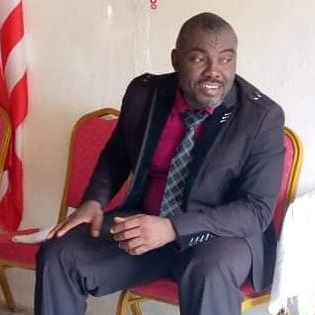

MONROVIA, LIBERIA — Still riding the momentum of its most recent major gathering in Kakata, the Economic Freedom Fighters of Liberia (EFFL) appears to be preparing another wave of political mobilization.
This time, leaders from Grand Bassa and Bong counties are coming together for what could become another major display of the party’s growing political ambitions.
Political activity within the EFFL appears to be intensifying. The party’s Political Leader, Emmanuel D. Gonquoi, has signaled a new phase of expansion, with leaders from Grand Bassa and Bong reportedly traveling to Monrovia to finalize internal arrangements for an upcoming event.
In a Facebook post published Thursday, November 5, Gonquoi wrote: “Bassa and Bong leadership are headed to Monrovia 4 de completion of internal requirements for organizing an event. We are EFFL and we do things differently and shall govern in the future differently. The Red Sea is moving soon!”
Though brief, the message carries considerable political weight, particularly in light of Gonquoi’s recent activities and increasingly confident statements about the EFFL’s political future.
The announcement comes just weeks after the party’s October 17 gathering in Kakata, Margibi County, where Gonquoi made a declaration that quickly sparked political discussion across Liberia:
“2029, I will be on the ballot,” said the EFFL man, with the statement marking a crucial moment for the EFFL leader.
Although he did not specify which office he plans to contest, he openly expressed his intention to take part in the next electoral race.
With Grand Bassa and Bong leaders now reportedly taking organizational steps toward another political event, the question is whether Kakata was merely the opening move in a much broader national mobilization effort.
FROM KAKATA TO THE CITIES: GONQUOI’S POLITICAL CALCULATIONS
The EFFL’s gathering in Kakata was more than a routine political appearance. Initially billed as a youth dance competition under the theme “Youth Expression for Social Change,” the October 17 event gave Gonquoi an opportunity to reconnect with supporters and share his political ambitions.
The gathering took on wider political significance when the EFFL leader announced that he would be on the ballot in 2029.
He also pushed back against the notion that Margibi County could not produce a presidential or vice-presidential candidate, arguing that the county should have a place in the country’s highest political offices.
Gonquoi further indicated that he would reveal which position he plans to contest at a future event at the Antoinette Tubman Stadium in Monrovia.
After the Kakata appearance, he began identifying other counties—including Nimba, Grand Bassa, Bong, and Lofa—as destinations for the party’s next political engagements.
The latest announcement about Grand Bassa and Bong therefore appears to follow the direction he had already outlined.
It suggests that the EFFL aims to expand its political presence beyond its established strongholds and build a broader organizational footprint across the country.
THE RED SEA: A POLITICAL WARNING OR A DECLARATION OF CONFIDENCE?
Perhaps the most striking element of Gonquoi’s latest message is his declaration: “The Red Sea is moving soon!” The phrase adds another layer of political symbolism to the EFFL’s expanding public messaging.
By invoking the Red Sea, Gonquoi seems to present his movement as preparing for a major political journey—one that could challenge established arrangements and pursue a different route to national leadership.
His claim that the EFFL will “do things differently” and “govern in the future differently” also suggests that the party wants to be evaluated not only by its ability to draw supporters to political gatherings, but also by its promise of an alternative approach to governance.
Gonquoi has not formally explained what he means by the Red Sea expression, so its precise political implications remain open to interpretation.
What, however, is becoming increasingly clear is that the EFFL leader wants Liberians to watch what his movement does next.
FROM KINGMAKER TO POTENTIAL CONTENDER: THE BOAKAI CONNECTION
Recent developments have renewed scrutiny of the EFFL’s relationship with President Joseph Boakai and the ruling Unity Party.
During the 2023 presidential election, the EFFL backed Boakai’s candidacy through the Unity Party’s Rescue Mission rather than fielding its own presidential candidate.
That support helped form the broader coalition that ultimately brought Boakai to the presidency. The relationship, however, has not been free of tension.
In August 2026, Gonquoi publicly complained that political allies who helped bring the Unity Party to power were being excluded from the governing arrangement.
He said that consultation mechanisms in place during the campaign had disappeared after the election.
He also cautioned that the EFFL would not guarantee anyone a second term, underscoring the party’s independence.
In this context, his October announcement that he would be on the ballot in 2029, followed by an apparent expansion of political activity at the county level, has prompted new questions about the relationship’s future.
Is the EFFL preparing to contest political power independently in 2029? Is Gonquoi positioning himself as a presidential candidate? Or is the party seeking greater leverage ahead of the next general and presidential elections?
For now, none of these possibilities has been definitively confirmed. Gonquoi has said he intends to be on the ballot but has not publicly identified the office he plans to seek.
GRAND BASSA AND BONG: THE NEXT TEST OF EFFL:’S NATIONAL REACH
The involvement of leaders from Grand Bassa and Bong could prove an important measure of the EFFL’s organizational ambitions.
Both counties hold significant places in Liberia’s political landscape and have well-established constituencies of their own.
The decision to bring their respective party structures to Monrovia to finalize internal preparations suggests the party may be pursuing a coordinated strategy for its next public engagement.
Howbeit, political mobilization requires more than convening county leaders. The true test will be whether the party can turn internal organization into sustained grassroots participation, meaningful public engagement, and a clearly articulated political agenda.
The EFFL must also show that its county-level structures can function beyond individual events and remain active throughout the political cycle.
It remains to be seen whether the next gathering will achieve the visibility of Kakata—or surpass it.
2029: THE BIGGER POLITICAL QUESTION
One development is becoming increasingly difficult to overlook: Emmanuel Gonquoi is no longer speaking solely about supporting other political forces.
His public statements are increasingly positioning the EFFL at the heart of Liberia’s future political debate.
The National Elections Commission accredited the party in January 2023, after which it supported Boakai’s presidential bid.
Now, the EFFL appears intent on building a distinct political identity of its own. This shift could add a new dimension to Liberia’s preparations for the 2029 elections.
For the Unity Party, it raises questions about the future of its relationship with a political organization that helped secure its successful 2023 campaign.
For other political parties, it signals the possibility of another party seeking to broaden its influence beyond established political alliances.
For the EFFL, meanwhile, it is an opportunity to show whether its increasingly ambitious political rhetoric can be backed by organizational strength, a persuasive national program, and support from voters throughout Liberia.
For now, Gonquoi’s message is clear: the movement plans to press ahead. Grand Bassa and Bong are reportedly preparing for the next engagement. Other counties have already appeared in his announced outreach plans.
Further ahead is the promised event at the Antoinette Tubman Stadium, where he has said he will reveal which political office he intends to seek.
As Gonquoi puts it, the Red Sea is moving. Its final destination, however, will be determined by the Liberian electorate.
The political countdown to 2029 may already be underway.