Liberia’s State-Owned Enterprises Retain Millions, Default on Government Payments as Boakai’s Accountability Pledge Faces Test
MONROVIA — Who really owns Liberia’s state-owned enterprises? The Liberian people, whose resources, taxes and national assets sustain these institutions, or the officials appointed to manage them?
That question is becoming increasingly difficult to avoid as financial reports, government budget documents and audit findings expose serious weaknesses in the way public corporations manage money, report their earnings and fulfill their financial obligations to the national treasury.
From millions of dollars in projected government contributions that were never fully remitted to incomplete financial statements, questionable revenue projections and weak institutional oversight, Liberia’s state-owned enterprise sector is facing an accountability crisis that could be costing the country substantial public revenue.
Yet, while ordinary Liberians struggle with poor roads, unreliable electricity, inadequate healthcare, unemployment and limited public services, the management of billions of dollars in public-enterprise transactions remains difficult for citizens to scrutinize.
The central question is whether these corporations understand that they exist to serve the Liberian people, or whether some of their managers have come to treat public institutions as independent financial territories where they determine what government receives, what remains in their accounts and how resources are spent.
Millions of dollars retained while government struggles for revenue
The government’s own FY2025 National Budget provides an important starting point.
According to Annex 2 of the budget, 18 state-owned enterprises were projected to generate approximately US$295.06 million in gross recurrent operating revenue.
However, the government’s estimated share was only 11.7 percent, while approximately US$242.81 million, representing 82.3 percent, was projected to remain with the enterprises as net recurrent revenue.
The budget also projected approximately US$43 million in total contributions from the 18 enterprises, including taxes.
These figures do not automatically establish wrongdoing. Public corporations must retain sufficient funds to operate, maintain infrastructure, pay employees and invest in their services.
But the figures raise a legitimate question: What financial controls determine how much money these institutions retain, how much they transfer to government and how their expenditures are justified?
Even more troubling, the budget disclosed that 17 of the 18 enterprises covered had failed to submit their financial plans for FY2025. The Bureau of State Enterprises therefore had to develop estimates using historical performance and other assumptions.
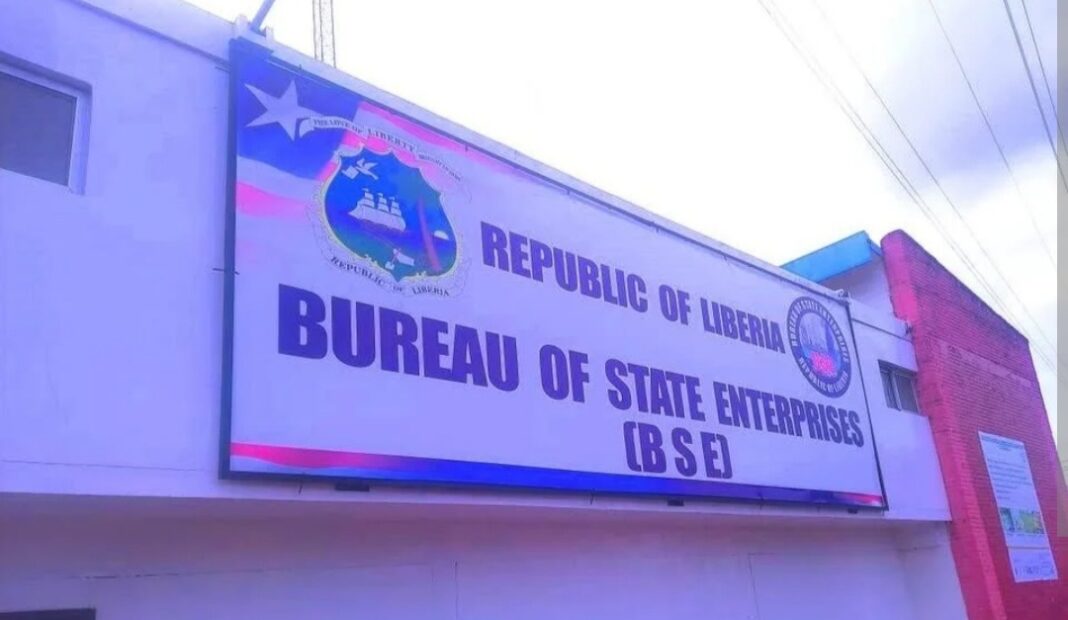
The same budget identified 46 operational state-owned enterprises, but the Bureau was tracking only 18, representing approximately 39 percent of the operational portfolio.
In other words, government was preparing national revenue projections while lacking complete financial plans from most of the enterprises included in its oversight system.
Dividends and government contributions: Where is the money?
Liberia’s Public Financial Management framework is clear that government-owned enterprises cannot simply decide that public revenue belongs to them.
Section 46 of the PFM Act establishes that the board of each state-owned enterprise is responsible for its dividend policy, taking the institution’s financial well-being into consideration.
However, expected dividends must be reflected in the national budget, and all declared dividends must be deposited into the government’s Consolidated Fund.
The law also provides for additional dividends when an enterprise records extraordinary profits, subject to the prescribed government consultation and agreement.
Section 42 separately provides a mechanism for the Finance Minister and relevant Sector Minister, in consultation with the board, to direct the transfer of money held by a public corporation in excess of what is required for its purposes.
The distinction is important: dividends, statutory revenue contributions, taxes and surplus-fund transfers are different obligations. None should be concealed under the general description of money owed to government.
The problem is whether the government is adequately enforcing these requirements.
NaFAA, LPRC and NPA: Documented failures to meet revenue targets
In January 2025, the Liberia Revenue Authority disclosed that several public institutions had failed to meet their FY2024 budgetary contribution targets.
The National Fisheries and Aquaculture Authority (NaFAA) was expected to remit US$1.2 million but reportedly remitted nothing.
The Liberia Petroleum Refining Company (LPRC) was expected to contribute US$3.8 million but remitted approximately US$2.5 million, leaving a shortfall of US$1.3 million.
The National Port Authority (NPA), with a projected contribution of US$6.38 million, reportedly submitted US$3 million, leaving US$3.38 million outstanding.
The LRA Commissioner General, James Dorbor Jallah, expressed concern about the failure of revenue-generating public institutions to meet their obligations.
He also explained that enforcement had become complicated because the Ministry of Justice raised concerns about representing government agencies on opposing sides of a potential court action.
NaFAA, for its part, attributed its failure to the absence of board approval for its budget, arguing that its contribution had not been captured.
These explanations raise another question: Why should the national government have to negotiate with institutions it owns to obtain revenue already included in its national budget?
The World Bank exposes a deeper financial accountability problem
The November 2026 World Bank assessment of Liberia’s state-owned enterprises provides an even more disturbing picture.
According to findings reported in connection with the World Bank’s Seventh Liberia Economic Update, financial information was submitted for only 83 of 276 potential entity-years over a six-year period.
Twenty-five of the 46 operational enterprises had never submitted a single financial return.
Auditing was equally weak.
Only 17 operational entities had completed at least one audit since FY2019. Only four audits across the SOE portfolio received unqualified opinions, while all 10 available compliance audits were adverse.
The report also found that 40 percent of the figures that could be compared differed by more than five percent between audit reports and information held by the Bureau of State Enterprises or the State-Owned Enterprises Authority.
These are not merely administrative weaknesses. They make it difficult for government, lawmakers and citizens to establish what public corporations earn, what they spend, what they owe and what they receive from taxpayers.
The financial position is equally concerning.
For FY2024, 19 reporting entities recorded an adjusted combined surplus of approximately US$28 million. However, three entities accounted for about US$47.4 million in surplus, while the remaining 16 recorded a combined deficit of approximately US$19.4 million.
The reported surplus also included US$15.1 million in government subsidies and US$16.7 million in development-partner grants.
Without those transfers, the portfolio would have recorded an estimated loss of US$2.7 million.
By the end of 2025, the 19 reporting entities had accumulated approximately US$815.4 million in liabilities. Government-guaranteed or on-lent loans amounted to approximately US$423.3 million, with LEC accounting for about 77 percent.
This means that while some public enterprises are expected to contribute to government revenue, others are simultaneously creating substantial financial exposure for the same government.
Could public-enterprise money be benefiting powerful individuals?
This is perhaps the most sensitive question requiring investigation.
When public corporations generate millions of dollars, retain substantial revenues, fail to submit complete financial statements and operate under weak oversight, the possibility of waste, unauthorized expenditure, conflicts of interest and financial abuse cannot be dismissed.
But it would be irresponsible to conclude that powerful individuals are receiving diverted SOE funds without documentary evidence.
There are, however, allegations that deserve independent examination.
In June 2026, The New Dawn reported allegations by a group identifying itself as Whistleblowers and Concerned Citizens of the Bureau of State Enterprises.
The group alleged that approximately US$181,761 in remittances made by state-owned enterprises to the Bureau between November 2025 and May 2026 had been misapplied by senior officials.
The complaint also alleged unauthorized expenditure and possible political use of the funds.
These remain allegations, not established findings of corruption. They require an independent investigation, examination of the Bureau’s bank statements, procurement records, payment vouchers and expenditure approvals, alongside responses from the officials named.
The Liberia Anti-Corruption Commission should clarify whether the allegations were referred to it and whether any investigation has been conducted.
The larger issue is whether public money transferred from one government institution to another is being properly accounted for at every stage.
Where is presidential accountability?
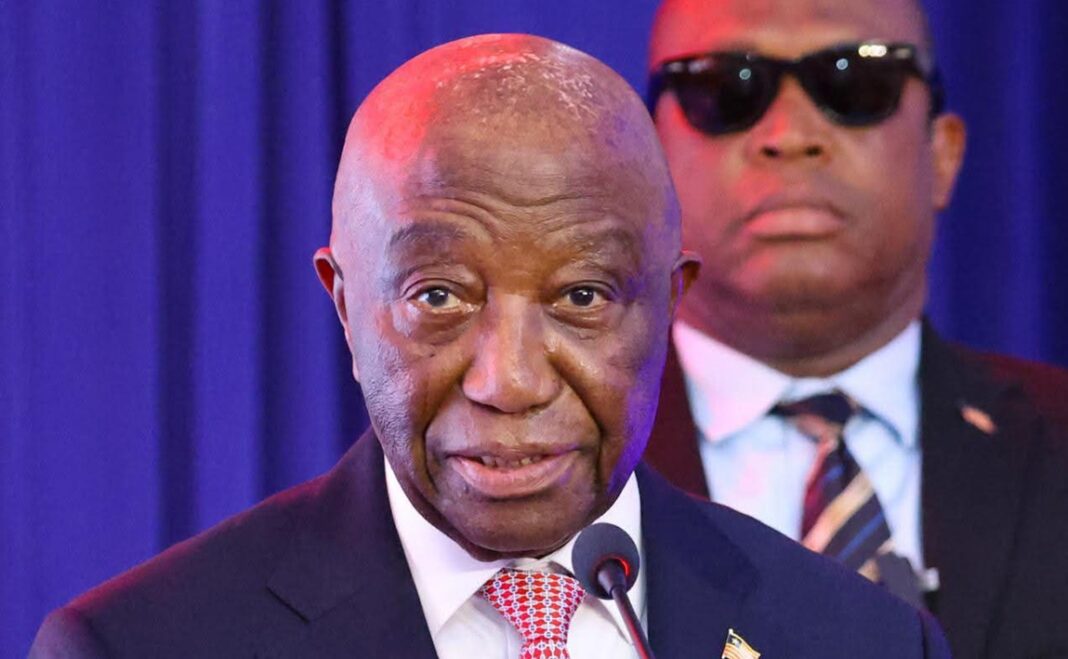
President Joseph Nyuma Boakai came to office promising accountability, transparency and improved public-sector management.
His administration has also recognized the weaknesses in the state-owned enterprise sector.
In September 2024, the then Director General of the Bureau of State Enterprises, Arthur Massaquoi, publicly acknowledged that many SOEs were affected by mismanagement, resource abuse, weak reporting and inadequate oversight.
He disclosed that the Bureau had struggled to enforce accountability because of weak institutional authority and limited legal and operational capacity.
He also said that of 18 enterprises engaged in a review of board compensation, only nine complied with the exercise.
The President subsequently supported efforts to develop a comprehensive corporate governance policy.
In February 2026, he signed legislation establishing the State-Owned Enterprises Authority of Liberia, marking a major institutional reform. The authority is expected to strengthen oversight and improve financial accountability.
However, legislation alone does not recover unpaid government revenue, reconcile questionable financial records or hold officials accountable.
In October 2026, the authority’s leadership told lawmakers that it had 65 employees and only three vehicles to monitor the entire state-enterprise sector. Its Director General also acknowledged significant capacity limitations.
The President’s reform initiatives are therefore relevant, but the public needs measurable results.
Has the government recovered outstanding contributions? Have boards been held accountable? Have suspected financial irregularities been referred for investigation? Have all enterprises submitted their financial statements?
No comprehensive public accounting of these questions has yet been established by the material reviewed for this investigation.
Liberia cannot afford to treat public corporations as private kingdoms
The consequences of weak SOE management extend beyond government accounting.
When public enterprises fail to remit expected revenues, the government has fewer resources available for roads, hospitals, schools, electricity, water and other public services.
When enterprises accumulate debt, receive government subsidies and fail to produce reliable financial statements, taxpayers ultimately face the financial consequences.
It is therefore unacceptable for public institutions to operate without timely reporting, transparent expenditure records and enforceable financial obligations.
The National Legislature must also take responsibility. Budget hearings should not become annual ceremonies in which institutions present revenue projections without being required to explain previous failures.
The General Auditing Commission must publish timely, accessible audit findings, while the new State-Owned Enterprises Authority must demonstrate that its expanded mandate produces actual compliance.
Most importantly, the President must ensure that the people appointed to manage public corporations understand that public resources are held in trust for the people of Liberia.
The question is no longer simply how much money these enterprises generate.
It is how much they owe the country, how much they actually pay, where the rest goes and who is responsible when the money cannot be accounted for.
If Liberia’s public corporations can generate millions of dollars but government cannot consistently establish what they earn, retain, spend and remit, then the country has a public-wealth accountability problem that cannot be solved by budget speeches and promises of reform.
The Liberian people deserve answers. Public corporations are not private kingdoms, and government revenue is not a discretionary gift that their managers can distribute according to personal preference.
The ultimate question for President Boakai is this: Who is holding the custodians of Liberia’s public wealth accountable?