MONROVIA – Liberia has reached a historic milestone in domestic revenue mobilization, collecting more than US$1 billion within a single year for the first time in the country’s history, as the government moves to finance a proposed US$1.539 billion national budget for Fiscal Year 2027.
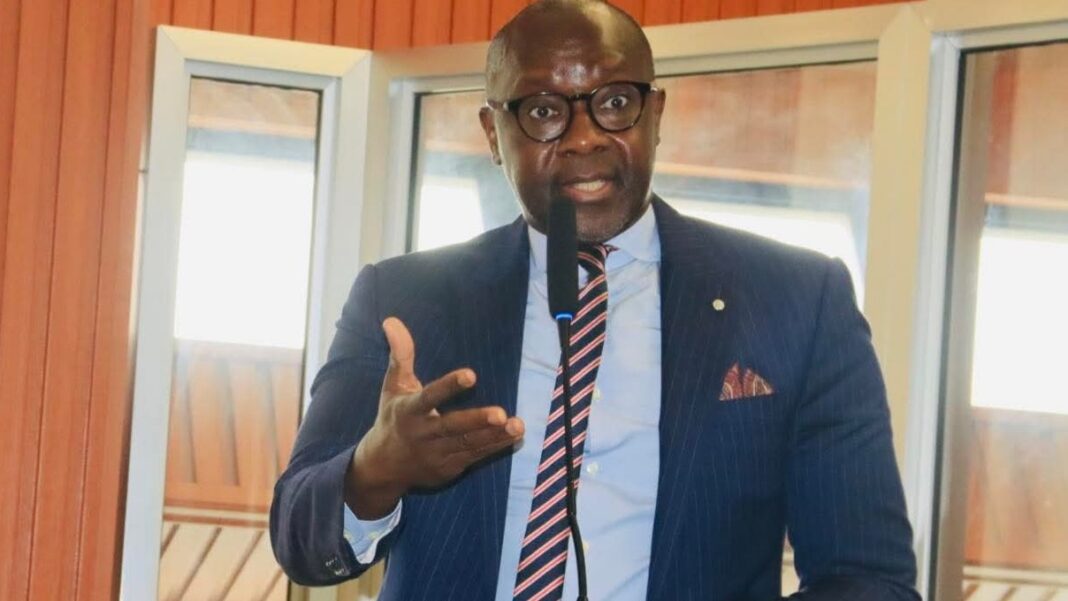
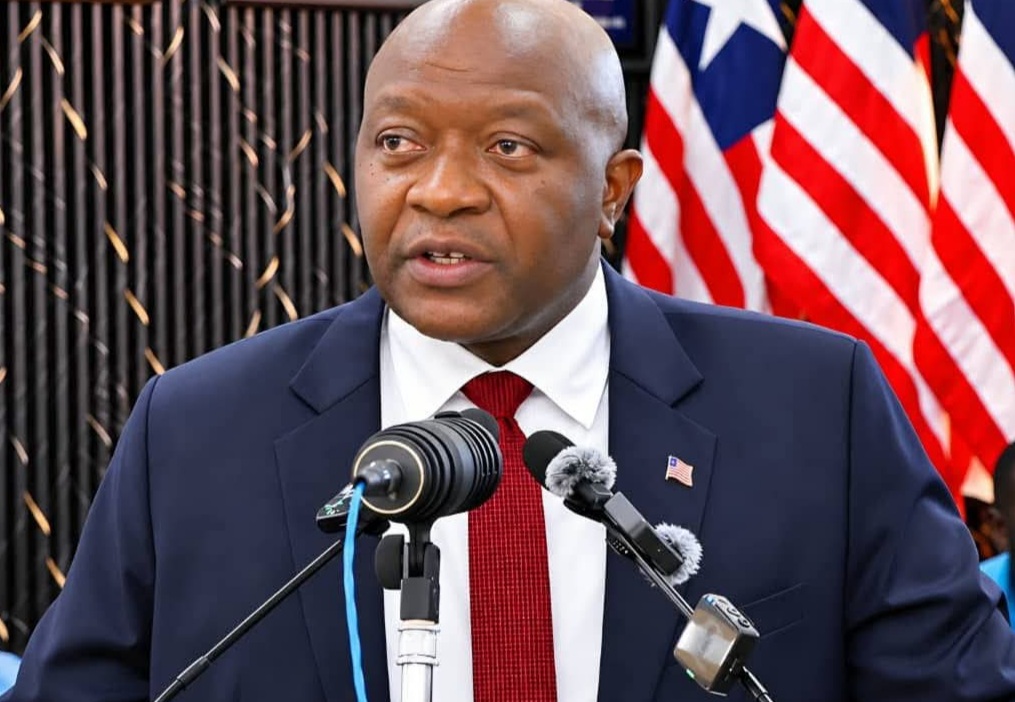
The achievement, announced by Finance and Development Planning Minister Augustine Kpehe Ngafuan on Monday, represents an important development in the country’s efforts to strengthen domestic financing, reduce dependence on external budget support, and expand the resources available for national development.
Speaking at a special press briefing at the Ministry of Information in Monrovia on Monday, November 9, 2026, Minister Ngafuan said the government had collected more than US$1 billion in domestic revenue by September 2026, attributing the performance to taxpayers’ contributions and improvements in revenue administration.
He expressed appreciation to Liberian taxpayers, the Liberia Revenue Authority and other institutions whose work contributed to the achievement, describing domestic revenue mobilization as an important foundation for sustaining public services and financing national priorities.
The historic revenue performance comes as President Joseph Nyuma Boakai’s administration advances a proposed national budget of approximately US$1.539 billion for 2027, representing an increase of about 18 percent over the approved 2026 budget.
The draft budget, presented to the House of Representatives on Friday, November 6, through Speaker Richard Nagbe Koon, is themed, “A Growing Budget for Bigger Impact: Accelerating the Implementation of the ARREST Agenda for Inclusive Development.”
According to Ngafuan, approximately US$1.447 billion, representing 94 percent of the proposed budget, is expected to come from domestic resources, including a projected US$55 million carried forward from 2026.
The remaining US$92 million, representing approximately six percent, is expected through external budget support.
The financing arrangement highlights the administration’s intention to increasingly depend on resources generated within Liberia to support government operations and development programs.
However, the Finance Minister cautioned that the proposed budget’s growth must be accompanied by stronger financial discipline, improved procurement practices and greater attention to the actual results produced by public expenditure.
He disclosed that spending entities submitted funding requests totaling approximately US$3 billion, nearly twice the resources available to the government, making difficult allocation decisions necessary during the preparation process.
Ngafuan explained that the government had to balance competing demands from hospitals, schools, infrastructure institutions, public agencies and other national priorities while meeting statutory and debt obligations.
He emphasized that the size of the national budget alone would not determine its success, stressing that the effectiveness of expenditure and the ability of government institutions to deliver measurable results would be equally important.
A major feature of the proposed 2027 budget is the government’s projected reliance on domestic resources rather than external budget financing.
Beyond the US$92 million expected in external budget support, development partners are projected to provide approximately US$195.4 million for off-budget programs supporting Liberia’s development agenda.
The Finance Minister said the revenue forecast is based on continued economic activity, improved tax compliance, stronger revenue administration and the proposed transition from the Goods and Services Tax system to a Value Added Tax framework.
The government has also identified US$40 million as contingent revenue, meaning the corresponding expenditure will only be released if the anticipated resources are actually realized.
Basic salaries, debt obligations, social benefits and the Public Sector Investment Program have been excluded from that contingent expenditure arrangement.
This provision is intended to prevent government from committing funds that have not yet materialized while maintaining protection for essential public obligations.
Under the proposed VAT framework, rice will remain exempt, while petroleum products will remain outside the VAT system but continue to attract other applicable taxes, fees and levies.
The proposed reform will require public education and clear communication to ensure that businesses and consumers understand the changes.
The proposed budget comes against a projected real economic growth rate of 5.5 percent in 2026 and 5.1 percent in 2027.
While acknowledging the economic progress, Ngafuan recognized that many Liberian households and businesses continue to face challenges, particularly concerning electricity, transportation, public services and the cost of economic activity.
To address these concerns, the government has proposed approximately US$328.49 million for the Public Sector Investment Program, representing 21.3 percent of the overall budget.
The investment strategy prioritizes ongoing projects and counterpart funding intended to advance existing development commitments toward completion.
Infrastructure and Basic Services receive a proposed US$142.56 million, including US$49.1 million through the National Road Fund and counterpart support for major road corridors.
Among the identified projects are the Karloken-Fish Town, Sanniquellie-Loguatuo and Fish Town-Kelipo road corridors.
The government has also proposed US$40 million for electricity generation and distribution expansion, including improvements intended to help the Liberia Electricity Corporation reduce commercial losses through smart metering.
These investments are expected to support transportation, electricity access, agricultural production, commerce and the delivery of essential services.
Agriculture is another area targeted for investment, with the government proposing support for mechanization hubs, agricultural value chains and the recruitment of technical and extension personnel to improve productivity.
Despite the growth in projected domestic revenue, the Finance Minister acknowledged that rising debt obligations will absorb a considerable portion of the government’s available resources.
Debt service and related obligations are projected to increase from approximately US$232 million in 2026 to US$275.5 million in 2027, representing an increase of about US$43.5 million.
The proposed budget includes approximately US$12 million for servicing Afreximbank financing secured in previous years for the Roberts International Airport road project, alongside payments to other creditors, including the World Bank and African Development Bank.
Ngafuan said honoring these commitments is necessary to preserve Liberia’s financial credibility and demonstrate responsible management of public borrowing.
At the same time, he emphasized that accountability must grow alongside government expenditure.
In that direction, the proposed allocation to transparency and accountability institutions is expected to increase from approximately US$37.9 million to US$49.13 million.
The increase includes support for the General Auditing Commission and expanded anti-corruption services.
The government also plans to operationalize six additional county treasuries in 2027, bringing the total number of facilities to ten, with the aim of improving financial administration and public revenue management across the country’s 15 counties.
Additional measures are intended to improve budget execution, including allowing preliminary procurement activities before the beginning of the fiscal year, with binding contracts contingent on the passage of the budget.
The government also proposes allowing spending entities to use 25 percent of their budgets for vehicle purchases involving used cars, beginning in January 2027, subject to standards and guidelines to be issued by the General Services Agency.
Multi-year commitments would require confirmation of funding availability from the Ministry of Finance and Development Planning.
Although the proposed US$1.539 billion budget represents a substantial increase over the 2026 appropriation, Ngafuan stressed that it remains a draft document subject to legislative scrutiny, public hearings and approval.
He encouraged civil society organizations, businesses, the media and ordinary citizens to examine the proposals and participate constructively in the legislative process.
The Finance Minister said the budget was developed through consultations with spending entities, development partners, local stakeholders and civil society organizations, including countrywide outreach conducted under the government’s Open Budget Initiative.
The proposed budget now places before the Legislature an important national question: how effectively can Liberia translate improved domestic revenue collection and increased public resources into tangible improvements in the lives of its citizens?
For the Boakai administration, the challenge will extend beyond raising revenue and approving a larger budget. Its success will depend on whether the projected resources are collected, allocated responsibly, spent efficiently and translated into completed projects and improved public services.