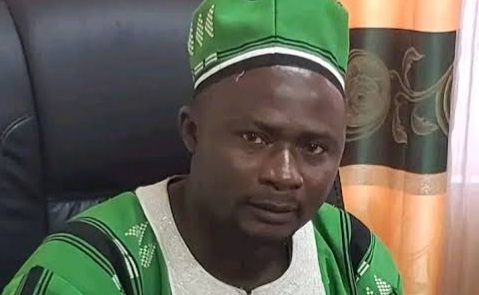
MONROVIA, LIBERIA — Months after his controversial transfer from the Ministry of Youth and Sports to the Liberia Refugee Repatriation and Resettlement Commission (LRRRC) Executive Director, Cllr. Jerror Cole Bangalu says he is working to revive an institution he believes should have a stronger role in Liberia’s national security, humanitarian protection, and migration management.
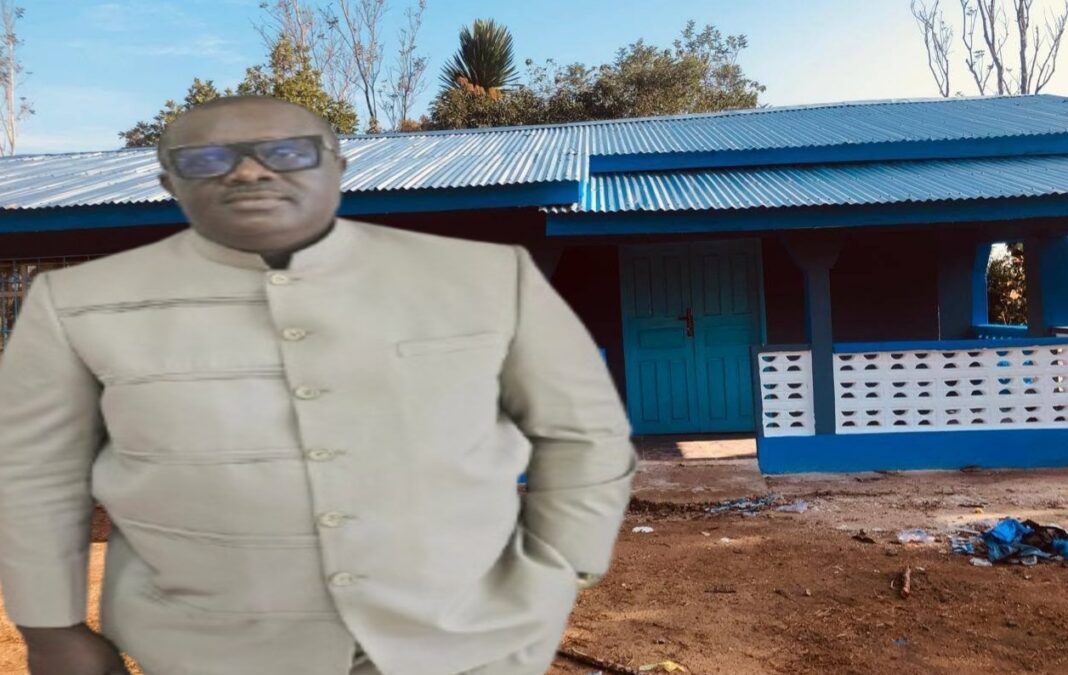
Bangalu has announced the completion of renovations to the Commission’s regional office in Voinjama, Lofa County.
He described the project as a major step toward reestablishing the LRRRC’s presence in a strategically important border region.
In a Facebook post, the former Youth and Sports Minister said rebuilding the facility was an immediate priority when he took over the Commission.
He cited years of deterioration and the need to restore government-owned infrastructure.
“After years of collapse and considering that this is our own property, I immediately prioritized the complete reconstruction of our LRRRC’s regional office in Voinjama,” Bangalu wrote.
He said he would lead a delegation to Voinjama during the week to officially reopen the renovated facility, describing the project as complete.
“Mission Accomplished,” he added.
The Voinjama office holds particular importance because Lofa County borders Guinea and Sierra Leone. The area therefore requires sustained government attention to cross-border movement, migration monitoring, and humanitarian concerns.
Bangalu directly linked the reopening to President Joseph Boakai’s Executive Order No. 159, which broadened the Commission’s mandate and reinforced its role in coordinating refugee protection and migration governance.
He stated that Voinjama is strategically located to help implement the order, especially its provisions on monitoring and governing mixed cross-border migration.
The reconstruction is therefore more than the renovation of an abandoned government building. It forms part of a wider initiative to establish the Commission’s operational presence beyond Monrovia as Liberia responds to increasingly complex population movements.
Bangalu joined the LRRRC following a major government reshuffle announced by President Boakai on January 21, 2026.
On January 22, the Executive Mansion formally announced his appointment as the Commission’s Executive Director. Attorney Cornelia W. Kruah was nominated to succeed him as Minister of Youth and Sports.
The presidency characterized the appointment as a strategic move to reposition the LRRRC and strengthen its capacity to address emerging migration challenges at the national, regional, and international levels.
The administration specifically cited refugee management, cross-border movements, the reintegration of returnees, and national security concerns in the Mano River Union region and the broader West African sub-region.
Bangalu’s reassignment, however, sparked considerable public debate, with the central issue being whether his move from a Cabinet-level ministerial post to leadership of an autonomous commission amounted to a promotion, a lateral transfer, or a political demotion.
Some commentators and governance observers argued that the change diminished his political standing, noting that a minister has direct Cabinet-level authority and access to the President—advantages that may not automatically extend to an executive director.
Others questioned whether the reassignment represented a quiet political adjustment within the governing Unity Party administration.
The discussion featured prominently in newspaper headlines, including “Bangalu Goes to LRRRC: Promotion or Demotion?” published by In Profile Daily on January 26, 2026, and “Bangalu’s Move to LRRRC: Strategic Promotion or Political Demotion?” published by Global News Network Liberia on the same date.
The Executive Mansion, however, maintained that the reassignment was more than a routine personnel change, indicating at the time that it formed part of a broader institutional realignment aimed at giving the LRRRC a more significant role in national affairs.
Ultimately, the move placed Bangalu at the helm of an institution whose responsibilities the President was substantially expanding.
He formally handed over the Ministry of Youth and Sports to Kruah in February, as the ministry’s leadership transition took place on February 23–24, 2026.
Before Bangalu’s appointment, the LRRRC had been operating under interim leadership.
Reports indicate that an interim management arrangement began on November 1, 2024, with Jackson J. Paye serving as Officer-in-Charge and Joseph Boye Cooper holding an interim operational leadership role. This arrangement continued until the leadership changes in January 2026.
Bangalu’s appointment came as the Commission sought to rebuild its institutional capacity while preparing to take on a significantly broader national mandate.
When he formally assumed office in early February, he made it clear that the transformation would involve more than replacing the Commission’s leadership or upgrading its facilities.
He maintained that the LRRRC could no longer operate as a single-purpose body focused mainly on traditional refugee matters, given Liberia’s evolving migration patterns, deportations, internal displacement, and statelessness.
The reforms he announced included amending the 1993 Act that established the Commission, preparing a comprehensive, costed five-year work plan, forming a high-level Policy Working Group, and carrying out an institutional capacity assessment and audit of personnel credentials.
He also proposed a modern data management system to strengthen information gathering and enable evidence-based decisions.
Operational priorities included examining the arrival of Burkinabè migrants in southeastern Liberia, addressing the circumstances of the remaining Ivorian refugees, and developing modern reception facilities for vulnerable populations.
The Commission has since advanced several of these proposals. In March 2026, it launched a Policy Working Group process to support institutional and policy reforms pursuant to Executive Order 159.
In July, the LRRRC announced that it would validate a five-year strategic plan to guide its work in refugee protection, migration governance, statelessness, and the reintegration of deportees and returning Liberians.
The Commission has also discussed the biometric profiling of undocumented migrants.
Bangalu recently disclosed plans to develop a more reliable database of people living in Liberia.
These developments indicate that the administration’s decision to expand the LRRRC is gradually progressing from policy announcements to institutional and operational implementation.
The rehabilitation of the Voinjama office is another tangible element of this process.
Howbeit, the reforms’ overall impact will ultimately depend on sustained funding, adequate staffing, effective coordination, and measurable results.
President Boakai’s Executive Order No. 159, issued in March 2026, is key to understanding the LRRRC’s changing role.
The order consolidates and broadens the Commission’s responsibilities, positioning it as the central coordinating institution for refugee protection, migration governance, statelessness response, and the reception and reintegration of Liberians returning from or deported from abroad.
It also incorporates provisions from Executive Order No. 144 as part of efforts to modernize Liberia’s institutional response to population movements and humanitarian challenges.
The order is necessary because migration in Liberia is no longer confined to refugees escaping conflicts in neighboring countries.
The country is also managing mixed migration flows that include people moving for varied reasons, remaining refugee populations, undocumented migrants, stateless people in border communities, internally displaced persons, and Liberians returning from abroad, including those deported by force.
Under this broader framework, the LRRRC is expected to coordinate a more integrated government response to these challenges.
Its duties include reinforcing refugee protection, improving migration monitoring and governance, addressing statelessness, assisting returnees and deportees with reintegration, and enhancing the collection and management of migration-related data.
The order is also intended to strengthen collaboration among government ministries and agencies, international organizations, humanitarian partners, and other stakeholders engaged in migration management.
In practice, it aims to help Liberia better identify who enters and leaves the country, understand the circumstances of population movements, and establish coordinated systems to address humanitarian and security concerns.
This approach should not be mistaken for treating all migrants as security threats. Its purpose is to improve border management while safeguarding the rights and dignity of refugees, migrants, and other vulnerable groups.
The order also establishes a transitional framework for creating a permanent Refugee and Migration Commission of Liberia (RAMCOL), which is expected to assume these expanded responsibilities through the appropriate legal and institutional processes.
Making that transition would require more than simply changing an administrative name. It would entail a stronger legal framework, greater institutional capacity, adequate financing, and clearly defined responsibilities.
Prioritizing Voinjama aligns with the broader objectives of Executive Order 159.
Lofa County’s location on the borders with Guinea and Sierra Leone makes it vital for monitoring population movements and addressing cross-border humanitarian concerns.
A fully operational regional office could strengthen the Commission’s engagement with local authorities, immigration officials, security institutions, humanitarian organizations, and communities affected by migration.
It could also lessen reliance on coordination from Monrovia when border communities face issues that demand immediate attention.
Accordingly, rehabilitating regional infrastructure is an important operational requirement for a Commission seeking to expand its responsibilities nationwide.
Bangalu’s announcement is an early test of his commitment to transform the institution from a primarily traditional refugee-focused agency into a more responsive national migration governance body.
The greater challenge, however, will be ensuring that the renovated Voinjama office becomes a fully staffed, adequately equipped operational center that delivers measurable results.
For now, the Commission’s leadership is presenting the reopening as evidence that the transformation is underway, with Voinjama poised to become an important component of Liberia’s evolving migration management system.