
BY OLANDO TESTIMONY ZEONGAR
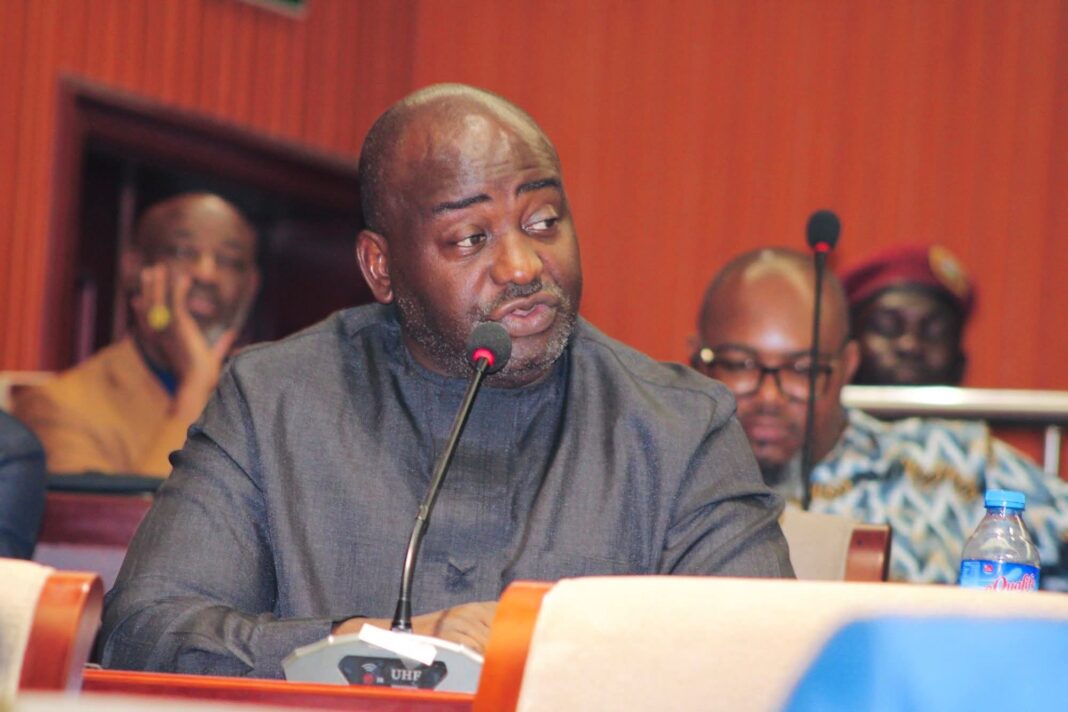
MONROVIA, LIBERIA — After years of navigating the sensitive balance between government service and his identity as a vocal political activist, Economic Freedom Fighters of Liberia (EFFL) leader Emmanuel C. D. Gonquoi has formally resigned from his post at the National Port Authority (NPA). He said it was time to devote his full attention to the political movement he leads.
The EFFL political leader’s resignation brings an end to his controversial tenure in the Boakai administration, after years of criticism over his decision to hold a government position while remaining an outspoken political figure.
Gonquoi announced his resignation in a Facebook post, indicating that he had formally submitted same to the NPA management.
He stated: “We have formally presented our resignation to the management of NPA and it’s time to work for EFFL and Liberia!”
Beyond announcing his departure, the EFFL leader appeared to use the occasion to respond directly to years of public debate about his decision to accept a government appointment under President Joseph Boakai while continuing his political activism and criticism of governance.
In a provocative closing remark, Gonquoi wrote: “The debate about Government experience in the future is over! Hahaha.”
His laughter-filled comment appeared to add a political message to what might otherwise have been a routine resignation announcement, possibly addressing critics who questioned his decision to combine a government role with his position as a political leader.
A resignation letter dated November 10, 2026, and addressed to NPA Managing Director Sekou A. M. Dukuly, confirms that Gonquoi will leave his post as Executive Director of the Training Department effective November 20, 2026.
In the letter, Gonquoi thanked the institution for the opportunity to serve and wished the NPA continued success. He did not, however, explain his decision to resign.
Gonquoi’s departure has renewed attention to a political controversy that has followed him since he joined the Boakai administration.
As Commander-in-Chief and political leader of the EFFL, Gonquoi was among the political figures who backed the Unity Party’s successful 2023 presidential campaign against former President George Weah.
The EFFL’s support for Boakai helped establish Gonquoi and his party within the political coalition that brought the current administration to power.
Howbeit, Gonquoi’s later acceptance of a government post created political unease, particularly because he continued to comment publicly on governance, institutional performance, and the administration’s direction.
Critics questioned how he could maintain an independent activist identity while holding a government position in the same administration he was expected to scrutinize.
The controversy grew more notable as Gonquoi increasingly expressed dissatisfaction with government institutions’ performance.
In May 2025, he publicly criticized the government, asserting that approximately 60 percent of government entities were not functioning effectively.
At the time, he warned that the EFFL could pursue civil action against institutions that failed to perform.
His comments prompted questions about the distinction between his government duties and political activism.
Nevertheless, Gonquoi maintained his critical stance, repeatedly asserting that the EFFL would not stay silent about governance failures merely because it had supported Boakai’s election. Tensions have also increased between the EFFL and the ruling Unity Party.
In June 2025, Gonquoi gave the Boakai administration two years to meet its commitments, warning that his party would mobilize resistance if the government failed to satisfy Liberians’ expectations.
By August 2026, the EFFL leader was publicly accusing the Unity Party-led government of marginalizing political partners who had helped secure its electoral victory.
He said the political communication channels established during the campaign had disappeared after the election, leaving alliance partners without meaningful ways to discuss governance and national issues with the President.
These developments further complicated Gonquoi’s dual role as a government official and a political figure increasingly critical of the administration.
His resignation removes that particular institutional link, though it does not resolve the broader political questions about his relationship with the ruling establishment.
Gonquoi’s declaration that the time had come to work for the EFFL and Liberia signals a renewed focus on his political movement.
But whether his departure will lead to a more forceful campaign against the government’s shortcomings remains uncertain.
For now, his announcement marks another important chapter in his relationship with the Boakai administration—a relationship that began with political support, developed into government service, and increasingly came to feature public criticism and disputes over governance.
His farewell message to the NPA was gracious, expressing gratitude to the institution’s management and staff for their support.
Howbeit, his Facebook post carried a clear political undertone. By stating that the debate over government experience was settled, Gonquoi seemed intent on presenting his time in government as a chapter that had now run its course.
For a political leader who has spent considerable time balancing government service with activism more commonly associated with the opposition, November 20 will formally mark the end of his tenure at the NPA.
What happens next may reveal whether his resignation signals merely a return to party work or the start of a more pronounced political realignment ahead of Liberia’s next electoral contest.