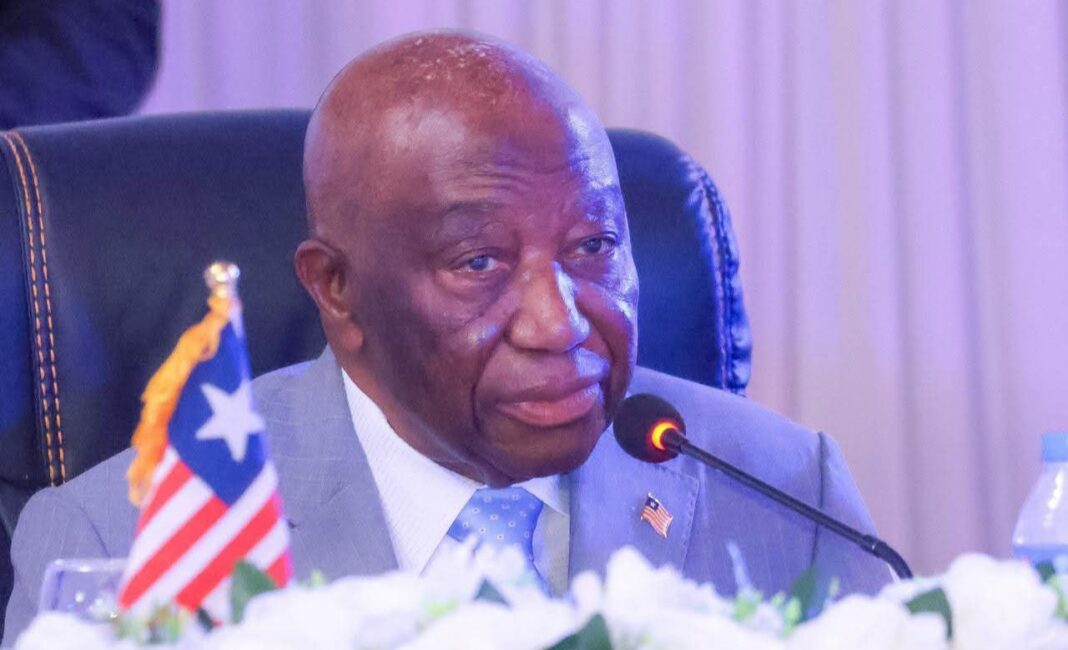
MONROVIA, LIBERIA – President Joseph Nyuma Boakai has called on young Liberians, diplomats, scholars, and citizens to actively preserve the country’s hard-won peace, warning that Liberia’s painful history of civil conflict must remain a constant reminder of the responsibility to protect national stability.
Speaking on the occasion of the launch of the Compendium of Liberian Peace Agreements on Friday, November 20, 2026, President Boakai described the publication as more than a historical archive, saying it represents the collective memory of a nation that endured profound suffering but demonstrated resilience through dialogue, reconciliation, and the determination to rebuild.
The compendium documents several peace agreements negotiated during Liberia’s civil conflict, including the Banjul Agreement of October 24, 1990, Abuja I of August 19, 1995, Abuja II of August 17, 1996, and the Accra Comprehensive Peace Agreement of August 18, 2003, which helped bring an end to the country’s devastating civil war.
President Boakai said the agreements have outlived their original purpose as negotiated instruments and now serve as historical monuments to the lives lost, families separated, and dreams interrupted during fourteen years of conflict.
He stressed that the publication carries a deeper national significance by reminding Liberians of the sacrifices made to restore peace and the importance of ensuring that future generations do not repeat the mistakes that plunged the country into violence.
According to the President, Liberia’s experience demonstrates that dialogue remains one of the most enduring instruments for resolving conflicts, even under circumstances where political disagreements, mistrust, and competing interests threaten national unity.
Reflecting on his own involvement in Liberia’s post-war recovery, Boakai said his personal experiences during the period when the wounds of war were still fresh had shaped his understanding of the fragility of peace.
He recalled witnessing the sacrifices of peacekeepers and participating in difficult decisions that contributed to Liberia’s recovery, noting that the experience strengthened his conviction that peace cannot be taken for granted.
“Peace is never permanent; each generation must nurture, protect, and renew it,” President Boakai said, emphasizing that the lesson continues to inform his presidency and his determination to prevent Liberia from descending into another civil conflict.
The Liberian leader said the compendium should serve as a practical resource for young diplomats and scholars who will study the country’s peace negotiations, understand the historical circumstances surrounding the agreements, and appreciate the enormous human cost of the conflict.
He described the young people who will engage with the publication as custodians of Liberia’s national memory and architects of the country’s future, challenging them to translate historical knowledge into a commitment to peaceful coexistence.
Boakai said the publication must not remain confined to academic institutions, diplomatic circles, or government offices, but should inspire a wider national campaign for peace among citizens.
“Everyone who holds, reads, and/or comes into contact with this compendium must be a campaigner for peace,” the President declared.
The statement places emphasis on the need to move beyond simply documenting Liberia’s peace agreements toward cultivating a national culture in which citizens actively reject violence, promote dialogue, and protect the gains made since the end of the civil war.
The President also commended the Ministry of Foreign Affairs and the Gabriel L. Dennis Foreign Service Institute for their role in producing the compendium, recognizing Foreign Minister Sara Beysolow Nyanti, Director General Reginald B. Goodridge Sr., Dr. Aaron Weah, and students of the institute’s Conflict Resolution and Negotiation class for their contributions.
He said the work symbolizes the promise of a new Liberia, one that learns from its past and builds a future worthy of the sacrifices made by those who fought for peace and those who lost their lives during the conflict.
The compendium, according to the President, is intended to serve as a beacon for those seeking to understand the cost of conflict and the transformative power of peace.
Liberia’s civil wars, which spanned fourteen years, left the country devastated, displaced millions of people, destroyed critical infrastructure, and claimed countless lives, making the preservation of peace a central responsibility of successive governments and the country’s population.
Boakai’s remarks underscore the importance of historical documentation and civic education in sustaining Liberia’s post-war stability, particularly as younger generations continue to grow up without direct experience of the conflict.
The President urged Liberians to recognize peace as a collective responsibility rather than an achievement that can be permanently secured through the signing of agreements alone.
He concluded his statement with a prayer for the Republic, calling for divine guidance, national unity, and the continued preservation of Liberia’s peace.