By Staff Writer | Smart News Liberia
MONROVIA – The Asset Recovery and Property Retrieval Taskforce (AREPT) has welcomed the latest ruling of the Supreme Court of Liberia, describing it as a significant step forward in the government’s campaign to hold individuals accused of misusing public funds accountable.
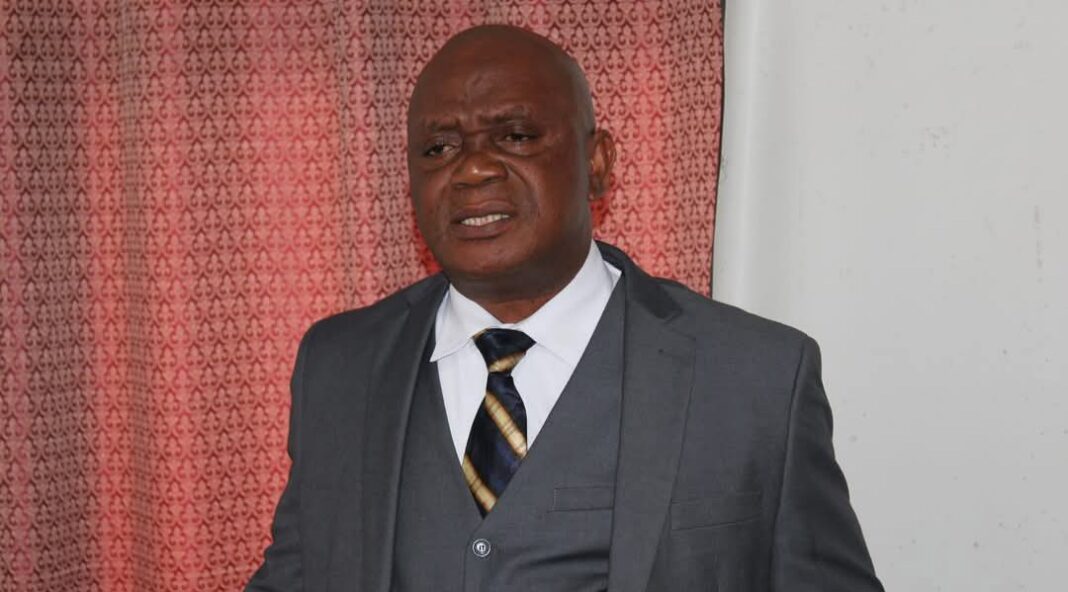
In a statement issued through its Chairman, Cllr. Edwin Kla Martin on Wednesday, April 29, 2026, the Taskforce praised the decision handed down by Associate Justice Yussif D. Kaba, presiding in Chambers, which denied a petition seeking to halt criminal proceedings in a major corruption case linked to a government renovation contract at the Ministry of Foreign Affairs.
According to AREPT, the case involves MDMC (Expressed Inc.), a private contractor whose Chief Executive Officer, John S. Youboty, and Project Manager, Joseph C. Goodridge, had asked the Supreme Court for a writ of prohibition to stop the lower court from continuing the criminal trial against them.
The indictment alleges that the defendants received approximately US$1,949,999.72 for renovation works at the Ministry of Foreign Affairs but completed work valued at only US$1,098,863.58, representing about 56 percent of the contract value. Prosecutors further claim that roughly US$851,136.13 was misapplied or diverted.
Cllr. Martin said the Supreme Court’s ruling sends a clear message that corruption allegations involving public resources must be tested through the proper legal process rather than delayed through procedural maneuvers.
“The Court has made it clear that questions of criminal liability and the evaluation of evidence belong before the trial court,” Martin stated. “This decision now clears the path for the matter to proceed in keeping with the law.”
In their petition, the defendants reportedly argued that the dispute was contractual in nature and that they could not be personally held liable for actions attributed to a corporate entity. However, Justice Kaba rejected those arguments, ruling that the petition was premature and lacked merit.
The Supreme Court further instructed the lower court to resume jurisdiction and continue proceedings, effectively reopening the path for trial. AREPT noted that while such legal challenges are part of due process, they do not change the substance of the allegations before the court.
Martin emphasized that the trial court remains the appropriate venue where evidence can be examined fully and where the accused will have the opportunity to defend themselves under the law.
“We want to assure the Liberian people that despite delays caused by legal objections, our commitment remains firm,” he said. “Anyone accused of unlawfully acquiring public resources must answer before the law, and justice must take its course.”
He added that AREPT will continue working closely with the Ministry of Justice and other state institutions to ensure that this case, along with others already before the courts, is prosecuted fairly and in accordance with due process guarantees.