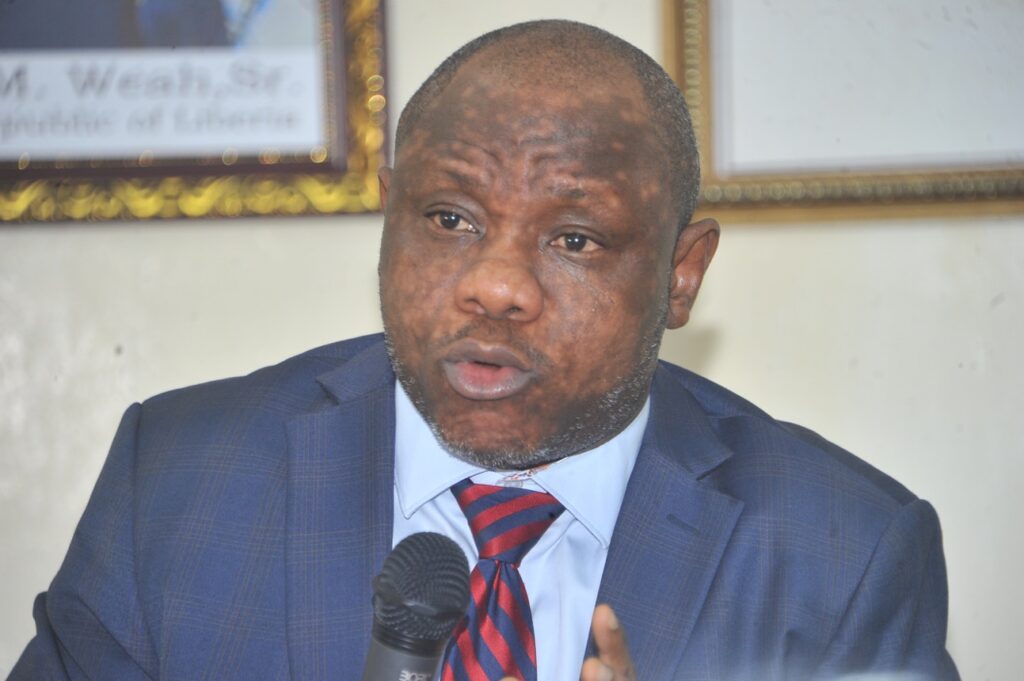
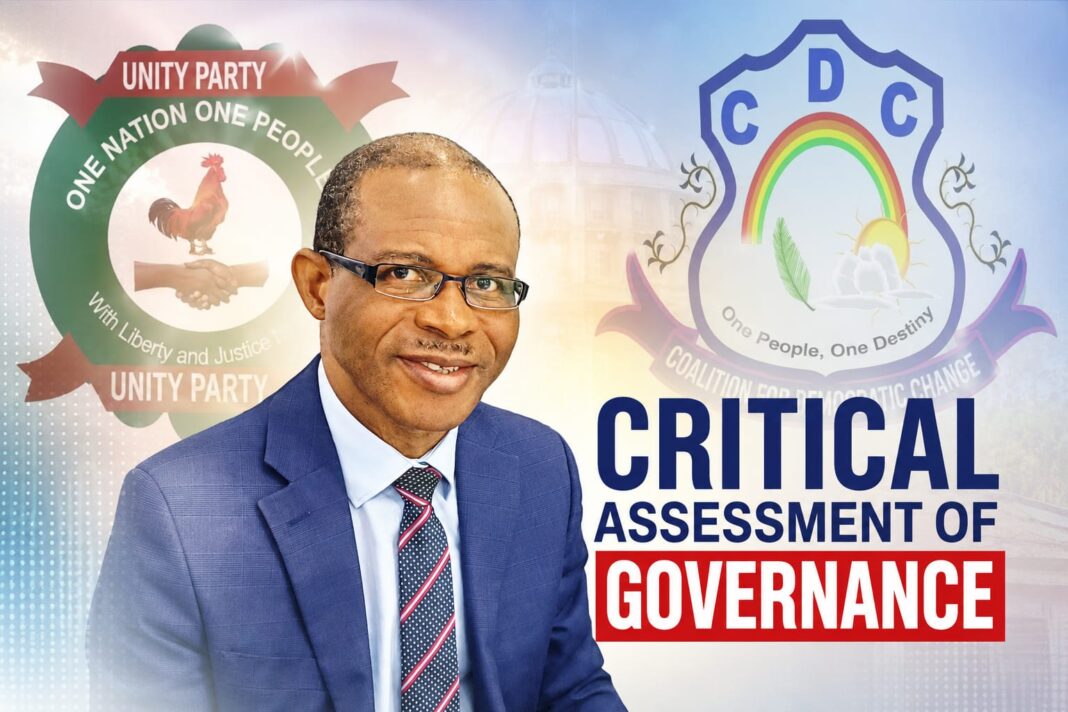
MONROVIA – African biomedical scientist and former Director General of the National Public Health Institute of Liberia (NPHIL), Dr. Dougbeh Chris Nyan, has delivered a critical assessment of governance in Liberia, arguing that successive administrations of the Coalition for Democratic Change (CDC) and the Unity Party (UP) have failed to demonstrate a meaningful departure from the governance shortcomings they previously criticized.
In an exclusive interview with Smart News Liberia on Friday, September 4, 2026, Dr. Nyan said the political debate between the CDC and the UP has increasingly become a contest over which administration was more corrupt, while the country’s deeper governance and development challenges remain largely unresolved.
According to Nyan, whatever limited progress may have been achieved in areas such as rules, infrastructure and governance has been overshadowed by what he described as persistent failures in leadership.
“The order of being corrupt and the other is in order of being corrupt,” Nyan said, characterizing what he sees as the central problem confronting Liberia’s political establishment.
He argued that instead of concentrating on improving institutions and delivering development, political actors have become consumed with accusations and counteraccusations over corruption.
“So at this point all that is happening now is that they are fighting over who was more corrupt than the other,” he said.
Nyan said both the CDC and Unity Party have exposed serious weaknesses during their respective periods in power.
He was particularly critical of the Unity Party, arguing that its return to national leadership after 12 years under former President Ellen Johnson Sirleaf was accompanied by promises to correct many of the problems it had criticized during the previous administration of former President George Weah.
Nyan said the current UP administration under President Joseph Boakai has not demonstrated, in his assessment, the kind of fundamental improvement that would distinguish it from the governance record it previously criticized.
He argued that six years of the previous CDC administration, viewed alongside the Unity Party’s earlier period in power, had not provided sufficient evidence of a fundamental transformation in governance.
He argued that six years of the previous CDC administration, viewed alongside the Unity Party’s earlier period in power, had not provided sufficient evidence of a fundamental transformation in governance.
He said the debate should not be reduced to which political party is worse than the other because ordinary Liberians are primarily concerned about whether government is improving their daily lives.
“The ordinary people,” he emphasized, are the ones most affected by what he described as bread and butter issues.
Nyan challenged the government to explain how increased revenues and economic gains are translating into tangible improvements for ordinary citizens.
“You can have GDP, you can raise billions of dollars, if it doesn’t trickle down to the ordinary person, it makes no sense,” he said.
He pointed to persistent concerns over schools, roads, healthcare and the justice system as examples of areas where ordinary Liberians continue to experience serious difficulties.
Nyan questioned the significance of mobilizing billions of dollars in government revenue if citizens continue to encounter inadequate public services.
He also criticized the country’s justice system, arguing that many ordinary citizens believe access to justice is influenced by their ability to afford strong legal representation.
“The people know that when they go to court, they will need to have either a good lawyer or more money so they can get justice,” he said.
According to Nyan, such perceptions raise fundamental questions about the rule of law and public confidence in Liberia’s institutions.
He argued that governance must ultimately be measured by whether citizens experience fairness, functioning institutions and tangible improvements in their standard of living rather than by government revenue figures or political rhetoric.
Nyan’s assessment also extended to what he described as continuing institutional and legal problems within the government.
He argued that six years of the previous CDC administration, viewed alongside the Unity Party’s earlier period in power, had not provided sufficient evidence of a fundamental transformation in governance.
Nyan criticized the roles of officials within the Justice Ministry, Ministry of Health and the Office of the Minister of State for Presidential Affairs, accusing them of contributing to what he described as a prolonged impasse.
He argued that following the Supreme Court ruling in his favor, the Boakai government should either reinstate him as Director General of NPHIL or compensate him for the period in question, rather than leaving the matter unresolved.
Nyan also criticized the continued presence of an officer in charge at NPHIL, Dr. Sia Wata Camanor, whom he characterized as unlawfully occupying the position based on his interpretation of the Supreme Court ruling. He said the government should adhere to legal decisions and institutional rules.
His comments reflect an argument that Liberia’s governance crisis is not limited to corruption alone but includes what he sees as failures to respect laws, court decisions and institutional procedures.
Nyan said Liberia’s leadership must ultimately be judged by the credibility and performance of its institutions.
He contrasted Liberia’s image with Rwanda, arguing that international perceptions of Rwanda and President Paul Kagame are closely associated with development and progress, while Liberian political leadership is too often associated with corruption, misrule and poor governance.
“When you call Kagame, it’s associated with progress,” Nyan said.
He argued that Liberia needs leaders whose names become associated with development, credibility, effective governance and national progress rather than allegations of corruption and institutional failure.
Nyan’s comments amount to a challenge to both major political camps to demonstrate that they can deliver something fundamentally different from the governance patterns that have disappointed Liberians over the years.
His central argument is that Liberia’s political debate should move beyond accusations over who performed worse and toward the more consequential question of whether any administration can deliver functioning institutions, credible leadership and measurable improvements in the lives of ordinary citizens.
As Liberia looks toward the next political cycle, Nyan believes the dissatisfaction among voters could create space for political alternatives capable of presenting a credible governance agenda.
For him, the country’s central political problem is no longer simply whether the CDC or Unity Party can defeat the other.
It is whether either party can convince increasingly demanding Liberian voters that it has the credibility and capacity to govern differently.