The 50-Year Sentence, the Two-Thirds Rule and the Law That Could Eventually Open the Prison Door
By Lyndon J. Ponnie, Sr.
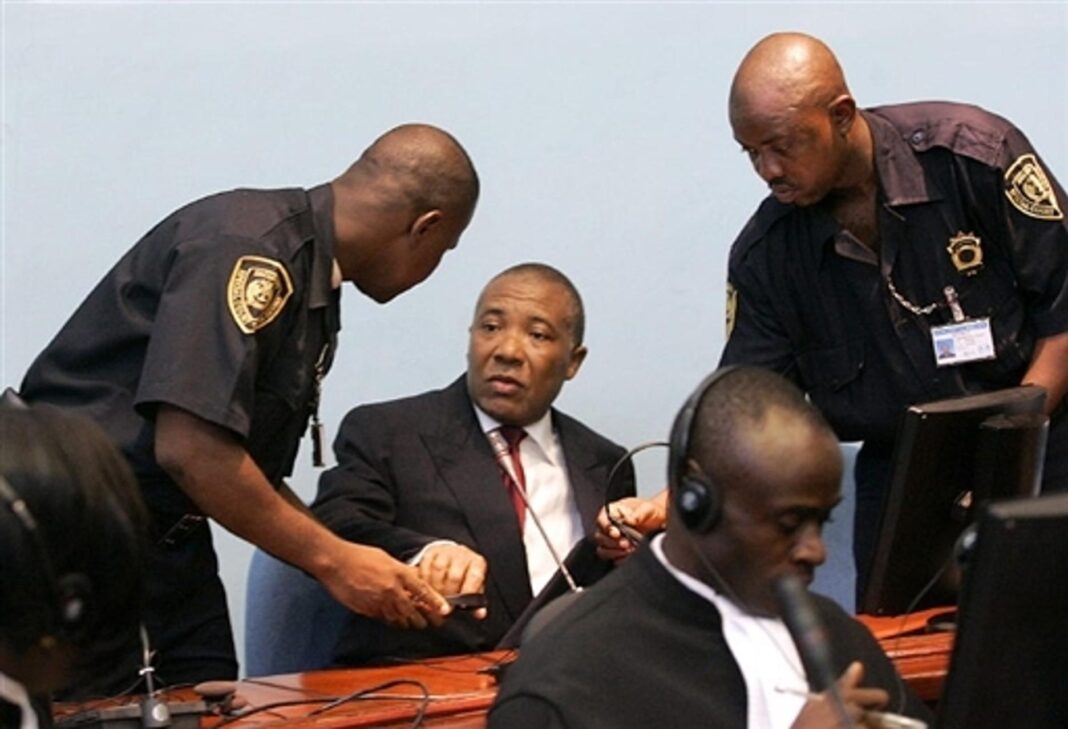
For more than two decades, the name Charles Ghankay Taylor has remained permanently connected to one of the most consequential chapters in Liberia’s modern history and the international prosecution of crimes committed during Sierra Leone’s civil war.
But after years of imprisonment, a question is increasingly resurfacing:
What happens when a former Liberian president serving a 50-year sentence reaches the point at which the law permits him to be considered for conditional early release?
The question is not whether Charles Taylor was convicted. He was.
It is not whether he received a lengthy prison sentence. He did.
And it is not whether the conviction was upheld on appeal. It was.
The more complicated question is what the governing legal framework says about the possibility of release after a substantial portion of the sentence has been served.
That question deserves careful examination because the answer is contained not in political speculation, but in the legal framework governing the Residual Special Court for Sierra Leone (RSCSL).
THE ROAD FROM LIBERIA TO THE HAGUE
Taylor’s legal journey began long before he entered prison.
The Special Court for Sierra Leone indicted him in 2003 while he was still President of Liberia. Following his departure from office and exile in Nigeria, he was arrested on March 29, 2006, and transferred to the custody of the Special Court for Sierra Leone.
His trial was subsequently moved to The Hague in the Netherlands because of concerns about regional stability and security.
The trial opened in 2007.
On April 26, 2012, the Trial Chamber convicted Taylor on all 11 counts. The convictions involved his responsibility for crimes committed by rebel forces in Sierra Leone, including findings relating to planning and aiding and abetting.
On May 30, 2012, the Trial Chamber imposed a single sentence of 50 years’ imprisonment. Importantly, the sentencing judgment ordered that Taylor receive credit for the period beginning March 29, 2006, when he was detained pending trial.
The Appeals Chamber subsequently upheld both the convictions and the 50-year sentence.
That starting date is important when examining the question of how much of Taylor’s sentence remains to be served.
THE 50-YEAR SENTENCE DOES NOT NECESSARILY MEAN 50 YEARS BEHIND BARS
This is where the legal issue becomes more complicated.
The Rules of Procedure and Evidence of the Residual Special Court contain a specific provision dealing with pardon, commutation and early release.
Rule 124 provides that early release may occur only when the President of the Residual Special Court decides to grant it, after considering the interests of justice and the general principles of law.
Most importantly, the Rule provides that:
“An early release shall only occur after the prisoner has served a minimum of two-thirds of his or her original sentence.”
For a 50-year sentence, two-thirds is approximately 33 years and four months.
Because Taylor’s sentence carries credit from March 29, 2006, the two-thirds point falls approximately in July 2039, assuming the credit and sentence calculation remain unchanged.
But reaching that date would not automatically free Taylor.
That distinction is critical.
The law creates a point at which a prisoner may become eligible for consideration. It does not create an automatic right to walk out of prison.
WHAT MUST TAYLOR DEMONSTRATE?
The RSCSL’s revised Practice Direction on Conditional Early Release adds further requirements.
The Practice Direction, adopted on February 29, 2024, states that a convicted person becomes eligible for consideration for Conditional Early Release no sooner than after serving two-thirds of the total sentence, provided additional requirements are satisfied.
Among those requirements are evidence that the prisoner:
– successfully completed applicable remedial, educational, moral, spiritual or other prison programmes;
– is not a danger to the community or a member of the public;
– complied with the terms and conditions of imprisonment;
– respects the fairness of the process through which he was convicted;
– refrains from incitement against the peace and security of Sierra Leone while incarcerated; and
– has made a positive contribution to peace and reconciliation in Sierra Leone and the region.
The Practice Direction identifies examples of such a contribution, including public acknowledgement of guilt, support for peace projects, a public apology to victims or victim restitution.
These provisions make the issue considerably more complicated than simply counting the years Taylor has spent in prison.
THE PRESIDENT OF THE RESIDUAL COURT HOLDS THE KEY
Another important feature of the legal framework is the role of the President of the Residual Special Court.
Rule 124 does not say that a prisoner is automatically released once the two-thirds threshold is reached.
Instead, it places the decision within the authority of the President of the RSCSL, who must consider the interests of justice and general principles of law, while consulting the judges who imposed the sentence where possible and considering the position of the Prosecutor, including the interests of prosecution witnesses and victims.
This means that eligibility and release are two different legal questions.
A prisoner can become eligible for consideration without being granted release.
That distinction will be central to any serious examination of Taylor’s future.
THE CONDITIONS WOULD NOT NECESSARILY END WITH RELEASE
Conditional release also means exactly what the term suggests: release subject to conditions.
The Practice Direction requires a convicted person seeking early release to provide a written and signed statement acknowledging that release will be subject to a Conditional Early Release Agreement.
Therefore, even if Taylor eventually reaches the statutory threshold and satisfies the requirements for consideration, any release could remain subject to conditions imposed under the Court’s authority.
The legal framework therefore does not support the simplistic conclusion that Taylor will automatically be released after serving two-thirds of his sentence.
It supports something narrower:
After the required period has been served, he may become eligible to have his case considered for conditional early release.
WHY THIS MATTERS FOR LIBERIA
The Taylor question is not merely a matter of an aging former president and a distant international court.
It carries profound implications for Liberia.
Taylor was Liberia’s president from 1997 until 2003. His political career, his role in Liberia’s civil war and the regional conflicts of the period, and his subsequent conviction remain deeply embedded in the country’s political and historical record.
Any future development concerning his imprisonment is therefore likely to generate intense debate in Liberia and across West Africa.
But the debate should be separated from the law.
Political supporters may interpret a possible release one way. Victims and those affected by the Sierra Leone conflict may interpret it very differently. Governments may have their own considerations.
The Court, however, is bound by its governing legal framework.
THE BIG QUESTION
The central question emerging from the investigation is therefore not simply:
“Will Charles Taylor be released?”
The more legally accurate question is:
“When Charles Taylor reaches the point at which he can be considered for conditional early release, what factors will determine whether the Residual Special Court actually grants it?”
That question opens a much larger story.
What does Taylor’s detention record show?
What has happened to other convicted persons under the RSCSL’s conditional-release framework?
What role can victims and prosecutors play?
What conditions could potentially accompany a release?
Where would Taylor live if released?
Could he return to Liberia?
Would the Liberian Government have any legal authority to prevent or facilitate such a return?
And perhaps most importantly, what would happen if the Court concludes that the interests of justice require him to remain incarcerated beyond the point at which he becomes eligible for consideration?
These are questions that cannot be answered through rumor or political commentary.
They require examination of the Court’s rules, previous conditional-release decisions, Taylor’s detention record, his legal status and the agreements governing enforcement of his sentence.
THE INVESTIGATION CONTINUES
After more than 20 years in detention, Charles Taylor’s story is therefore not necessarily approaching a simple ending.
The legal clock continues to run.
But the clock alone does not determine the outcome.
The law establishes the threshold. The Court determines whether the requirements have been met. And the interests of justice, victims, witnesses and the wider regional context remain part of the legal framework.
Part Two will examine the precedent: What happened when other Special Court convicts reached the point of conditional early release, and what their cases could tell us about Taylor’s eventual prospects under the law.
This investigation continues.