THE PROGRESSIVE MOVEMENT IN LIBERIA — PART THREE
By Liberian Investigative Journalist Lyndon Ponnie, Sr.
The Progressive Movement in Liberia had spent much of the 1970s challenging the political order dominated by the True Whig Party. Its leaders had demanded greater political participation, social justice, economic reform and an end to the political exclusion of large sections of the indigenous population.
But when the True Whig era finally collapsed on April 12, 1980, it was not the progressives who seized the Executive Mansion.
It was the military.
Master Sergeant Samuel K. Doe and a group of enlisted soldiers overthrew President William R. Tolbert, killed the president and established the People’s Redemption Council. The coup ended more than a century of True Whig political dominance, but it also created a new question for the progressive generation: Could the ideas that had challenged the old system survive under military rule?
THE PROGRESSIVES AND THE NEW MILITARY GOVERNMENT
In the immediate aftermath of the coup, several prominent progressive figures entered the new government.
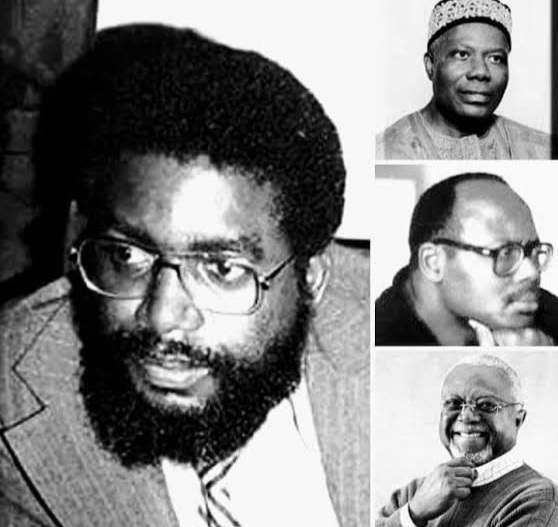
Togba-Nah Tipoteh, one of the leading figures of the Movement for Justice in Africa (MOJA), became Minister of Planning and Economic Affairs.
Gabriel Bacchus Matthews, the founder of the Progressive Alliance of Liberia (PAL) and a leading opposition figure, became Foreign Minister.
Henry Boimah Fahnbulleh Jr., another prominent progressive intellectual, also served in the Doe government, including as Foreign Minister after Matthews.
This was one of the most complicated moments in Liberia’s political history.
Men who had spent years challenging the old political establishment were suddenly working inside a military government that had come to power through a coup.
For some, participation represented an opportunity to influence the new order from within.
For others, it became a political and moral dilemma.
TIPOTEH’S BREAK WITH DOE
Tipoteh’s experience illustrates that dilemma.
He remained in government for approximately 15 months before resigning. Accounts of his departure attribute his resignation to concerns about human-rights abuses by the Doe government.
The significance went beyond one minister leaving office.
The progressive movement was beginning to confront a fundamental question: Was removing the old political establishment enough, or must political power itself be exercised democratically and accountably?
The answer increasingly pushed some of the movement’s leading figures back into opposition.
THE PROMISE OF 1980 COLLIDES WITH THE REALITY OF MILITARY RULE
The early promise of the Doe government gradually gave way to increasing authoritarianism.
Political parties were banned following the coup, while Doe’s government increasingly became dominated by members of his Krahn ethnic group. Political and ethnic tensions intensified during the 1980s.
The same political activists who had challenged the concentration of power under the True Whig Party now confronted another concentration of power—this time under a military government.
The progressive movement consequently became divided between those who participated in government and those who returned to opposition.
By the mid-1980s, opposition to Doe was becoming increasingly organized.
The Liberian People’s Party (LPP), associated with MOJA and formally established in 1983, became an important vehicle for the political ideas associated with that tradition. But the government moved against opposition forces, and attempts were made to prevent the LPP from participating fully in the political process.
FAHNBULLEH LEAVES — AND THE OPPOSITION EXPANDS
Fahnbulleh’s trajectory was also significant.
After serving in the Doe government, he eventually went into exile and became involved in opposition activity against the regime. His political work continued outside Liberia during much of the 1980s.
The pattern was becoming clear.
The progressive generation that had entered the government after the 1980 coup was increasingly scattered—some inside government, some in opposition, and some in exile.
But the political ideas that had animated MOJA and PAL had not disappeared.
1985: THE RETURN TO ELECTORAL POLITICS
In 1985, Liberia attempted to return to constitutional civilian government through elections.
Doe’s National Democratic Party of Liberia was declared the winner, but the election was followed by continuing political tension and allegations of electoral manipulation. Opposition figures continued challenging the regime.
For the progressive tradition, however, the more important development was that political struggle was once again being fought through parties and elections rather than only through street demonstrations or military intervention.
The LPP and other opposition movements remained part of that struggle.
THEN CAME THE CIVIL WAR
The unresolved political crisis eventually exploded.
On December 24, 1989, Charles Taylor’s National Patriotic Front of Liberia entered Liberia from Côte d’Ivoire, beginning the conflict that would become the First Liberian Civil War.
Doe was captured and killed by forces led by Prince Johnson in September 1990. ECOWAS intervened militarily, and an Interim Government of National Unity was established with Amos Sawyer as president.
For Sawyer, this represented an extraordinary transformation.
The university professor and MOJA figure who had challenged the old political system was now head of Liberia’s internationally backed interim government.
AMOS SAWYER’S SECOND CHAPTER
Sawyer’s presidency of the Interim Government of National Unity was not a return to normal constitutional government.
Liberia was at war.
Sawyer’s administration controlled Monrovia and its immediate environs, protected by the West African peacekeeping force ECOMOG, while Charles Taylor’s forces controlled much of the rest of the country.
The progressive movement had therefore reached another historical crossroads.
The struggle that had begun as a campaign against political exclusion in the 1970s had passed through military rule and now found itself operating in the middle of a devastating civil war.
BACCHUS MATTHEWS RETURNS TO GOVERNMENT
Another remarkable development was the return of Gabriel Bacchus Matthews.
The same man who had confronted the Tolbert government in the 1970s and had served briefly as Doe’s foreign minister returned to government as Foreign Minister under Sawyer’s interim administration.
This time, however, the political circumstances were completely different.
Liberia was no longer simply debating whether the True Whig system should be reformed.
The country was fighting for its survival.
THE PROGRESSIVE MOVEMENT AFTER THE WAR
The end of the civil war did not end the political life of the progressive generation.
Its influence survived through political parties, elections, civil-society organizations, intellectual institutions and individual politicians.
Tipoteh continued to contest national elections, including the 1997 and 2005 presidential elections. The LPP also continued participating in electoral alliances.
Matthews continued his political career until his death in 2007.
Fahnbulleh eventually returned to government service in the post-war period, including serving as National Security Advisor under President Ellen Johnson Sirleaf.
And Amos Sawyer continued to influence Liberia’s constitutional and democratic development long after leaving the interim presidency.
The 2005 election, in particular, represented a major turning point: it was Liberia’s first post-war election in which political power was contested outside the systems of the old settler oligarchy, Doe’s military rule and Charles Taylor’s wartime political structure. Sawyer later studied the emerging patterns of that post-conflict political order.
THE PROGRESSIVE LEGACY
The history of Liberia’s Progressive Movement cannot simply be reduced to whether MOJA or PAL won political power.
They did not.
The movement was fragmented. Some of its leaders entered government and later broke with the authorities. Others went into opposition or exile. Some continued through political parties and elections.
Yet the movement helped change the political vocabulary of Liberia.
Questions that had once been largely confined to intellectual and opposition circles—political participation, social justice, economic inequality, indigenous representation, multiparty politics and accountability in government—became central questions in Liberia’s national debate.
The 1979 Rice Riots helped expose the depth of public dissatisfaction with the old order. The 1980 coup destroyed the True Whig Party’s political monopoly, but military rule did not resolve the deeper questions that had produced the progressive challenge.
And that may be the most important lesson from the movement.
The Progressive Movement did not capture the Liberian state. But it helped change the political argument over what the Liberian state should be.
From MOJA and PAL, through the LPP, the opposition to Doe, the Sawyer interim government and later democratic struggles, the people and ideas associated with that generation repeatedly reappeared in Liberia’s political history.
THE STORY DOES NOT END HERE
The progressive generation eventually gave way to new political formations and new generations of politicians.
But many of the arguments remained familiar.
Who should control Liberia?
Who should benefit from its resources?
How much power should a president have?
What happens when government becomes unaccountable?
And can Liberia change governments through institutions and elections rather than coups and war?
Those questions, first pushed forcefully into Liberia’s national political conversation by the progressive generation of the 1970s, remain part of the country’s political debate today.
Part Three therefore closes one chapter—but it also opens another: how the intellectual and political legacy of MOJA, PAL and their leaders travelled into the post-war political order and influenced the generations that followed.