By Socrates Smythe Saywon | Smart News Liberia
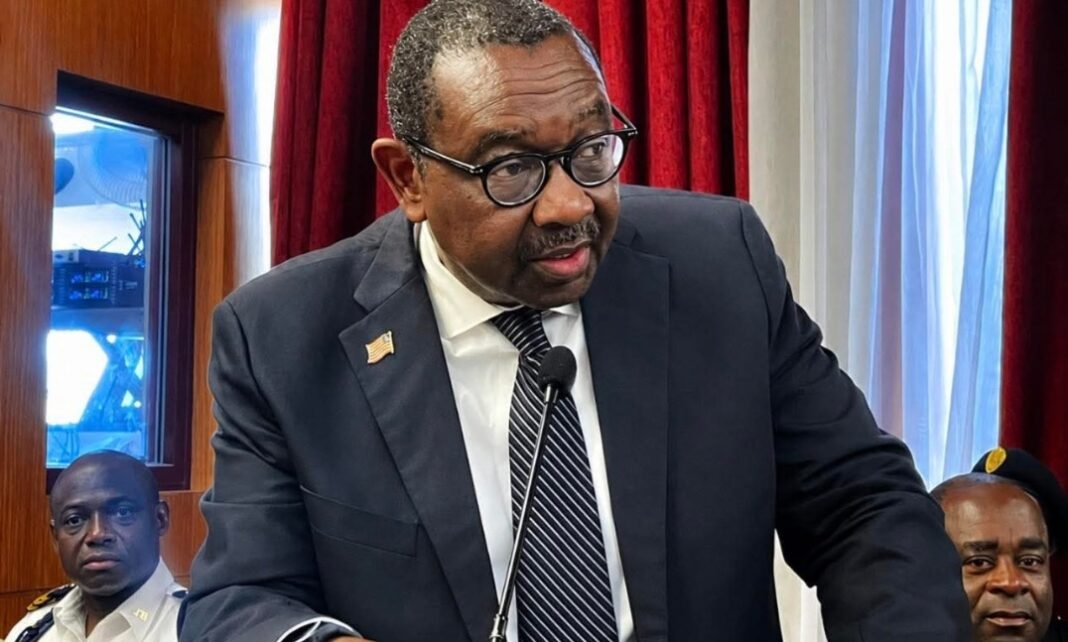
MONROVIA – Justice Minister and Attorney General Cllr. N. Oswald Tweh has declared an uncompromising war against drug traffickers, corrupt officials, and the growing spread of kush, warning that the Republic of Liberia “is coming” for those profiting from the country’s narcotics crisis. But as the Boakai administration marks International Drug Day with renewed promises of a nationwide crackdown, a critical question remains: Can the government back its tough anti-kush rhetoric with sustained action?
In a national statement issued Friday, June 26, Minister Tweh described Liberia’s drug epidemic as a national emergency that is destroying an entire generation, pointing to rising addiction, growing numbers of young people living on the streets, and the devastating impact of kush on communities across the country.
While the Justice Minister outlined recent drug seizures, arrests, and plans to target major trafficking networks instead of only street-level dealers, many Liberians are likely to judge the government’s success not by its promises but by whether those responsible for financing, facilitating, and protecting the drug trade are ultimately brought to justice.
“We have buried too many young people. We have walked past too many of our sons and daughters sitting catatonic on our streets, in our cemeteries, behind our markets, to pretend this is a problem we are merely observing. It is a problem we are living,” the Justice Minister declared.
He identified kush as one of the country’s most dangerous narcotics, describing it as inexpensive, widely available, and deliberately engineered to be addictive.
According to Minister Tweh, the drug has devastated families regardless of their social or economic status, transforming promising young Liberians into drug-dependent youths commonly referred to as “zogos.”
He further warned that nearly one in every five young Liberians has been affected by narcotics in one form or another, describing the situation as the loss of an entire generation rather than simply another public health statistic.
Minister Tweh reminded Liberians that President Joseph Nyuma Boakai has declared the drug crisis a national emergency and assured the public that the Ministry of Justice and all security institutions under its supervision are treating that declaration with urgency.
To demonstrate ongoing enforcement efforts, the Minister disclosed that during the first three months of 2026 alone, the Liberia Drug Enforcement Agency (LDEA) seized more than 422 kilograms of illegal narcotics and arrested 233 suspected traffickers across the country.
He also pointed to the recent interception of approximately 237.6 kilograms of cocaine valued at about US$19 million at Roberts International Airport, describing the operation as proof that Liberia’s security institutions can disrupt international drug trafficking when properly equipped, trained, and held accountable.
However, that same cocaine seizure has also intensified public concern over how such a massive shipment allegedly entered Liberia’s cargo system and advanced through multiple layers of airport handling before being intercepted.
The investigation remains active, with several airport officials, cargo handlers, and private sector executives identified as persons of interest. At the same time, members of the House of Representatives have called for the temporary suspension of cargo handling companies linked to the investigation pending its outcome.
Against that backdrop, many Liberians continue to ask whether the growing number of drug seizures reflects stronger law enforcement or exposes the depth and sophistication of trafficking networks operating within the country.
Minister Tweh acknowledged that seizures and arrests alone will not end Liberia’s narcotics crisis.
He argued that law enforcement must move beyond arresting street-level dealers and instead dismantle the criminal organizations financing, importing, and distributing illegal drugs throughout the country.
“The law must fall heaviest on those who manufacture, import, and traffic these poisons into our communities,” he declared, emphasizing that those profiting from addiction should face the full weight of the law while young people struggling with substance abuse should have greater access to treatment and rehabilitation.
The Justice Minister pledged to work closely with the Ministry of Health and development partners to expand rehabilitation services, warning that a country that only imprisons addicts without helping them recover will prolong the crisis.
He also vowed to pursue corrupt public officials who facilitate drug trafficking, promising that investigations will extend to every county, border crossing, seaport, and airport without fear or favor.
That commitment comes at a time of heightened public scrutiny following the multimillion-dollar cocaine investigation, with many citizens demanding that prosecutions reach not only couriers and low-level operatives but also the influential figures alleged to be financing or protecting international drug trafficking networks.
Minister Tweh appealed to parents, teachers, pastors, imams, chiefs, and community leaders to become active participants in identifying drug abuse and preventing addiction before it destroys more young lives.
Addressing young Liberians battling addiction, he offered a message of hope, assuring them that recovery is possible and that government intends to strengthen rehabilitation efforts alongside criminal enforcement.
At the same time, he delivered a stern warning to drug traffickers, declaring that neither wealth, influence, nor political connections would shield anyone involved in poisoning Liberia’s youth.
“We did not survive a civil war, two epidemics, and decades of struggle to lose this generation to a drug peddled for a few hundred Liberian dollars on a street corner,” the Justice Minister declared.
As Liberia observes International Drug Day, the Justice Minister’s message signals a tougher stance against narcotics trafficking. Yet the true test of the Boakai administration’s anti-drug campaign will not rest on speeches or statistics alone. It will depend on whether the government delivers sustained prosecutions, dismantles the powerful networks behind the drug trade, strengthens rehabilitation programs, and restores public confidence that no trafficker or protector of traffickers is beyond the reach of the law.