By Our Reporter | Smart News Liberia
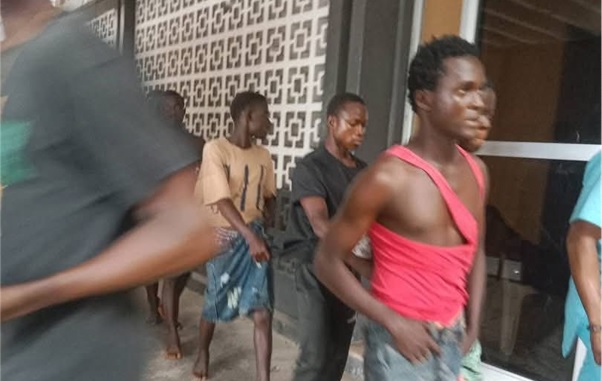
MONROVIA – The Liberia National Police (LNP) has formally charged 12 individuals allegedly linked to last week’s shocking mob attack at the busy Red Light Commercial District, where a young Liberian woman was violently assaulted, stripped naked in public, and humiliated after being accused of dressing “indecently.” The disturbing incident, which was captured on video and widely circulated across social media platforms, triggered outrage and drew condemnation from human rights advocates and members of the public.
LNP confirmed that the accused individuals have been forwarded to the Monrovia City Court at the Temple of Justice today, May 12, 2026, as investigations continue into the incident. Police say the case remains active and additional arrests are expected as investigators review digital evidence and gather more witness statements connected to the attack.
Providing an official update on Tuesday, May 12, 2026, Inspector General Gregory O. W. Coleman strongly denounced the actions seen in the viral footage, describing the conduct as unlawful, degrading, and completely contrary to Liberia’s constitutional principles and respect for human dignity. He stressed that the behavior displayed by the mob represented a serious violation of public order and the rule of law.
According to the police, preliminary findings based on eyewitness testimonies, video recordings, and statements obtained from individuals including Telewowoyan Flomo and Augustine T. Musa established sufficient grounds for criminal charges against several suspects allegedly involved in the public assault.
The individuals charged include Shelton Dolo, Emmanuel Flomo, Abel C. Dandy, Ernest Koiyan, Lincoln Sungbeh, Prince Saykay, Daddy Stephen, Emmanuel Dee, Joe Roberts, and Eric Gbokolo. Police stated that the defendants are facing multiple criminal offenses under Liberia’s Revised Penal Code.
The charges brought against the accused include harassment, sexual assault, disorderly conduct, simple assault, felonious restraint, recklessly endangering another person, and offensive touching. Investigators noted that the alleged acts violated several provisions of the Revised Penal Code of the Republic of Liberia, particularly sections relating to assault, public disorder, and gender-based abuse.
The police further disclosed that additional suspects identified through ongoing investigations, video analysis, and witness cooperation could also face prosecution, including individuals currently beyond the immediate reach of law enforcement authorities. The Liberia National Police warned that anyone linked to the attack would be pursued and prosecuted in keeping with the law.
Beyond the criminal dimension of the case, the Liberia National Police emphasized that incidents involving mob violence and forced public humiliation carry broader national consequences. Authorities warned that such scenes damage Liberia’s international image and threaten ongoing efforts to attract tourism, foreign investment, and economic opportunities. Police said images of public brutality circulating globally risk portraying the country as unstable and lawless.
The police administration stressed that Liberia continues to market itself internationally as a peaceful democratic nation open to business, commerce, and international partnerships. However, officials cautioned that acts of mob justice and gender-based violence undermine public confidence in state institutions and weaken the country’s reputation abroad.
While reaffirming its commitment to pursuing justice for the victim, the Liberia National Police also urged the public to allow the judicial process to proceed peacefully and lawfully and reminded citizens that all accused persons remain entitled to due process and are presumed innocent until proven guilty by a competent court. The police additionally called on community leaders, youth groups, religious institutions, civil society organizations, and market associations to reject mob violence, public humiliation, and all forms of gender-based abuse, stressing that a civilized society is built on justice, accountability, and respect for human dignity rather than the anger of crowds.