MONROVIA – The Liberia Revenue Authority’s latest revenue performance has drawn praise from transparency advocate Anderson Miamen, who has welcomed the government’s growing domestic revenue collection while issuing a strong warning that additional public resources must translate into tangible benefits for ordinary Liberians.
The Liberia Revenue Authority (LRA) reported that domestic revenue collections reached US$893 million as of August 12, 2026, placing the Authority significantly closer to its US$1.3 billion target for the year.
The latest figure also means that the LRA has already collected US$45 million more than the entire US$848 million collected in 2025, underscoring the pace of growth in domestic resource mobilization under Commissioner General James Dorbor Jallah.
The LRA said collections have maintained an upward trajectory since Jallah assumed leadership in March 2024, increasing from US$699 million in 2024 to US$848 million in 2025, before reaching US$893 million by August 12 this year.
The revenue authority attributed the improvement to reforms focused on strengthening revenue collection, improving compliance, modernizing revenue systems, expanding taxpayer engagement and accelerating digitalization.
The performance has also received recognition from the government. Finance and Development Planning Minister Augustine Kpehe Ngafuan, speaking during a National Steering Committee meeting marking the first year of implementation of the ARREST Agenda for Inclusive Development, praised Jallah and the LRA for their revenue performance and contribution to mobilizing resources for national development.
The LRA also credited its employees and taxpayers, noting that continued taxpayer compliance remains critical to sustaining domestic revenue mobilization.
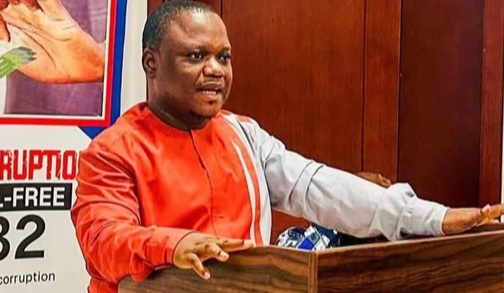
It is against this backdrop of rising collections that Miamen, Executive Director of the Center for Transparency and Accountability in Liberia (CENTAL), issued his assessment Tuesday.
In a statement posted on his official Facebook page, Miamen described the LRA’s performance as “highly welcoming news” and commended Commissioner General Jallah and his team for what he called a job well done.
But while celebrating the revenue gains, Miamen argued that Liberia should not become satisfied with collections measured in millions when the country has the potential to mobilize substantially more domestic resources.
He urged the LRA to intensify its efforts and pursue reforms capable of taking Liberia beyond what he termed the country’s “Millions Curse” in domestic resource mobilization.
“It has been conspicuously clear that Liberia has been cheated over time, given the low domestic revenues generated,” Miamen wrote, arguing that the current performance could be surpassed through greater use of technology, transparency and oversight.
“Thank you Millions, but go away!! We need Billions and even Trillions!!” he declared.
However, Miamen’s central concern extends beyond the size of the revenue collected. He questioned whether the additional resources generated will actually reach the Liberian population through well-targeted public-interest spending.
He warned that increased domestic revenue should not result in greater expenditure on luxury vehicles, logistical benefits or other privileges for senior government officials, including the President, Vice President, Speaker and Chief Justice.
Miamen also criticized what he described as the potential use of public resources to finance the “ill-advised Foya-based Presidential project” and other initiatives that, in his view, do not directly respond to the needs of ordinary citizens.
He further cautioned against allocating public resources to presidential committees dominated by what he described as “recycled politicians” and individuals who believe they should continue benefiting from public resources.
His criticism effectively shifts the focus from revenue collection to revenue management, raising the question of whether Liberia’s improved domestic mobilization will produce measurable improvements in public services and living conditions.
For Miamen, the LRA’s US$893 million collection is therefore an achievement worth recognizing, but not an end in itself.
He urged the government to ensure that every additional dollar collected is subjected to strong oversight and allocated to projects and programs that provide direct and measurable benefits to the population.
Miamen said civil society will be watching closely to determine where the additional revenues are allocated and spent, particularly whether they benefit politically connected individuals or ordinary citizens.
He singled out women, children and persons with disabilities as groups that should receive greater attention, arguing that they often bear the greatest burden of poor governance, corruption and inadequate public services.
The debate comes as the LRA moves toward its US$1.3 billion annual target, with US$893 million already collected by August 12.
If the upward trend continues, the LRA could record one of its strongest revenue performances in recent years. But Miamen’s intervention underscores a broader governance challenge: mobilizing more money is only one part of the equation; ensuring that the money is transparently and responsibly spent is equally important.
His message is therefore both a commendation and a challenge to the government: celebrate the millions, but use the gains as a foundation for reaching billions while ensuring that increased public revenue produces visible improvements in the lives of Liberians, particularly those in remote communities where basic social services remain limited.
“Thank you Millions, but go away!!” Miamen wrote. “We want Billions that are properly allocated and managed to tangibly benefit Liberians, including those in remote locations and lacking basic social services.”