MONROVIA, LIBERIA — Is Information Minister Jerolinmek Matthew Piah’s declaration that no government can solve all of Liberia’s problems within six years an honest acknowledgment of the country’s development challenges, or an early attempt to prepare Liberians for the possibility that President Joseph Nyuma Boakai may fall short of his campaign promises?
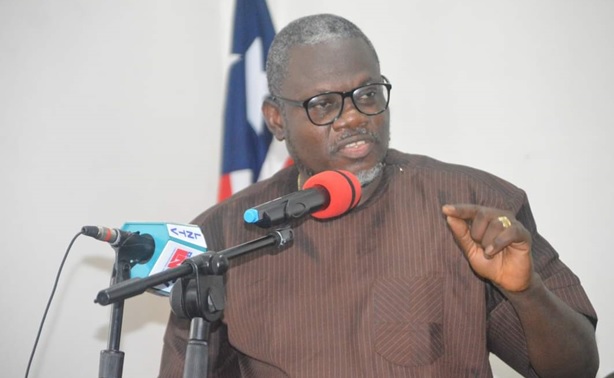
The question has emerged following Piah’s October 22, 2026, remarks at the Ministry of Information’s regular press briefing, where he defended the Boakai administration against criticism over its development record and the President’s participation in the 81st United Nations General Assembly.
Piah argued that Liberia’s challenges are too enormous for any single administration to resolve within one six-year term, emphasizing that successive governments must preserve existing gains and build on the work of their predecessors.
In principle, the argument is reasonable. Liberia’s infrastructure deficits, unemployment, poverty, and weaknesses in public services developed over many years and cannot all be eliminated overnight.
But Piah’s statement raises a more uncomfortable question for the government: If the administration cannot solve every problem within six years, how much progress can Liberians reasonably expect it to deliver on the specific promises that brought it to power?
That is the distinction the government must address.
A CONFESSION OF LIMITATIONS OR AN ATTEMPT TO LOWER EXPECTATIONS?
Piah’s remarks could be interpreted as a realistic acknowledgment that national development requires more time than a single presidential term.
However, coming as the Boakai administration approaches the end of its third year, the statement also invites scrutiny over whether the government is preparing the public for unmet expectations.
Liberians did not necessarily expect the President to eliminate every national problem within six years. But campaign promises create legitimate expectations that a government will make measurable progress on the priorities it placed before voters.
The administration campaigned on improving governance, addressing corruption, strengthening public services, and tackling the country’s longstanding development challenges.
Among the most memorable commitments was Boakai’s promise that vehicles would no longer become stuck in mud on the country’s highways within his first 100 days in office.
Yet reports of poor road conditions, particularly in parts of southeastern Liberia, continue to raise questions about progress on that commitment. Public concerns have also extended to education, healthcare, employment, and the reliability of essential services.
These problems do not, by themselves, establish that the government has accomplished nothing. They do, however, make it reasonable to ask which commitments have been fulfilled, which remain outstanding, and why.
The issue is not whether Boakai can fix everything. It is whether his government is delivering on the priorities it promised to address.
THREE YEARS IN POWER: WHERE IS THE MEASURABLE PROGRESS?
By October 2026, the Boakai administration had been in office for approximately two years and nine months.
That period does not mean every major infrastructure project should be completed. Large projects require planning, financing, procurement, and implementation.
Nevertheless, the government should be able to demonstrate tangible progress through completed projects, published expenditure records, improved public services, and measurable outcomes.
For example, Liberians deserve answers to several questions:
– Roads: Which major road projects have been completed, and what measurable progress has been made toward improving access to remote communities?
– Education: What has the government achieved in addressing teacher welfare, school disruptions, and the quality of public education?
– Healthcare: What improvements have been made in access to medical facilities, staffing, and essential medicines?
– Employment: What measurable results have government programmes produced in creating jobs and economic opportunities?
– Governance: What progress has been made in fighting corruption, strengthening public institutions, and ensuring accountability?
– Public spending: What results have taxpayers received from the money allocated to government programmes and projects?
These are not demands for perfection. They are basic questions of democratic accountability.
If the administration has made significant progress, it should be able to demonstrate that progress with credible evidence. Where targets have not been achieved, officials should explain the obstacles and provide realistic timelines for completion.
THE DANGER OF USING SIX YEARS AS A SHIELD
The greatest concern arising from Piah’s statement is not his acknowledgment that Liberia faces enormous challenges. It is the possibility that the six-year argument could become a convenient response whenever citizens question the government’s performance.
A presidential term is constitutionally limited, but that limitation does not suspend accountability.
Every administration must work within financial, institutional, and economic constraints. It must also accept responsibility for its own decisions, priorities, implementation failures, and use of public resources.
Previous governments may have left behind serious problems, and external economic conditions may complicate the implementation of policies. Those realities deserve consideration when assessing performance.
But they do not remove the obligation to show what the current government has done with the time and resources available to it.
The administration must distinguish between problems that genuinely require long-term solutions and campaign commitments that should already have produced measurable results.
Without that distinction, appeals for patience risk becoming a substitute for explanations.
THE UN TRIP AND THE QUESTION OF RESULTS
Piah’s remarks also followed criticism of Boakai’s participation in the 81st UN General Assembly.
International diplomacy can be important for attracting investment, strengthening partnerships, and representing Liberia’s interests abroad.
But the value of presidential travel should be demonstrated through outcomes rather than assumed simply because the President attended an international gathering.
What concrete benefits did Liberia obtain from the trip? Were new investment commitments secured? Were development agreements concluded or advanced? What follow-up actions will translate diplomatic engagements into economic opportunities?
These are legitimate questions that the government can answer through a detailed public report.
The government should not interpret every demand for evidence as hostility toward the President. Citizens can support Liberia’s international engagement while insisting that public expenditure produces identifiable benefits.
WHAT DOES PIAH’S STATEMENT REALLY MEAN?
Piah’s declaration is not a formal admission that Boakai will fail to fulfil his campaign promises. Nor does it establish that the administration has failed across every sector.
It is, however, a political statement that places the government’s expectations and performance under renewed scrutiny.
One interpretation is that Piah is asking Liberians to recognize the scale of the problems inherited by the administration and the time required to address them.
Another is that the government is attempting to temper expectations as criticism grows over the pace of development.
Determining which interpretation best reflects the administration’s position requires examining its subsequent actions, published targets, and measurable achievements—not merely the minister’s choice of words.
If the government believes it is making meaningful progress, it should welcome an opportunity to demonstrate that progress.
LIBERIANS NEED A SCORECARD, NOT AN EXCUSE
As the administration moves further into its first term, the public needs a comprehensive account of its campaign commitments.
Such an assessment should identify what has been completed, what is underway, what has been delayed, how much each initiative has cost, and what citizens can reasonably expect before the end of the term.
The assessment must also acknowledge achievements where the evidence supports them. Accountability should not mean ignoring progress, just as acknowledging national challenges should not mean overlooking missed commitments.
For ordinary Liberians, the ultimate measure of government performance is whether public policies are improving daily life.
A passable road that connects a community to a hospital, a functioning school, reliable electricity, accessible healthcare, or a credible employment opportunity can make a more immediate difference than another political assurance.
The government must therefore demonstrate how its decisions are translating into practical improvements.
THE SIX-YEAR CLOCK IS TICKING
Piah is right that no administration can reasonably promise to eliminate every problem facing Liberia within six years.
But that principle does not answer the central question facing the Boakai administration: how much progress has it made on the specific promises it asked Liberians to trust?
The minister’s statement may be an honest acknowledgment of the limits of government, an effort to manage public expectations, or both. It should not automatically be treated as a confession of impending failure.
What matters now is whether the administration can support its position with measurable results.
Liberians are not demanding that every problem disappear overnight. They are demanding evidence that the government is moving the country forward, fulfilling its commitments, and using public resources responsibly.
The question is not whether Boakai can fix everything in six years. It is whether, before his term expires, he can demonstrate that the promises that brought him to power have translated into meaningful improvements in the lives of the Liberian people.