
MONROVIA, LIBERIA – The arrest and impending prosecution of Jerry Nyantee Wrato has rapidly developed into a wider national debate over how Liberia will draw the line between criminal online conduct and protected expression under its newly enacted Cybercrime Act.
The case began with allegations involving digital content targeting Vice President Jeremiah Kpan Koung but has now moved into a much larger legal and public-policy discussion after the Liberia National Police concluded its investigation and announced four charges against Wrato.
The charges are misuse of devices, cyberstalking, distribution of data messages that incite damage to property or violence, and distribution of harmful data messages.
The police says the charges fall under Sections 10.1, 15.1, 18.1 and 19.1 of the Cybercrime Act of 2025 and that Wrato will be forwarded to court for further proceedings.
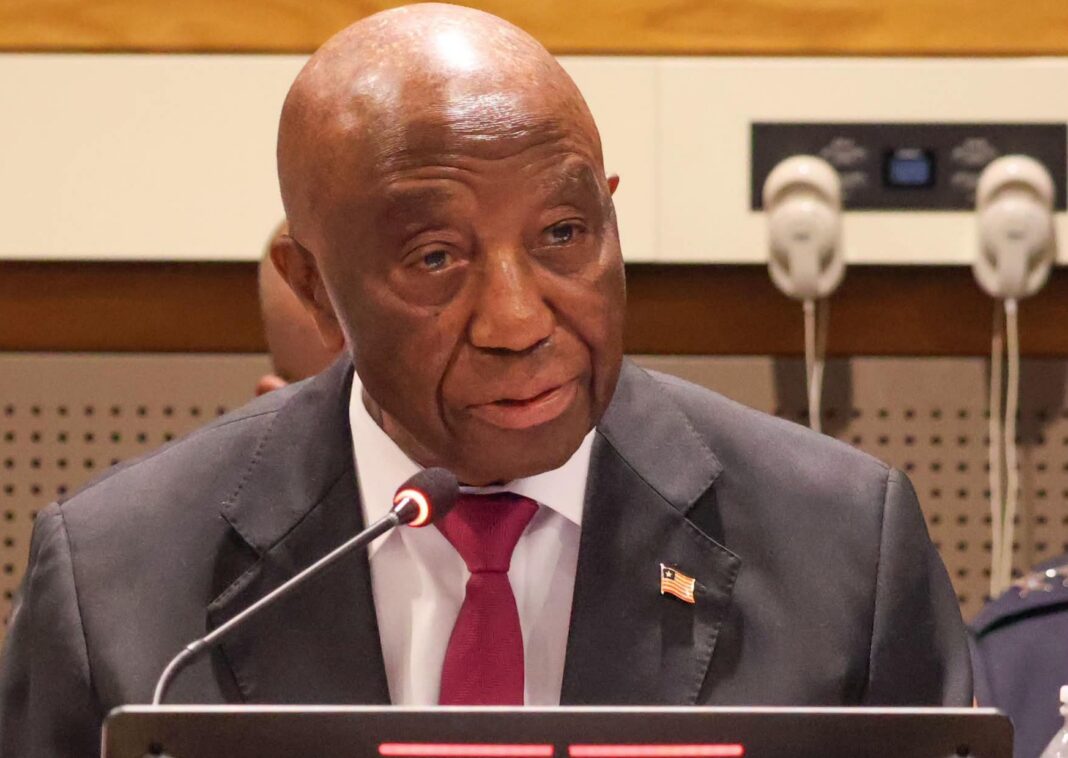
The case has drawn unusual attention because Vice President Koung himself publicly expressed compassion toward Wrato and requested his release.
Koung’s position has introduced a question that reaches beyond the individual case: whether an alleged victim’s decision to forgive or decline to pursue a complaint can end a criminal investigation when law enforcement believes a potential offense has occurred.
The police has answered that question by proceeding with prosecution.
In his September 21 communication to the Vice President, Inspector General Gregory O. W. Coleman said criminal allegations become matters for law enforcement once they come to the attention of the police.
He said the police has a statutory responsibility to investigate objectively and take appropriate action based on evidence and law.
The position effectively separates the personal wishes of the person allegedly targeted from the state’s responsibility to determine whether conduct falls within a criminal statute.
The distinction is particularly important because Liberia’s Cybercrime Act is relatively new.
The Ministry of Posts and Telecommunications lists the approved printed Cybercrime Act of 2025 among its official Acts, with the printed version dated July 24, 2026.
The Wrato case is therefore emerging as one of the first major public tests of how the legislation will operate when allegations involve politically sensitive digital expression and a senior government official.
Current legal analysis of the printed Act shows that the legislation does not simply criminalize every offensive or insulting statement made online.
Section 15 on cyberstalking addresses specified forms of threatening or harassing computer data, including conduct intended to bully, threaten or harass where it places a person in fear of death, violence or bodily injury, as well as specified kidnapping, injury or extortion-related threats.
Section 18 addresses the distribution of computer data intended to incite damage to property or violence against a person or group.
Section 19, meanwhile, deals with distribution of harmful data messages and is among the provisions that have generated particular discussion about the relationship between cybercrime enforcement and freedom of expression.
Those distinctions mean that the court proceedings will be important in determining how the statutory provisions apply to the specific conduct alleged against Wrato.
The police has not announced a finding of guilt.
Instead, Inspector General Coleman explicitly stated that charging Wrato does not constitute a determination of guilt and that the suspect remains entitled to the presumption of innocence and all constitutional and statutory protections.
That safeguard is particularly relevant because the case has already generated competing public interpretations.
Vice President Koung has taken a conciliatory position and called for Wrato’s release.
Former Finance and Development Planning Minister Samuel D. Tweah Jr., meanwhile, has criticized the arrest and questioned the law’s implications for freedom of expression. Current reporting quotes Tweah as arguing that the case reflects a broader problem with the new cybercrime legislation.
Other government security officials have defended enforcement of the law against allegedly manipulated or humiliating digital content involving public officials. FrontPageAfrica reported that Executive Protection Service Director Sam Gaye argued that creating and sharing fake material intended to insult, humiliate or threaten a person can fall within the new cybercrime framework.
The competing positions place the judiciary at the center of the next stage.
The court will have to consider the actual evidence presented by the prosecution, the precise content and circumstances surrounding the alleged communications, the statutory elements of the offenses charged and the constitutional protections available to the accused.
The case also raises an important issue concerning the growing use of artificial intelligence in Liberia’s information environment.
Current reports indicate that the allegations involve AI-generated images and video depicting Vice President Koung.
The development highlights a challenge facing legal systems worldwide: determining how existing criminal laws should apply when digitally manipulated material can be created and distributed rapidly, potentially reaching large audiences before the affected person can respond.
For Liberia, the issue has arrived shortly after the country enacted its new cybercrime framework.
The government has an interest in protecting citizens from genuine threats, harassment, incitement and other harmful digital conduct. At the same time, the Constitution and existing press-freedom framework establish protections that remain relevant when criminal laws are applied to online communication.
That tension makes the Wrato proceedings important beyond the individual defendant.
If the prosecution proceeds, the court will have an opportunity to clarify how the new law should be applied to alleged cyberstalking, harmful messages, incitement and misuse of digital devices.
The proceedings may also provide greater clarity about the distinction between political criticism, ridicule or offensive expression on one hand and conduct that satisfies the legal elements of a cybercrime on the other.
For now, however, the police position is that its investigation has been completed and the evidence warrants charges.
The Vice President’s request for release has not stopped the process.
Wrato is expected to face the judiciary, where the allegations will be tested under the law.
The outcome of that legal process will determine whether the charges are sustained, dismissed or otherwise resolved, but until then, Wrato remains presumed innocent.
The case has already established one important point about Liberia’s new digital legal environment: cybercrime enforcement is no longer a theoretical issue.
It has reached the center of a live constitutional, legal and technological debate involving one of the country’s highest-ranking officials, a private citizen and a law that is now being tested in court.