He ran for the presidency three times but never secured a win. Yet, his political journey left Liberia pondering a question that even death could not resolve: What could have been?
There’s an undeniable sense of solitude that accompanies the conclusion of a political career. The rallies have ceased. The flags are taken down. Campaign posters gradually disappear from the walls. The microphones are silent. The crowds that once rallied behind a candidate return to their everyday struggles. And somewhere, far from his homeland, the man who dedicated his life to earning the trust of Liberians rests in peace.
For Charles Walker Brumskine, the significant place was Johns Hopkins Hospital in Baltimore, Maryland. On November 20, 2019, his long journey came to an end at the age of 68.
Liberia was left grappling with its unresolved debates and unfulfilled political aspirations—and, perhaps most hauntingly, a lingering question: What might a Brumskine presidency have entailed?
We will never know, and that uncertainty may be the most sorrowful aspect of his narrative. Charles Walker Brumskine did not pass away as a former president; instead, he left us as something even more poignant: a man who was close enough to power to envision it, fought valiantly to attain it, yet never held it.
He knocked on the door of the presidency three times, and each time, Liberia opted for someone else. Nevertheless, the door—and the man who persistently knocked—remain etched in Liberia’s political memory.
THE LAWYER
Before he became a presidential candidate, Brumskine was known as a lawyer. His political identity was deeply influenced by his legal background. After studying at the University of Liberia and later in the United States, he established a strong legal career and emerged as one of the leading attorneys in the country.
The courtroom was his domain. It was a place where power could be challenged through legal precedents. Even the most powerful individual could face defeat if the law was on the other side.
This perspective was carried over into his political life. Brumskine had a solid grasp of institutions and constitutions, and he firmly believed that a republic’s strength lies in its ability to hold even the most powerful accountable to the law.
However, Liberia’s political landscape would put those beliefs to test.
HE KNEW POWER
Brumskine understood power intimately. He wasn’t just an outsider critiquing it from afar; he had been at its heart. After Charles Taylor was elected president in 1997, Brumskine took on the role of President Pro Tempore of the Liberian Senate, placing him near the epicenter of political influence.
However, as time passed, his relationship with Taylor soured, leading him to become a vocal opponent of the administration.
This shift was not merely a change in political stance; it was a pivotal moment that shaped his identity in the eyes of the Liberian people. Having felt the weight of power, he then grasped the significance of standing against it.
This journey culminated in the founding of the Liberty Party, which he led and which emerged as one of the most prominent opposition movements in Liberia, serving as the platform for his presidential ambitions.
THREE TIMES
The presidency was his ultimate unfulfilled dream. He made his first attempt in 2005, came back in 2011, and then tried once more in 2017 after facing two defeats.
Three campaigns. Three times Liberia was invited to envision Charles Walker Brumskine as its leader. And three times, the response was a resounding no.
For some politicians, a single defeat is enough to deter them. But for Brumskine, losing was never the final word. He continued to make his case. This tenacity became a defining trait of his political persona.
He was someone who could face electoral defeat yet still hold onto the conviction that he had valuable insights to offer about the nation.
Though his presidential bids may not have succeeded at the polls, they ensured that he remained a relevant figure in the national dialogue.
THE FINAL BATTLE
The 2017 election marked the end of his presidential campaigns. Liberia was on the brink of a significant political shift. George Weah and Joseph Boakai were the frontrunners in the runoff, while Brumskine raised concerns about the electoral process.
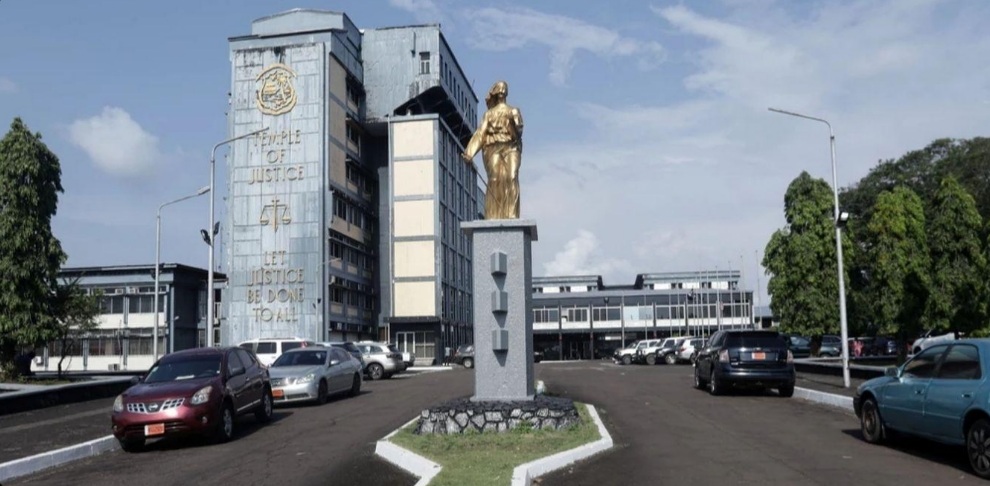
True to his nature, he took his grievances to court. The Supreme Court became the stage for his last major political confrontation, momentarily halting the electoral schedule as they deliberated on his challenge.
Critics viewed him as a defeated candidate unwilling to concede, while his supporters saw a constitutional lawyer upholding the electoral process’s integrity.
The motives and implications of that challenge may remain subjects of historical debate. However, the Brumskine approach was undeniably distinctive.
His ultimate political struggle was not waged with violence, but through petitions, legal arguments, and the frameworks of governance. The lawyer had remained steadfast in his role as a politician until the very end.
THERE CAME THE SILENCE
Illness had started to encroach on Brumskine’s political journey. The man who dedicated years to traversing Liberia in pursuit of votes ultimately sought treatment abroad.
Then came November 20, 2019. The news from Baltimore was definitive. Charles Walker Brumskine had passed away.
There are times when a nation comes to terms with the fact that a once-familiar voice has faded into memory. This was one of those moments.
The campaigner could no longer campaign. The lawyer could no longer present his case. The presidential candidate would never again stand before the Liberian people and urge them to elect him as their leader. The dream had finally faced an insurmountable foe: death.
WHEN POLITICS FELL AWAY
Death has a peculiar way of removing the masks of politics. Former President George Weah, whose political path had intertwined with Brumskine’s, honored him with heartfelt words. Weah referred to him as a formidable fighter and commended his unwavering commitment to doing what was right and lawful.
Liberia lowered its flag in mourning. For a brief moment, the nation reflected on the man, without concern for his political affiliations.
There were no elections to contest, no rivals to overcome, no petitions to submit, and no speeches to respond to. It was simply Charles Walker Brumskine, who had passed away.
THE PRESIDENT WHO NEVER WAS
Every country has its share of “what ifs,” and Liberia is no exception. Among these, Charles Walker Brumskine stands out in a unique way: What if Liberia had chosen him as president?
Would he have led with the same integrity he showed as a lawyer? Could the constitutionalist have resisted the allure of executive power? Would the man who held others accountable have accepted scrutiny of his own administration? Would Liberia’s institutions have emerged stronger under his leadership? Would the opposition leader have been willing to make the tough compromises that come with the presidency? Would he have achieved success, or would he have fallen short? Would history have honored him, or would it have been critical?
There are no definitive answers to these questions. The ballot box prevented us from exploring that possibility. Thus, the phrase “The President Liberia Never Had” should not be interpreted as a claim that Brumskine would have been an outstanding president.
Instead, it conveys a more measured and haunting sentiment: a recognition of a chance that history never had the opportunity to explore.
WHAT REMAINS
His legacy shouldn’t just be defined by the office he never held. Instead, we should evaluate him based on the principles he championed: the rule of law, the significance of institutions, the validity of political opposition, the belief in the importance of elections, and the idea that political conflicts can be resolved through constitutional methods rather than violence.
He was the founder of the Liberty Party, served as Senate President Pro Tempore, argued before the Supreme Court, and ran for president three times, though he never won. Yet, he persisted.
That resilience is significant. Liberia has seen leaders who took power by force, but Brumskine embodied a different vision: one where political aspiration could be achieved through parties, elections, courts, and public discourse.
He wasn’t immune to the contradictions inherent in politics—no politician is. However, he consistently returned to the belief that Liberia was a cause worth fighting for.
THE EMPTY CHAIR
There’s an image that perhaps conveys more about Brumskine than any campaign photo: an empty chair. It’s the chair he never sat in at the Executive Mansion.
The chair from which he never gave a presidential inaugural address. The chair where his Cabinet never convened.
An empty chair sparks the imagination. Who could have occupied that space? What decisions might have been made? What victories could have been celebrated? What errors might have been committed?
History is filled with events that took place. Yet, sometimes, the things that never occurred can haunt a nation just as profoundly.
THE LAST CAMPAIGN
Every politician eventually encounters their last campaign. For Brumskine, it wasn’t held under the Liberian sun. There were no campaign buses, no flags, no chants, and no ballot papers. Instead, there was a hospital in Baltimore, illness, and a significant distance.
Here was a man who dedicated his life to leading a country thousands of miles away from where he would take his final breath. His political journey concluded not at the ballot box, nor in defeat, but in silence.
He had pursued the presidency three times without success. Perhaps history had a different purpose for him. Not as a president or a victor, but as a witness—a witness to Liberia’s wars and its peace, to its political changes, and to its struggles with power and law. A witness who continually believed that Liberia could achieve more.
THE MAN AT THE DOOR
There’s a profound sadness in the image of a man standing before a door that never opens. Charles Walker Brumskine dedicated much of his public life to that door.
He knocked in 2005, again in 2011, and for the final time in 2017. Liberia did not answer. Then, in 2019, death sealed the path behind him. And so the door remains.
Behind it lies the presidency he never attained. In front of it stands the memory of a man who persistently knocked. Perhaps one day, Liberians will cease to wonder if Charles Walker Brumskine would have made a great president.
Perhaps a more significant question is: What lessons did Liberia learn from the man it never elected? A nation can evaluate its presidents by their achievements. It can assess its politicians by the struggles they undertake. But maybe it should also measure them by the aspirations they leave behind.
Brumskine left behind a dream. It wasn’t just the aspiration of him becoming president; it was the vision of a Liberia where the law held weight, institutions were respected, opposition was valued, and the future could be debated without the nation being torn apart in the process. That dream remains incomplete. So does the inquiry.
Seven years after his passing, Brumskine still holds a unique place in Liberia’s political narrative, reserved for those who nearly reached their destination but never quite did.
He was a lawyer with aspirations to govern. An opposition leader who understood power from the inside. A politician who faced defeat in three presidential elections but never lost his desire to lead. And a man who passed away far from his homeland, leaving a nation that never fully realized what it could have been like to have him in charge.
Perhaps that is the ultimate irony of his life. He dedicated himself to pursuing Liberia’s highest office, while Liberia grappled with whether it was truly ready for him.
Neither of those questions found resolution. And when the flags are lowered, the speeches have faded, and the political landscape of his era becomes the history of another, one phrase endures: Charles Walker Brumskine. The President Liberia Never Had.