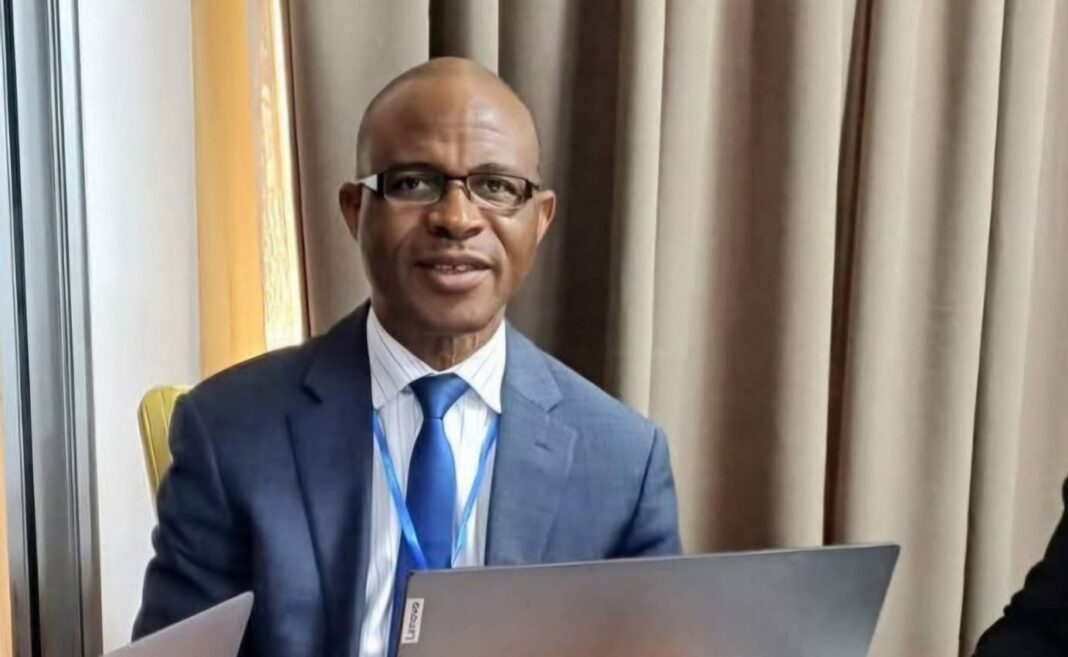
MONROVIA – Former National Public Health Institute of Liberia Director General Dr. Dougbeh Chris Nyan believes Liberia’s political landscape is undergoing a significant transformation, with ordinary voters increasingly looking beyond the traditional rivalry between the Unity Party and the Coalition for Democratic Change for a credible alternative ahead of the 2029 elections.
Speaking exclusively to Smart News Liberia on Friday, September 4, 2026, Nyan said the frustration among ordinary Liberians is creating an opening for what he described as a “third path” in national politics.
His argument is rooted in what he considers the failure of successive governments to translate national resources and public revenues into meaningful improvements in the lives of citizens.
Nyan said many Liberians supported either the CDC or the Unity Party with the expectation that their chosen political leadership would improve governance and deliver tangible benefits.
But, according to him, the continued struggles over corruption and governance have left voters questioning whether changing between the two established political camps will produce a fundamentally different outcome.
“The ordinary people are feeling it,” Nyan said.
He argued that citizens are no longer simply listening to political rhetoric but are evaluating governments based on what they experience in their communities.
Nyan said Liberia’s political class should not underestimate the analytical capacity of ordinary citizens because they are the people directly affected by poor public services, unemployment, inadequate infrastructure and the broader economic pressures confronting the country.
He challenged the argument that strong economic indicators or increased government revenue automatically demonstrate successful governance.
“You can have GDP, you can raise billions of dollars, if it doesn’t trickle down to the ordinary person, it makes no sense,” he said.
According to Nyan, voters are looking at the quality of schools, roads, hospitals, justice and public institutions when deciding whether government is delivering.
He said citizens are also increasingly concerned about credibility.
Nyan believes that this changing public attitude could create an opportunity for a political movement or coalition capable of convincing voters that it can provide more credible and effective leadership.
“People are questioning,” he said, arguing that the critical question is no longer simply whether Liberians want the Unity Party or CDC but what alternative exists if voters reject both.
Nyan said a third political force showing “some semblance of good governance” from its past could potentially attract voters who have become dissatisfied with the traditional political choices.
He cautioned, however, that the emerging political sentiment is not yet fully organized or clearly expressed.
“It’s not well expressed, but that’s a sentiment that is among our people,” he said.
Nyan also rejected the assumption that Liberia’s elections can be determined simply by regional or ethnic voting patterns.
He argued that Liberia’s political behavior is more fluid than many observers assume and that voters can cross traditional political and regional lines when a candidate appeals to their interests.
As an example, he pointed to the 2017 presidential election, when former President George Weah secured significant support in Lofa County despite the county’s historical political patterns.
For Nyan, that example demonstrates that Liberian voters cannot simply be categorized according to where candidates originate.
He said voters increasingly consider personality, credibility, political interests and the perceived ability of candidates to deliver.
Nyan also believes the country’s voting patterns are changing rapidly.
He argued that the era when voters could easily be influenced by relatively small political inducements is fading.
According to him, Liberians are becoming more sophisticated in evaluating political candidates and are increasingly interested in issues that affect governance and their future.
“Nobody is voting for anybody now because you get a scratch card, because you get a cup of rice,” he said, arguing that transactional politics has lost some of its former influence.
Nyan’s assessment extends to the importance of selecting credible presidential tickets ahead of 2029.
He said political parties seeking to win national elections will have to pay greater attention to the credibility of their candidates and running mates.
He specifically discussed Nimba County, traditionally viewed as a politically important and vote-rich county, cautioning against assuming that the county will automatically deliver a predictable bloc of votes to any particular political camp.
Nyan said internal political divisions and the influence of competing political figures could make Nimba’s electoral outcome more contested.
He cited figures including Vice President Jeremiah Kpan Koung, Edith Gongloe-Weh and Tiawan Saye Gongloe as part of the evolving political dynamics in the county.
Nyan argued that political parties will need credible and broadly appealing tickets if they hope to secure substantial support from Nimba and other politically competitive areas.
He said voters are increasingly looking for reliability and credibility from national leaders.
For Nyan, Liberia’s international image is also at stake.
He contrasted the country’s political leadership with Rwanda, saying that when people hear the name Rwanda, they often associate it with development and President Paul Kagame’s leadership.
Liberia, he argued, has yet to develop a comparable association between its national leadership and sustained progress.
Instead, he said Liberia’s political leadership is too often associated with corruption, bad governance, misrule and disregard for the rule of law.
That, he believes, is precisely what the next generation of Liberian voters wants to change.
Nyan said the 2029 political contest could therefore become less about the traditional CDC versus Unity Party rivalry and more about whether a credible alternative can emerge.
He acknowledged that the political environment currently contains a significant amount of emotion, particularly among CDC supporters amid controversies surrounding the current administration and the arrest of former Vice President Jewel Howard-Taylor.
But he cautioned that political anger alone would not determine the next election.
The decisive factor, in his view, will be whether any political ticket can convince voters that it represents credible leadership and can deliver tangible improvements.
Nyan’s analysis presents 2029 as a potentially consequential test for Liberia’s political establishment.
If voters increasingly reject the traditional practice of choosing between established parties without demanding measurable results, political organizations may be forced to compete more aggressively on credibility, governance and performance.
For the former NPHIL director, the question facing Liberia is therefore bigger than which party wins the next election.
The deeper question is whether the country’s voters will finally have a credible third option capable of converting widespread dissatisfaction into a coherent political movement.
And if such an alternative emerges with a credible national ticket, Nyan believes the traditional political calculations surrounding Liberia’s elections could change significantly.