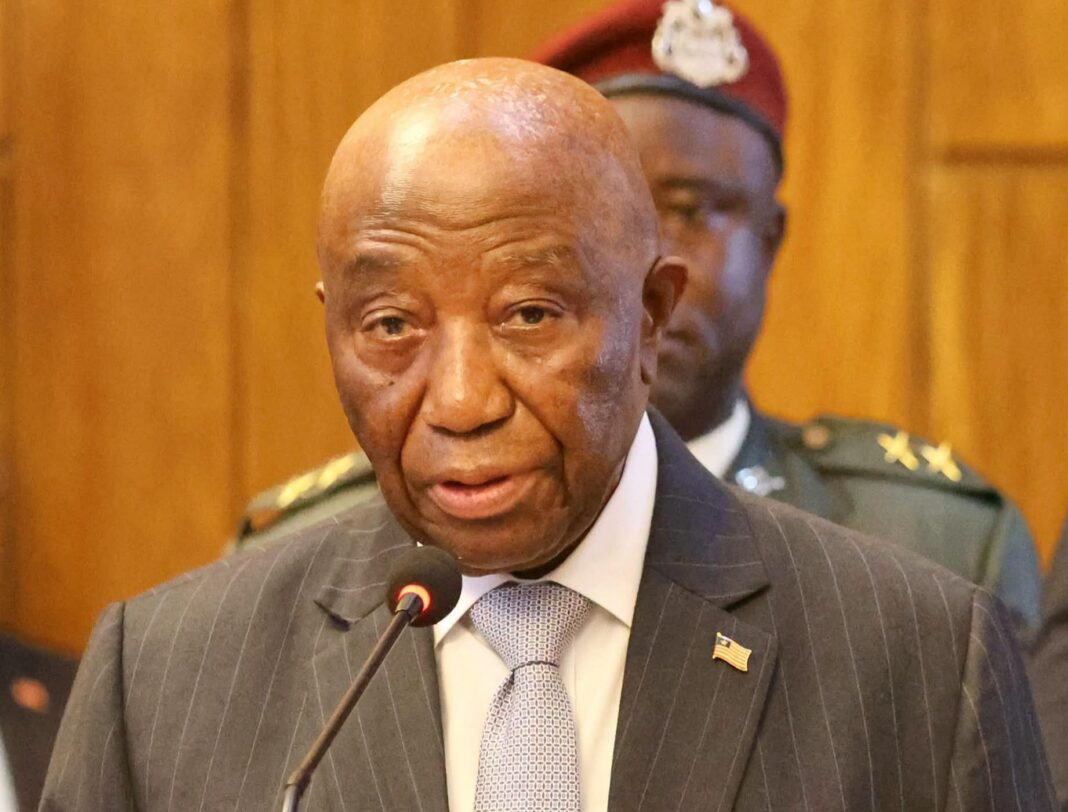
MONROVIA – President Joseph Nyuma Boakai has challenged newly commissioned government officials to abandon bureaucratic excuses and deliver measurable results, warning that Liberians are no longer satisfied with explanations about why government cannot perform.
Addressing officials during their commissioning ceremony at the Executive Mansion on Tuesday, September 8, 2026, Boakai said the urgency of improving the daily lives of Liberians must remain at the center of government.
“Our people are impatient for progress and improvement in their daily lives, and they have every right to be,” the President said.
Boakai said that expectation places a responsibility on every official appointed under his administration to ensure that the ARREST Agenda for Inclusive Development moves beyond policy language and produces visible results.
The President rejected the idea that the agenda should remain merely a government document or a collection of promises.
“It must translate into results our people can see, feel, and experience,” he said.
The warning represents one of the clearest performance-oriented messages from the President to officials across his administration.
Boakai told Assistant Ministers and other Executive Branch officials that he expects them to work, support their ministers and agency heads, contribute ideas and solve problems.
He also encouraged officials to provide professional advice even while respecting the established chain of command.
According to Boakai, government cannot function effectively when officials become more interested in titles than responsibilities.
The President also acknowledged that government officials will encounter limited resources, criticism and difficult decisions. But he rejected those circumstances as excuses for failing to act.
“There will be challenges,” he said. “But never allow those challenges to become excuses for inaction.”
Boakai added that Liberians have already heard enough explanations about why things cannot be done and are instead demanding leaders capable of finding ways to accomplish government objectives.
“They want leaders who will find ways to get things done,” he said.
The President went further by calling for measurable goals across government.
He said officials should set clear targets, work collaboratively and evaluate their success based on the difference their service makes in the lives of ordinary citizens.
The message carries particular significance for county officials, whom Boakai described as the administration’s direct representatives in communities across Liberia.
Superintendents and other local government officials, he said, must be accessible and responsive to the people they serve.
Their responsibilities, he stressed, cannot be limited to supporters of the governing political establishment.
Boakai also extended the performance expectation to state-owned enterprises, insisting that they must be professionally managed, financially responsible and capable of delivering the services for which they were established.
His remarks also touched on democratic governance and the fight against corruption.
The President urged the National Elections Commission to protect public confidence through independence, fairness and professionalism, while calling on the Liberia Anti-Corruption Commission to pursue accountability without fear or favor.
But beneath the various instructions was a broader challenge from the President to his government.
Boakai is effectively telling his appointees that holding a government position is not itself an achievement. Performance is.
He reminded the officials that their appointments are temporary and that eventually they will leave their offices.
The real measure of their tenure, he said, will be what they accomplished while they had the opportunity.
“Make your time count,” Boakai urged.
He called on the officials to serve with humility, lead with integrity, treat citizens with respect and work hard.
Most importantly, he challenged them to leave every institution, county, community or office better than they found it.
The President’s remarks therefore place a demanding standard before the officials now entrusted with implementing his administration’s agenda.
For Boakai, the next test is no longer whether officials can occupy government offices. It is whether they can turn authority into performance and promises into results.