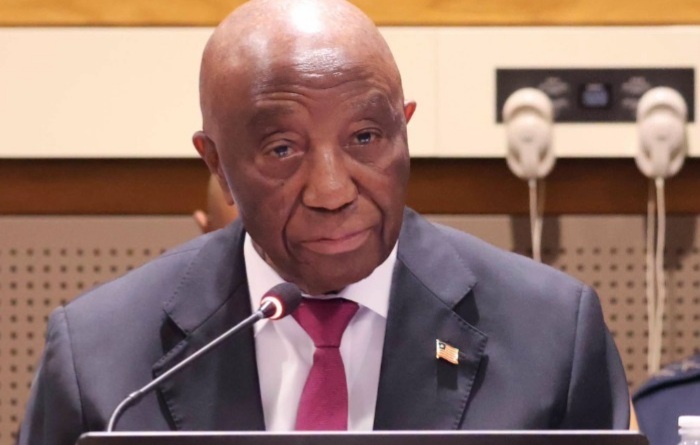
NEW YORK — Liberia’s President Joseph Nyuma Boakai is set to take the UN stage for his third address as Head of State, marking his fifth appearance in the General Debate.
This time, Liberia holds a seat on the Security Council, facing a world increasingly fraught with conflict, climate challenges, distrust, and calls for a more effective global order.
For President Boakai, the United Nations podium is a familiar place. However, today, Thursday, September 24, the stakes are higher.
As the Liberian President stands before the 81st United Nations General Assembly in New York, he will not just be another African leader vying for attention in a packed diplomatic hall.
He will represent a Liberia that now has a voice on the United Nations Security Council. He will advocate for a nation that has risen from the shadows of civil war and Ebola to reclaim its role on the international stage. And he will address a moment when the multilateral system that Liberia has long supported is facing unprecedented challenges.
The pressing question for the Liberian delegation is clear and substantial: What message will Boakai convey to the world?
The answer will start to emerge during the morning General Debate session, which kicks off at 9:00 a.m. New York time. Liberia is set to speak 11th, which means Boakai is expected to take the floor around 11:30 a.m. New York time—or 3:30 p.m. in Monrovia—assuming the previous speakers stick to their allotted 15 minutes.
The UN’s public schedule doesn’t provide a specific minute-by-minute start time for each speaker, so 11:30 a.m. should be seen as an estimated rather than a guaranteed start time.
For Liberians tuning in from home, it will be just another presidential address. But for Boakai, it represents something deeper. It marks his return.
FIVE TIMES BEFORE THE WORLD
Boakai is no stranger to the General Assembly. Before he took on the role of president, he stood at the same podium as Vice President Joseph Nyuma Boakai. In 2009, he represented President Ellen Johnson-Sirleaf and the Liberian government during the 64th session of the General Assembly.
His speech focused on Liberia’s progress after the war, national reconciliation, security-sector reform, and the partnership with the United Nations.
Two years later, in 2011, he returned to the Assembly, once again as Vice President, representing Liberia. His aim was to show the world that Liberia had moved past its war-torn past and was working towards peace.
The UN records indicate that Boakai served as Liberia’s Vice President and speaker during the General Debate of the 66th session.
Then came his presidency. In September 2024, Boakai made his debut at the General Assembly as President of Liberia.
The Ministry of Information in Liberia highlighted this as his first appearance at the UNGA in his presidential capacity, while also acknowledging his previous roles in 2009 and 2011 as Vice President.
His address in 2024 was wide-ranging yet clearly ambitious. He touched on topics such as Liberia’s democratic transition, peace and security, climate change, poverty, maternal and newborn mortality, regional instability, ECOWAS, and the ongoing conflicts in Ukraine and the Middle East, along with Liberia’s bid for a seat on the Security Council.
He portrayed Liberia as a nation eager to turn its post-conflict journey into a platform for peace and multilateral cooperation.
In 2025, Boakai made his second General Debate address as president, which came at a crucial time. Liberia had been elected to the UN Security Council for the 2026–2027 term, with the General Assembly choosing Liberia along with four other nations to serve as non-permanent members starting January 1, 2026.
During his 2025 speech, Boakai expressed gratitude to UN members for their trust and highlighted Liberia’s commitment to using the seat not just for national interests but as a voice for Africa. “The seat,” his administration stated, “belongs to Africa.” Now, he returns with that seat transformed from a campaign goal into a tangible reality.
THIS TIME, LIBERIA HAS A SEAT AT THE TABLE
Today’s speech is set against a transformed political and diplomatic landscape. Liberia is now a non-permanent member of the Security Council for the 2026–2027 term, as recognized by the United Nations.
This means that Boakai’s remarks will resonate in a new context. Liberia is no longer just appealing to the international community to pay attention to its issues; it is now part of the group responsible for upholding international peace and security.
This raises an important question: How will Liberia utilize the voice it has been granted?
The Boakai administration has already indicated several key areas it plans to focus on during UNGA81.
Government preparations have underscored themes such as peace and security, peacekeeping reform, conflict prevention, climate resilience, responsible management of natural resources, youth empowerment, women’s leadership, and reforming the multilateral system.
The themes align well with the overarching UNGA81 theme: “Restoring trust, managing transformation: A United Nations that delivers for all.”
However, while themes are important, the world will be eager to hear concrete details.
WHAT WILL BOAKAI SAY ABOUT LIBERIA?
The President steps up to the podium after a year in which his administration has aimed to showcase Liberia as a nation on the path to international re-emergence.
The recent Security Council seat is perhaps the most significant symbol of this effort.
Liberia’s election in June 2025 secured the country a two-year seat starting in January 2026, with the General Assembly recording 181 votes in favor.
However, gaining international recognition also comes with its own set of expectations. What role will Liberia play in discussions about peacekeeping? How will Monrovia leverage its post-war experiences when civilian lives are at risk in other conflicts? Will Liberia advocate more strongly for African representation and influence in global institutions? And what does “reform” truly mean for a nation that has historically relied on international bodies for peacekeeping, development, and humanitarian assistance? These are the questions that Boakai will have the chance to address.
THE LIBERIAN STORY THE WORLD ALREADY KNOWS
There’s a more profound narrative that the President can draw from. Liberia has firsthand experience with international intervention. The nation understands the fallout when conflict dismantles institutions. It recognizes the role international peacekeepers play in guiding a country from war to peace.
Liberia is aware of the repercussions when vulnerable states are abandoned to face crises on their own.
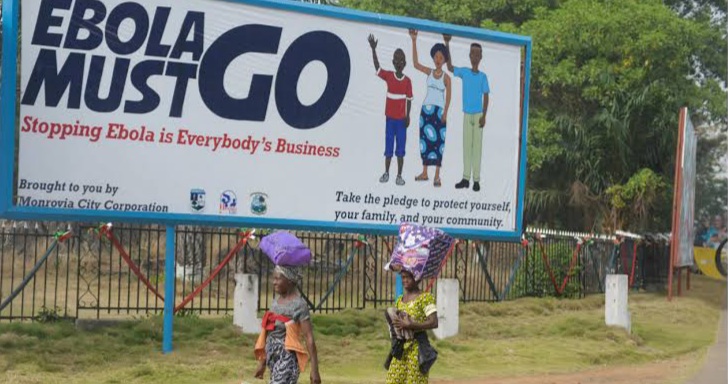
Additionally, it knows the heavy toll of disease. The Ebola outbreak in 2014 reshaped Liberia’s connection with global health organizations and highlighted the dire effects of inadequate systems dealing with a rapidly spreading epidemic.
The COVID-19 pandemic presented a challenge to a nation that had already become familiar with emergency response protocols.
Boakai has a chance to frame these experiences within a larger discussion about global collaboration. This isn’t just a call for empathy; it’s about presenting evidence.
Liberia’s past offers a unique viewpoint on the repercussions of global indifference and highlights the importance of international unity.
CLIMATE, RESOURCES, AND THE FUTURE
Climate change is an issue that is likely to gain important attention. Liberia, home to some of West Africa’s most important remaining forest resources, has seen the Boakai administration increasingly prioritize environmental governance and climate financing on the international stage.
During its engagements at UNGA81, the administration has emphasized the responsible management of natural resources and the crucial link between these resources, conflict prevention, and development. This focus could give today’s speech a uniquely Liberian perspective.
For a nation abundant in forests, minerals, and other natural resources yet still facing challenges with poverty and development, the global discussions surrounding climate finance and resource governance are far from abstract.
They directly impact the future of Liberia’s economy, the distribution of benefits from the country’s resources, and the balance between protecting forests and ensuring that communities can sustain their livelihoods.
The discussion centers on whether developing countries can secure substantial funding for climate adaptation, rather than just receiving commitments that are merely stated in international agreements.
THE QUESTION OF TRUST
Howbeit, one of the most crucial words in the theme of today’s UN General Assembly is trust. The United Nations has specifically chosen “Restoring trust” as a key part of the theme for the 81st session.
For Liberia, this word carries significant weight. The nation’s international standing has seen a remarkable shift.
Just a generation ago, Liberia was often associated with civil war, child soldiers, political turmoil, and humanitarian crises.
Today, the country holds a seat on the Security Council, marking a genuine transformation.
Yet, international credibility cannot be established through speeches alone; it is determined by actions that follow those speeches.
The world will listen to Boakai today, but it will also observe Liberia in the days to come. It will pay attention to how Monrovia votes on the Security Council and how Liberia addresses issues of peace and security.
It will scrutinize whether the commitments made regarding climate, development, and human rights are reflected in actual policies.
Additionally, it will be watching to see if Liberia leverages its international platform to advocate for broader African interests.
Finally, it will assess whether the progress made domestically aligns with the image that is projected internationally.
FROM 2009 TO 2026
Boakai’s journey to the podium today carries a deep symbolic weight. Back in 2009, he stood there as the Vice President of a nation still in the process of healing from the scars of war.
By 2011, he returned as Vice President of a Liberia striving to build peace and foster development. Fast forward to 2024, he came back as President, and in 2025, he was back again, this time seeking international support for Liberia’s aspirations for a seat on the Security Council.
Now, in 2026, he stands as the President of a country that has already secured that position.
He has made five verified appearances in the General Debate—two as Vice President and three as President—marking a span of seventeen years from his first appearance to today’s address.
The Liberia he represented in 2009 is not the same Liberia he represents now, and that may be the most significant message he can convey.
THE WORLD IS LISTENING
By the time Boakai steps away from the podium today, Liberia’s message will have been etched into the permanent diplomatic record.
His speech will be evaluated against the commitments he made in previous addresses. It will be assessed in light of Liberia’s new responsibilities on the Security Council.
It will be compared to the expectations of African nations. It will also be weighed against the realities that Liberians face at home.
Furthermore, it will be scrutinized in the context of the significant challenges that the international system is currently grappling with. Conflicts persist. Climate challenges are escalating. Multilateral institutions are under scrutiny regarding their effectiveness and representation.
Developing nations continue to advocate for better access to financing and a more substantial voice in global decision-making.
The United Nations is actively seeking ways to rebuild trust and enhance its effectiveness.
Therefore, today’s focus is not just on what Joseph Boakai will articulate. The more pressing question is what Liberia will convey through Joseph Boakai.
Will it present itself as a small nation striving for global recognition?
Will it share insights as a post-conflict country drawing from its own history?
Will it assert itself as an African nation calling for increased representation?
Or will it position itself as a new member of the Security Council with responsibilities that reach beyond its borders? Perhaps the response will encompass elements of all four perspectives.
Howbeit, one thing is clear: when President Joseph Nyuma Boakai addresses the General Assembly today, Liberia will possess more than just a microphone.
It will have a seat at the table. For the first time in his presidency, he will be addressing the world from a position that Liberia has long sought to attain.
The world will pay attention. What Liberia communicates—and how it acts afterward—will be significant.