When the forest disappears, a nation loses more than just trees. There are pivotal moments in a nation’s journey when an issue that seems remote, lurking in the wilderness and overlooked by the capital, suddenly demands the focus of the entire country.
Liberia’s escalating worries about undocumented Burkinabè migrants, forest encroachment, illegal mining, and unauthorized agricultural expansion may represent one of those critical moments.
The challenge facing Liberia is no longer just about who is entering its forests. The larger question is whether the nation can effectively safeguard its territory, uphold its laws, and protect its natural resources for future generations.
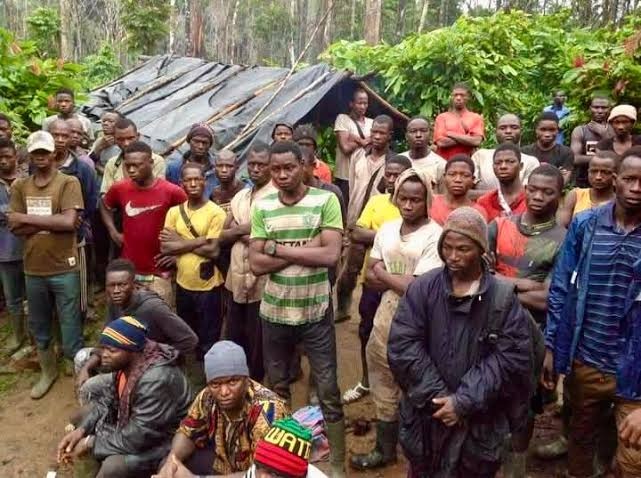
In June 2026, the Liberian government revealed an official estimate of around 140,000 Burkinabè nationals living in Grand Gedeh and River Gee Counties.
A report submitted to President Joseph Nyuma Boakai raised alarms about security issues, strain on local resources, mining operations, and alleged land grabs.
The magnitude of this estimate calls for thorough verification, yet the issues surrounding undocumented migration and forest encroachment warrant serious national consideration.
This is not merely a case of ordinary cross-border movement. Nor should it be a reason to vilify an entire nationality. It is a test of Liberia’s capacity to differentiate between lawful migration and unlawful actions, legitimate farming and illegal forest occupation, as well as regional collaboration and the abdication of national duties.
WHEN THE FOREST BECOMES A FRONTIER OF LAWLESSNESS
Liberia’s forests are not just empty areas waiting to be claimed. They are integral to the country’s natural heritage, ecological stability, and economic prospects.
These forests support local communities, safeguard water sources, provide habitats for wildlife, and offer livelihoods for many generations of Liberians.
However, reports of unauthorized cocoa farming, illegal mining, and encroachment into protected and community forests pose a serious question: what happens when activities in remote regions outpace the institutions meant to regulate them?
The repercussions can be severe. Trees are cut down, wildlife habitats are diminished, and rivers and streams face the risk of pollution. Agricultural land becomes strained, leading to conflicts over land that can exacerbate tensions between local communities and newcomers.
Once a forest is destroyed, no government announcement or enforcement action can bring it back instantly. There are accounts of forestland in Grand Gedeh being converted for cocoa farming, along with arrests of Burkinabè nationals accused of illegal farming and encroachment. These incidents highlight the necessity of consistently enforcing forest laws while ensuring individual accountability through thorough investigations and due process.
The real danger lies not in the nationality of the person wielding the cutlass, operating mining machinery, or farming the land, but in the unlawful destruction of a national treasure, regardless of who is responsible.
THE MEANING OF SOVEREIGNTY
Sovereignty goes beyond just a flag waving over the Executive Mansion in Monrovia. It encompasses a nation’s ability to effectively manage its territory, safeguard its borders, enforce its laws, and ensure that its resources benefit the public.
When illegal activities can thrive in forests without proper oversight, when protected areas can be encroached upon without prompt action, or when authorities struggle to identify who is entering, living in, and exploiting remote regions, it highlights a lack of state capacity.
This issue must transcend mere political rhetoric. Liberia needs clarity on who resides in these communities, their legal status, the activities they engage in, and whether those activities align with immigration, land, mining, and environmental regulations.
It is also crucial to determine if local residents, landowners, business interests, or public officials are enabling illegal operations.
A thorough investigation cannot end with just identifying a foreign worker on a farm or mining site. It must trace the entire network: who brought these individuals in, who provided the land, who funds the operation, who buys the products or minerals, and who stands to gain from the exploitation.
If Liberian citizens or officials are involved in illegal activities, they should be subjected to the same level of scrutiny, as selective enforcement would jeopardize the very sovereignty that the government aims to uphold.
THE ECONOMIC COST OF LOOKING AWAY
There’s another important aspect to consider regarding this ongoing issue: the potential economic opportunities that could be lost for Liberia and its citizens.
When mining operations occur outside the legal framework, the government stands to lose out on legitimate revenue. If forest products or minerals are funneled through unauthorized routes, the country misses out on taxes, royalties, and other advantages that could enhance public services.
Additionally, when community forests are cleared without the necessary permissions, local residents may find themselves deprived of resources and the benefits that responsible forest management should provide.
Illegal mining can also result in polluted waterways, damaged farmland, and significant environmental challenges.
While a small group of operators may reap immediate profits, the long-term repercussions are felt by entire communities.
The establishment of the Protect Our Resources Taskforce by President Boakai in June 2026, via Executive Order No. 167, offers a structured approach to tackling illicit mining.
The key question remains whether enforcement will be consistent, transparent, and effective throughout the nation.
Liberia must ensure that its forests do not become areas where private profits are made at the expense of the public good.
Importantly, policymakers need to be careful not to label all migrant farming as illegal. Many Burkinabè migrants have played a significant role in cocoa production, and local farmers have seen positive impacts from their contributions.
The key challenge, therefore, is to make sure that this productive work is done within legal land agreements, environmental protections, and relevant immigration laws because while economic contributions are important, they do not justify illegal land occupation. Similarly, being a foreign national does not automatically imply wrongdoing.
A HUMAN SECURITY QUESTION
The implications go beyond just trees, taxes, and immigration records; they deeply affect the daily lives of those living in southeastern Liberia.
What occurs when a community fears losing access to their customary land? What happens when farmers feel their future is jeopardized by the growth of plantations? What are the consequences when residents and newcomers start competing for land, jobs, water, and other resources without reliable institutions to mediate disputes?
These situations can lead to mistrust, conflict, and even violence. The government needs to intervene before these disputes escalate into communal hostility.
Local authorities, traditional leaders, community representatives, and security institutions should establish dependable channels for reporting encroachments, mediating land disputes, and addressing grievances.
Law enforcement must also adhere to the law. Arrests should be made based on solid evidence, and individuals should not face collective punishment due to their nationality.
When people are found to have broken the law, the proper legal procedures should be followed. Additionally, cases involving individuals with lawful status or legitimate claims should be assessed on a case-by-case basis.
Liberia must safeguard its citizens while upholding justice. Striking that balance is not a sign of weakness; it is essential for building a credible state.
A REGIONAL ISSUE REQUIRING A NATIONAL RESPONSE
Liberia is part of a region where people have historically crossed borders for trade, agriculture, family connections, and employment.
The importance of regional cooperation and the principle of free movement, as outlined by ECOWAS regulations, cannot be overstated.
Howbeit, regional integration does not imply that people can ignore the laws related to residency, land use, mining, or the protection of forests.
Therefore, Liberia should collaborate with Burkina Faso and relevant regional and international partners to gather accurate information on migration trends, verify identities and legal statuses, investigate organized illegal activities, and address any legitimate protection needs.
When necessary, registration should be conducted transparently and with appropriate safeguards in place. Additionally, the government needs to enhance border management and bolster the institutions that operate outside of Monrovia.
A border policy that exists solely on paper will not effectively address evolving migration patterns or prevent the illegal exploitation of natural resources.
The goal should be to promote orderly migration, lawful economic activities, environmental conservation, and peaceful coexistence, rather than fostering hostility between Liberians and Burkinabè people.
WHAT MUST HAPPEN NOW?
First, the government needs to provide a clear, evidence-based overview of the situation’s scale. The often-cited figure of 140,000 Burkinabè nationals should not be simply equated with 140,000 illegal immigrants.
Nationality, residency status, and involvement in illegal activities are distinct issues that require separate evidence.
Second, the Forestry Development Authority, Liberia Immigration Service, Ministry of Mines and Energy, Environmental Protection Agency, and local authorities must work together on field operations. Protected forests, community forests, customary lands, and mining areas should be accurately mapped and monitored, with any violations documented and thoroughly investigated.
Third, illegal mining and unauthorized forest clearing must be halted wherever the law applies. Equipment used in these unlawful activities should be dealt with according to legal protocols, and those responsible—including financiers, commercial beneficiaries, and any complicit officials—should face investigation and prosecution when warranted by evidence.
Fourth, customary land rights need to be safeguarded. Communities should have access to information regarding land agreements, concession arrangements, and authorized forest usage.
Traditional leaders should not be overlooked, but at the same time, customary authority should not be misused to legitimize illegal land seizures or hinder lawful enforcement.
Fifth, the government should publicly report on registrations, investigations, prosecutions, environmental damage, and restoration efforts.
A transparent record would enable the public to differentiate verified facts from speculation and evaluate whether official interventions are effective.
Finally, Liberia must invest in the communities at the heart of this issue. Infrastructure such as roads, agricultural support, land administration, local dispute-resolution systems, and the presence of trained forest rangers and immigration officers are crucial.
Relying solely on enforcement will not address a problem that is partly rooted in weak oversight and limited institutional capacity.
A WARNING FOR THE FUTURE
First, the government needs to provide a clear, evidence-based overview of the situation’s scale. The often-cited figure of 140,000 Burkinabè nationals should not be simply equated with 140,000 illegal immigrants. Nationality, residency status, and involvement in illegal activities are distinct issues that require separate evidence. Second, the Forestry Development Authority, Liberia Immigration Service, Ministry of Mines and Energy, Environmental Protection Agency, and local authorities must work together on field operations. Protected forests, community forests, customary lands, and mining areas should be accurately mapped and monitored, with any violations documented and thoroughly investigated. Third, illegal mining and unauthorized forest clearing must be halted wherever the law applies. Equipment used in these unlawful activities should be dealt with according to legal protocols, and those responsible—including financiers, commercial beneficiaries, and any complicit officials—should face investigation and prosecution when warranted by evidence. Fourth, customary land rights need to be safeguarded. Communities should have access to information regarding land agreements, concession arrangements, and authorized forest usage. Traditional leaders should not be overlooked, but at the same time, customary authority should not be misused to legitimize illegal land seizures or hinder lawful enforcement. Fifth, the government should publicly report on registrations, investigations, prosecutions, environmental damage, and restoration efforts. A transparent record would enable the public to differentiate verified facts from speculation and evaluate whether official interventions are effective. Finally, Liberia must invest in the communities at the heart of this issue. Infrastructure such as roads, agricultural support, land administration, local dispute-resolution systems, and the presence of trained forest rangers and immigration officers are crucial. Relying solely on enforcement will not address a problem that is partly rooted in weak oversight and limited institutional capacity.
WHAT HAPPENS NOW?
The real threat isn’t the presence of foreign residents in Liberia. Countries thrive through lawful trade, collaboration, and human connections.
The true danger lies in the unchecked growth of illegal activities that can overwhelm public institutions, making it hard to safeguard communities, natural resources, and the rule of law.
Liberia has a chance to tackle these issues before they escalate to a point of no return. Howbeit, seizing this opportunity requires more than just speeches, emergency meetings, or sporadic arrests.
It calls for reliable information, ongoing enforcement, accountability, and a genuine commitment to protecting both people and the environment.
The forests in Grand Gedeh and River Gee are not just local matters; they are part of Liberia’s national heritage. Their preservation impacts economic growth, food security, community stability, environmental resilience, and the trust citizens have in their government.
Liberia’s legacy will not be determined solely by how vocally its leaders advocate for sovereignty. It will be judged on whether the state can enforce its laws effectively, especially in the most challenging areas.
The message must be unequivocal: Liberia embraces lawful cooperation and honors the dignity of all individuals, but no one—be they Liberian or foreigner—should be allowed to exploit its land, devastate its forests, or break its laws without facing consequences.
Protecting Liberia’s forests means safeguarding Liberia itself. Achieving this requires a government that understands its territory, applies its laws impartially, and takes action before a manageable issue spiral into a national crisis.
Now is the time for a coordinated, transparent, and sustained response.