As Charlyne M. Brumskine steps into the presidency of the ECOWAS Community Court of Justice, Liberia marks a significant milestone. Yet, beneath this achievement lies a deeply personal narrative—a daughter fulfilling the dreams of a father who passed away before he could witness her remarkable success.
Some victories evoke national pride, while others resonate on a more profound level, stirring emotions and prompting thoughts of those who are no longer present to share in the joy.
For Justice Charlyne M. Brumskine, her rise to the presidency of the ECOWAS Community Court of Justice transcends mere professional success. It serves as a touching reminder of legacy, the essence of fatherhood, unfulfilled aspirations, and the profound connection between parent and child.
At the heart of this reflection is her late father, Cllr. Charles Walker Brumskine. A prominent Liberian lawyer, politician, former Senate President Pro Tempore, and founder of the Liberty Party, he passed away in November 2019.
His legacy is one of law, public service, and a steadfast belief in the transformative power of legal institutions. He also left behind a daughter who has now elevated the family name to one of West Africa’s most significant judicial platforms.
On October 6, 2026, Charlyne took her oath as a judge of the ECOWAS Community Court of Justice for a four-year, non-renewable term. Just a week later, on October 13, her peers elected her as president of the Court for a two-year term. She thus became the first Liberian woman to serve as a judge on this regional court and now leads the institution. This is an extraordinary accomplishment by any standard.
Howbeit, for those familiar with the Brumskine family’s history, this moment holds a significance that no title can truly encapsulate.
The father who had his own dream
Charles Walker Brumskine was a man who viewed the law not just as a career, but as a means to serve his country.
His journey in law paved the way for his political aspirations, and his impact reached far beyond the courtroom into Liberia’s discussions on leadership, governance, and democracy.
Reports about his daughter’s recent appointment reveal that Charles Brumskine had aspirations to serve as Vice President of the ECOWAS Commission at the regional level, a goal he did not fulfill before his passing.
His daughter has shared how her new role evokes memories of her father, making the moment deeply personal for her.
This is important because her father’s dream was to contribute to the ECOWAS Commission, rather than solely serving as a judge in the Community Court.
Howbeit, the connection between their ambitions is clear. Both father and daughter envisioned a future that extended beyond Liberia, aiming for regional impact.
In a poignant twist of fate, his daughter has now taken on a leadership role within the very regional community where he once hoped to leave his mark. One can only speculate about what that moment would have meant to him. Would he have sat in quiet reflection, absorbing the weight of her achievement before breaking into a smile? Would he have reached out to family and friends, bursting with pride? Would he have reminded her, as many fathers do, that a prestigious title comes with greater responsibilities? We may never know.
The deceased cannot share their thoughts or reactions with us. Yet, we can appreciate the depth of the question. What father wouldn’t feel immense pride watching his daughter ascend to such a notable position, especially when her success resonates with the same realm of public service that once inspired him?
If he could see her now
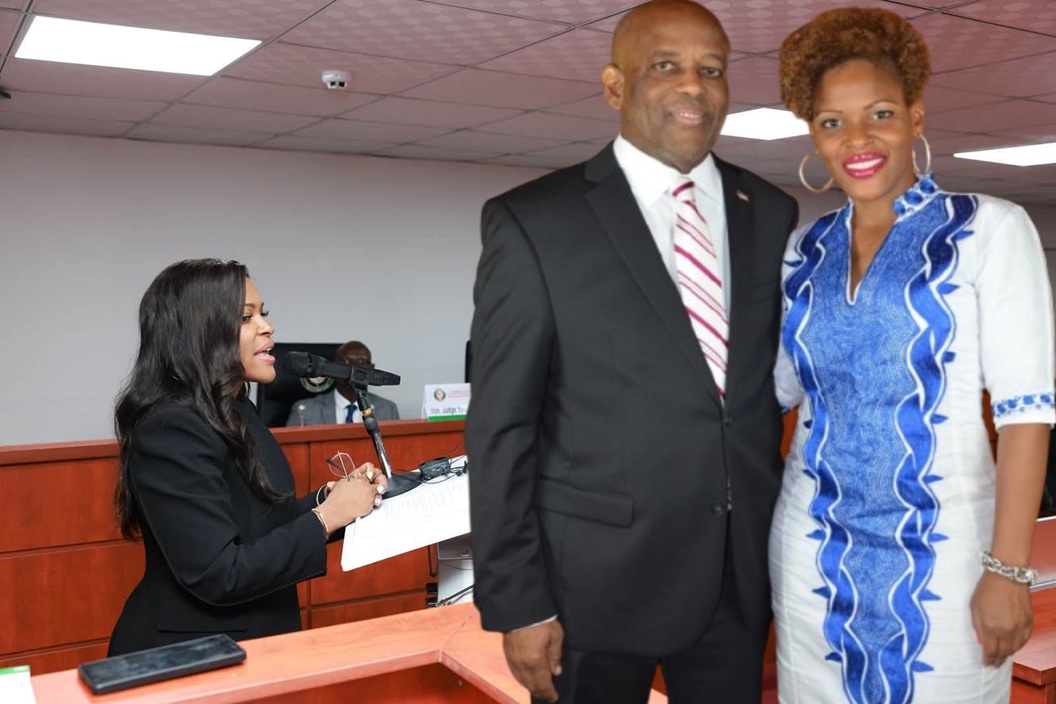
Imagine the scene for a moment. A daughter stands before her colleagues and dignitaries in Abuja, tasked with representing Liberia on a regional judicial institution. Her professional journey has led her to a pivotal point where her decisions and leadership can influence justice, human rights, and the rule of law throughout West Africa. Yet, woven into her story is the memory of a father whose life ended before he could witness this chapter unfold.
Perhaps the most poignant image is not of Charles Brumskine standing beside her at an inauguration, but rather the empty space where she would have wished to see him.
There’s a unique ache that accompanies achieving something remarkable when the person you long to share it with is no longer alive.
The world may celebrate, the cameras may flash, and congratulations may pour in from all sides, but the heart inevitably turns to the one whose embrace, voice, or words of encouragement are absent.
For Charlyne, her father’s absence adds a layer to this achievement that outsiders may not fully grasp. The presidency of the Court is a public triumph, while her father’s memory is deeply personal. Yet, these two aspects intertwine, making this moment resonate far beyond the confines of the courtroom.
It tells the story of a daughter who has forged her own professional identity while honoring a family legacy. It also reflects a father whose dreams, though not realized in the way he envisioned, continue to shape the narrative of his daughter’s ascent.
Would he be smiling down from above? That’s a question rooted in faith and imagination, something that can’t be definitively answered. Howbeit, it’s hard not to envision a father’s pride in seeing his child take on such a significant responsibility.
Her achievement is hers—but the legacy lives on
It’s important to clarify that Charlyne Brumskine’s appointment as president of the ECOWAS Court is not solely due to her being Charles Brumskine’s daughter. She has reached this point through her own dedication to her legal career, extensive experience, and professional reputation. With over twenty years in the legal field, she has worked in both private practice and public policy, and has also taught law. Notably, in 2022, she was the valedictorian of the Liberia Supreme Court Bar Examination, mirroring her father’s impressive history as a top performer in the same examination many years ago.
Her achievements should be recognized as the result of her hard work and preparation. While legacy can inspire, it cannot replace the skills necessary for a judicial role.
This is likely another reason why this moment would have been so significant for her father, had he been alive to see it: his daughter is not just upholding a name; she is enriching its significance. He dedicated his life to law and public service in Liberia, and now she is extending her legal contributions to a regional institution. He aspired to make an impact at the ECOWAS level, and she has embraced a four-year judicial role, during which she will serve as the Court’s president for two of those years. Though their journeys are not the same, they converge in a shared dedication to public service through the law.
The two years that make history
Justice Brumskine’s election as president of the Court adds an important chapter to the narrative. For the next two years, she will lead the institution while also serving as one of its five judges.
Her four-year term on the bench will extend beyond her presidency, allowing her more time to impact the Court’s work. This role carries substantial responsibility. The Court functions within the ECOWAS legal framework, dealing with issues under its jurisdiction, such as human rights cases and disputes between member states and Community institutions. While the title brings honor, it also comes with the duty to uphold independence, fairness, and integrity.
The true test of her leadership will be reflected in the quality of her guidance, the credibility of the Court’s decisions, and the trust it fosters among the people and institutions it serves.
For Liberia, her rise is a moment of great national importance. It serves as a powerful example for women and aspiring lawyers, showcasing a Liberian woman in a leadership role within a regional judicial body. For the Brumskine family, it represents a continuation of a story filled with ambition, loss, and resilience.
Yet, for the daughter who once experienced the loss of her father, there may be a deeper, personal significance that no formal ceremony can truly express.
A daughter’s triumph, a father’s unfinished chapter
There are certain aspects of life that success simply cannot restore. It cannot bring back a father who passed away long before his daughter reached her defining moment. It cannot recreate the conversations they might have had or the memories they could have created together.
Howbeit, achievement can open a new chapter in a family’s history. It can carry the influence of a loved one into realms that person never experienced. It can transform an old dream from a closed door into a narrative whose significance continues to evolve.
This may be the profound essence of Charlyne Brumskine’s ascent. Her father did not live to witness this milestone. He was not there to see his daughter take the oath as a judge, nor was he present when her peers selected her to lead the Court. The celebrations unfolded in his absence, yet his role in her journey endures.
We shouldn’t assume we know what he would have said or claim that he is literally watching over her. But we can envision the pride any devoted father would feel when his daughter accomplishes something so remarkable—especially when that achievement leads her into a field of regional service he had also aspired to join.
Perhaps the most appropriate tribute to Charles Walker Brumskine is not merely to question whether he would be proud. It is to acknowledge that his daughter now has the chance to transform that legacy into a meaningful service of her own.
The father’s chapter ended in 2019. The daughter’s chapter is still being written
For the next four years, Justice Charlyne M. Brumskine will carry the responsibility of a judge of the ECOWAS Community Court of Justice. For two of those years, she will lead the institution as its president.
Her father could not make this journey with her. But his memory has become part of the story she carries into it. And if there is one image that captures this moment, it is not a courtroom, a title or a formal portrait.
It is a daughter standing at the threshold of history, looking toward the future—and remembering the father who would have had every reason to smile.
Some dreams end with the person who first imagined them. Others live on, transformed, in the courage and accomplishments of the next generation.