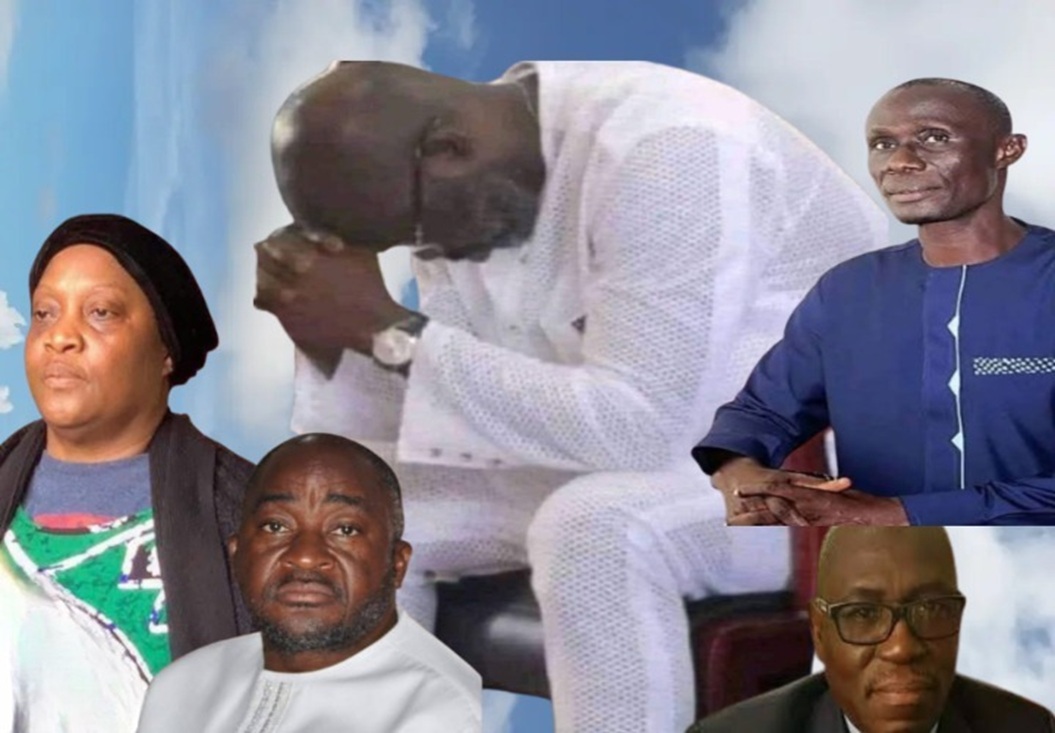
The legal troubles surrounding individuals from George Weah’s circle, including a former pastor accused of fraud, a former foreign minister convicted in the Saudi rice scandal, and a former vice president facing drug charges, are prompting serious discussions about power, accountability, and the legacy of his presidency.
George Manneh Weah ascended to the presidency of Liberia fueled by hope. His remarkable transition from an iconic football player to the Executive Mansion symbolized a promise: that a leader who truly understood the challenges faced by ordinary citizens could bring about meaningful change.
Howbeit, years after his presidency concluded, the ongoing legal issues involving his associates are overshadowing that initial promise. The courtroom has become an unsettling venue for many who were once part of Weah’s inner circle, spanning from the pulpit to the cabinet.
The focus has shifted from merely identifying the accused to understanding what these cases signify for public trust and the obligations that accompany power.
When the pulpit becomes a courtroom story
Rev. Emmanuel Nimely, who previously served as a religious adviser to Weah and is the pastor of the Fokay Klohn Family Fellowship Church, has been arrested on charges of defrauding around 90 individuals out of US$87,300. He allegedly promised to arrange travel to Australia for a supposed religious conference.
According to CENTAL’s Corruption Cases Tracker, he was granted temporary bail in April 2025.
This case is troubling not merely because of the amount involved, but also due to the trust that people place in their religious leaders.
For many struggling Liberians, a pastor symbolizes hope, guidance, and a safe haven. When someone in such a position faces allegations of financial wrongdoing, it undermines the trust that is essential to these relationships.
When those who are supposed to provide moral leadership become entangled in accusations of financial misconduct, it leaves ordinary citizens questioning where they can find true protection.
The rice scandal: A betrayal of public trust?
The scandal surrounding the rice donation from Saudi Arabia holds significant public importance.
In October 2026, reports from Liberian media revealed that several former officials from the Weah administration were found guilty of misappropriating 25,054 bags of rice meant for disaster victims and vulnerable communities. This consignment was valued at around US$425,918.
Among those convicted were former Foreign Minister Dee-Maxwell Saah Kemayah and former Internal Affairs Minister Varney A. Sirleaf.
The implications of this case are hard to overlook. The rice was meant for individuals facing dire circumstances—those who may have lost their homes, jobs, or the ability to provide for their families. For these individuals, a bag of rice represents more than just a statistic; it symbolizes a meal for their families.
When humanitarian aid becomes entangled in a criminal case involving high-ranking officials, the public has every right to question: How was the aid managed? Who is accountable? And were the people who needed help left behind while those in power controlled the resources?
This situation strikes at the core of public trust. Humanitarian aid should never be exploited for personal gain at the cost of those in need.
A former vice president faces grave allegations
The legal scrutiny has now turned to Jewel Howard-Taylor, who previously served as Weah’s vice president.
In August 2026, she faced charges related to an investigation into a suspected transnational drug trafficking network. The charges against her include drug trafficking, money laundering, and conspiracy.
These serious allegations put a former official of Liberia’s second-highest office under weighty public scrutiny.
In a country grappling with the threats posed by narcotics trafficking, the implications go far beyond the interests of individual politicians.
Drug trafficking and organized crime endanger communities, erode institutions, and diminish public trust. Therefore, any investigation into such serious allegations warrants thorough examination and a transparent judicial process.
What does this say about Weah’s legacy?
The rise in cases involving former associates inevitably prompts questions about the accountability culture within Weah’s administration.
Presidents have the responsibility to appoint ministers, delegate public resources, and set expectations for government operations. When multiple former officials are embroiled in serious legal issues, citizens are justified in questioning whether oversight was sufficient and if the safeguards meant to protect public resources functioned as they should.
This is a valid political inquiry, but it does not imply that Weah was personally involved in or aware of the alleged misconduct of those in his circle.
Defenders of Weah might contend that some of these prosecutions are driven by political motives. Such assertions should be scrutinized in light of the evidence available.
At the same time, the government needs to prove that its legal actions are based on solid evidence rather than political expediency.
The public ought to be able to differentiate between genuine prosecution and political retribution without feeling compelled to take sides in yet another partisan conflict.
The law must speak for itself
The cases mentioned here have distinct legal implications. Nimely is accused of fraud, while Kemayah and other former officials have reportedly been convicted in the Saudi rice case. Additionally, Howard-Taylor is facing significant charges related to narcotics.
It’s important to recognize that these situations should not be viewed as the same. The accusations against Nimely and Howard-Taylor do not equate to proof of their guilt.
Furthermore, the fact that these individuals worked under Weah does not imply that the former president was complicit in their alleged actions.
True accountability can only be achieved when it is based on solid evidence and fair legal processes.
Justice must not become a political weapon
Liberia is caught in a familiar pattern: a new government looks into the actions of its predecessor, the opposition claims it’s a witch hunt, and the ruling party announces a crackdown on corruption.
In the meantime, citizens are left wondering if the same level of commitment will be shown when allegations arise against officials from the current administration.
President Joseph Boakai’s government should be evaluated not just on how many former officials from Weah’s administration are prosecuted, but on whether accountability is upheld consistently across different political eras.
If corruption is unacceptable, it should be condemned no matter the political party. Misuse of public resources should trigger legal action, regardless of who appointed the officials in question. Failing to do so could turn the battle against corruption into just another tool for political maneuvering.
Liberia deserves more than another political scandal
The cases of Nimely, Kemayah, and Howard-Taylor each have unique facts and legal outcomes. They shouldn’t be grouped together as a single accusation against everyone linked to Weah.
Howbeit, collectively, they pose a critical question that Liberia cannot overlook: Will public office continue to protect the powerful, or will accountability become a fundamental aspect of governance?
For citizens who are struggling to provide for their families, it is essential that humanitarian aid reaches those who need it most. Trust in religious leaders must not be taken for granted or misused. In a nation grappling with corruption and organized crime, public institutions must prove that the application of the law is not swayed by influence.
Although Weah’s presidency has ended, the legal and political ramifications of actions attributed to certain individuals in his administration still require scrutiny.
His legacy will not be defined solely by media coverage; it will be influenced by the evidence that comes to light, the rulings made by the courts, and the standards of public service that Liberia ultimately upholds.
On the other hand, Boakai’s administration is now faced with its own challenge: to demonstrate that justice is not just for the powerful of the past, but is equally applicable to those in power today.
Ultimately, the true test is not about which political group will be next to face consequences, but whether Liberia can establish a system where no one is above the law and no one is adjudged guilty without evidence.